© irene waters 2017

© irene waters 2017
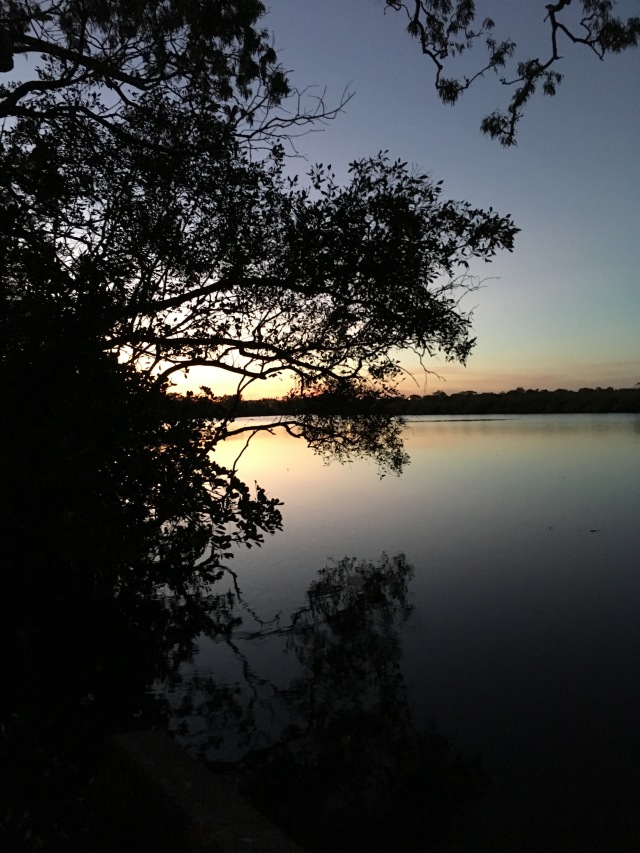
Part of skywatch Friday when skies from around the world are recorded.
© irene waters 2017
© irene waters 2017
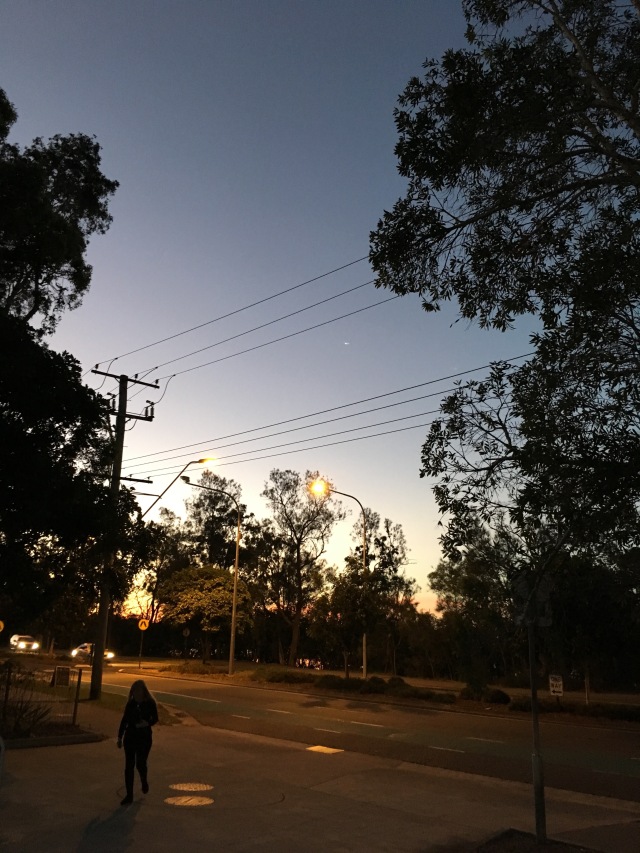
Part of skywatch Friday when skies from around the world are recorded.
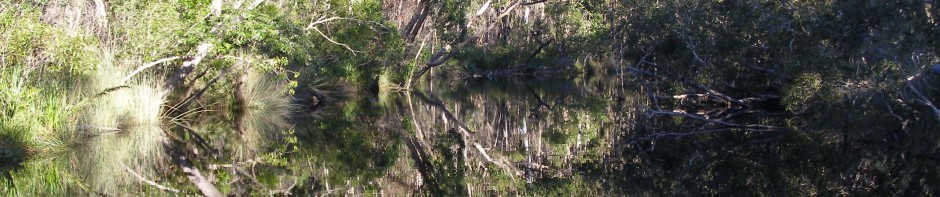
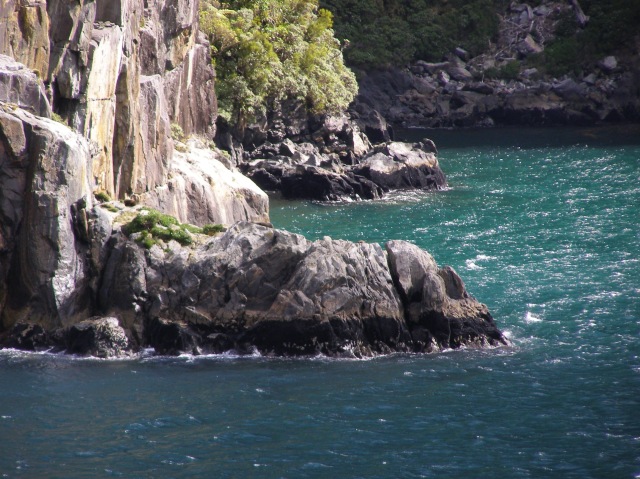
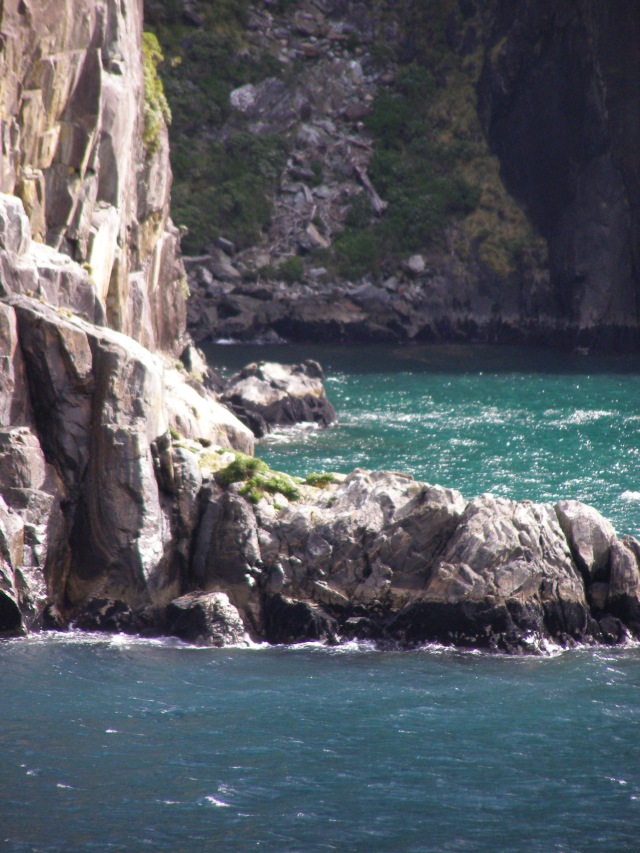
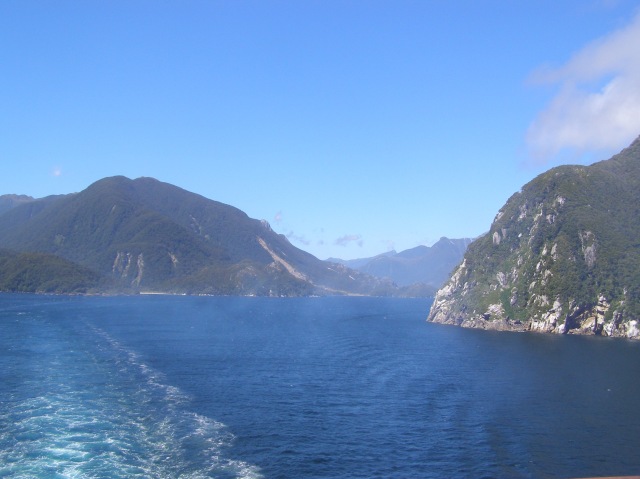
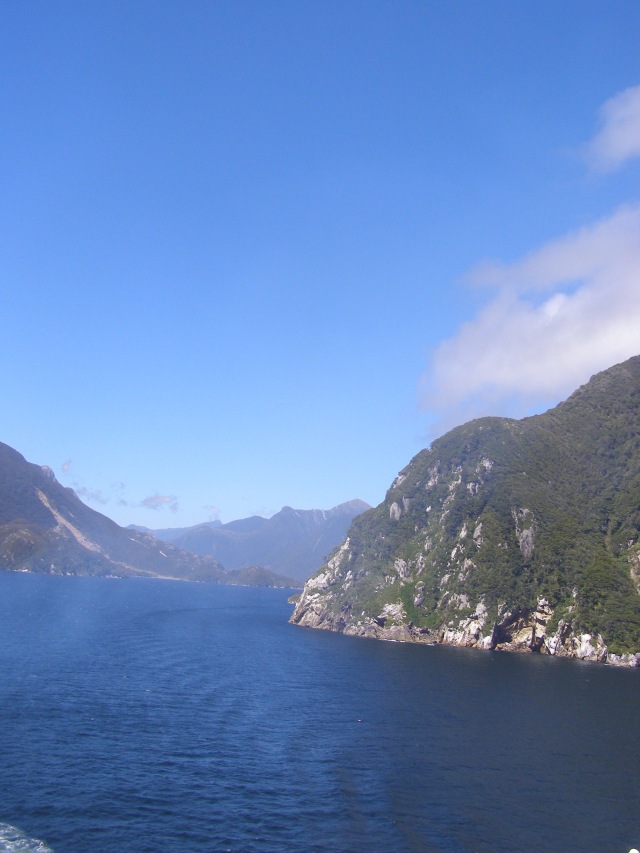
This week Paula has asked that we post the same scene, one as a portrait and one as a landscape.
© irene waters 2017
© irene waters 2017
© irene waters 2017
© irene waters 2017

© irene waters 2017

© irene waters 2017
© irene waters 2017
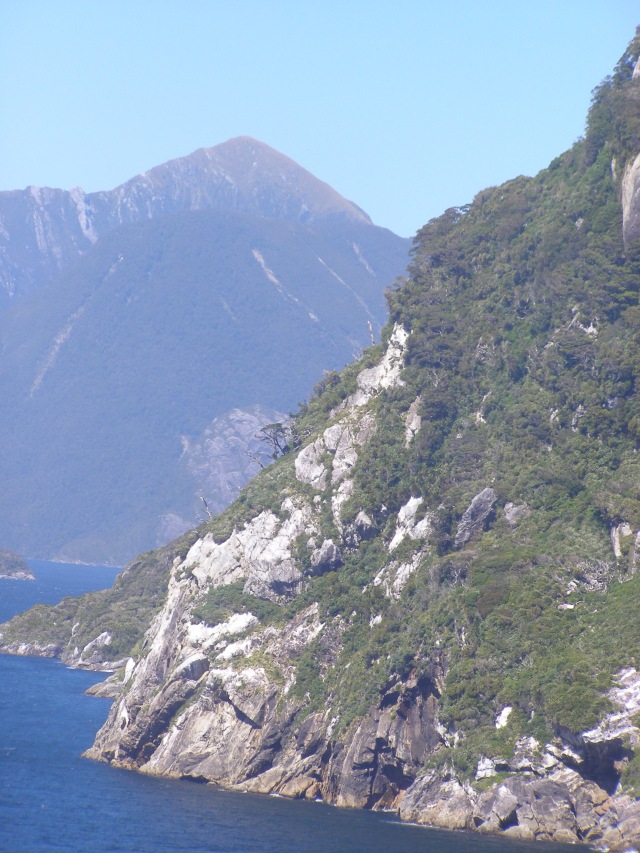
© irene waters 2017
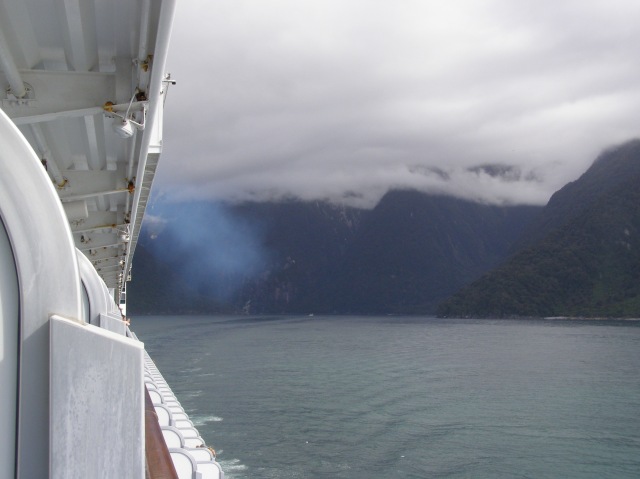
© irene waters 2017
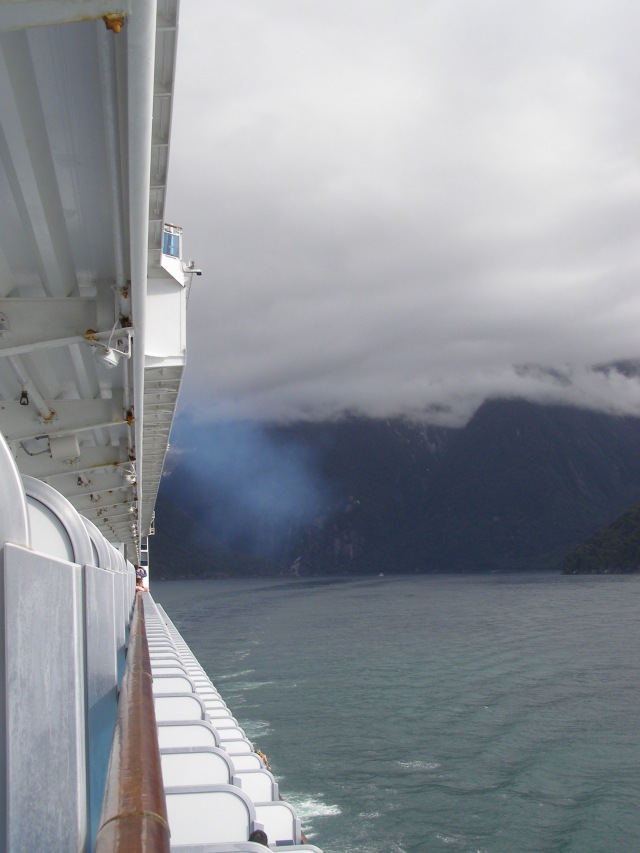
 irene waters 2017
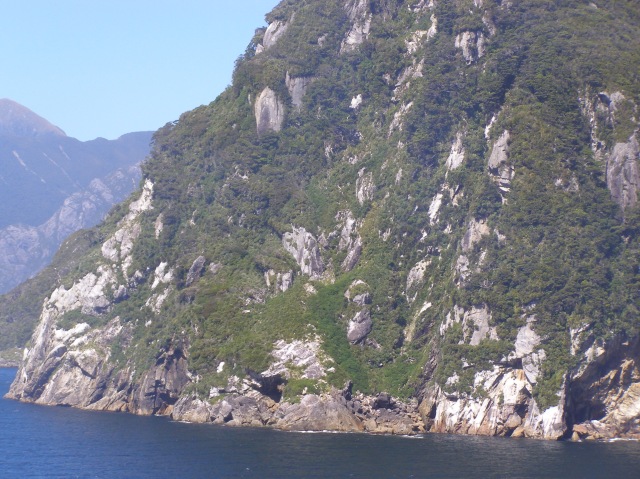
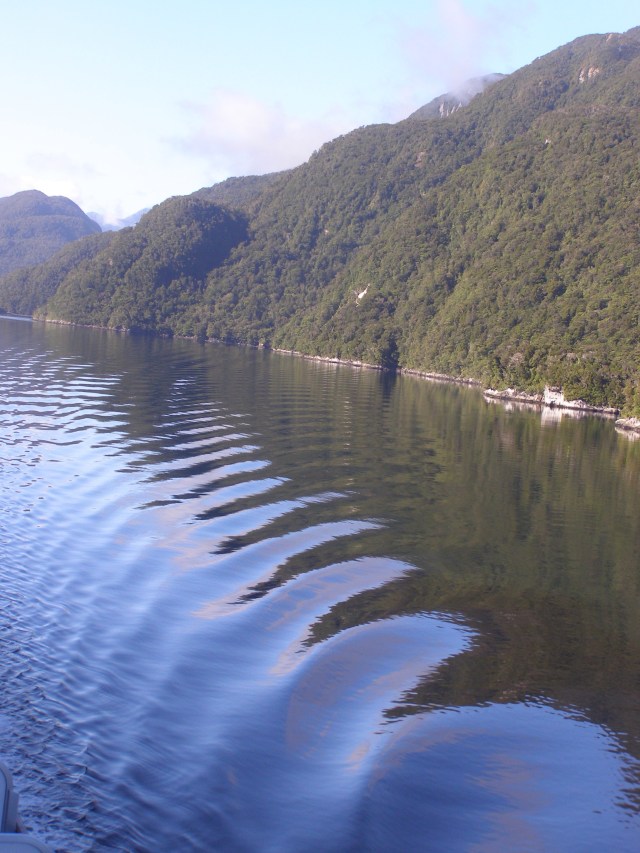
Cruising through the New Zealand fjords on a mammoth ship intensified the height of the mountains falling into the sea. At times the clouds were low enough to touch. The scenes worth taking both a portrait and a landscape shot.

© irene waters 2017

© irene waters 2017

courtesy of Amazon.com
This is a highly readable book by Noah Hawley. The story told starts on a foggy night when a private jet with some very influential and important people, their wives and two children, an artist on the road back from alcoholism and the air crew on board, took off from St Martha’s Vineyard with the destination being New York. Somewhere during the flight it crashes. The only survivors we know of are the artist and a four year old boy. We flash back to each passenger and their life before the fall and return to the survivors and their life after the fall. It was suspense at its best.
Before the Fall While most of his writing was lyrical some jarred. There were numerous examples of telling, not showing and this, I found, annoyed me greatly. Why did he need to, at the end of the first chapter, write “… none of them has any idea that sixteen minutes from now their plane will crash into the sea.” There were a number of similar examples throughout the book. Why didn’t he build the tension and show us it happening. In retrospect, these tellings, I think , were a very successful strategy, convincing me that the narrator was unreliable and allowed me to sustain hope throughout.
Hawley’s character construction was skilful and as a reader I certainly became involved positively with some and negatively with other characters. The human traits he gave his characters are one that were easily recognised by me as the reader. It was this connection that drove the novel forward and although I was slightly disappointed with the ending (I can’t say more as it will spoil it for anyone who decides to read it) I was also disappointed it was over. I wondered at how my mind could just ignore some pointers because of my own desires.
It was also a story of greed – from the wealthy wanting more, the poor wanting what the wealthy had and the greed of the media. It examined ploys of the media in creating the truth they wanted rather than the truth as it existed. I have always worried that now that news is 24 hours a day that there simply isn’t enough news to fill it up. This book went part of the way to me deciding I am right in that thought. It was a story of desire, the ability to sink to the depths and rise above them, the value of family and the nature of art and creation, memory and identity. Above all it showed the power of hope.
One of my favourite parts was the descriptions in the Chapter ‘Blanco’ and the conclusions Scott, the artist, puts forth as he ponders about the world he is in and the crash he survived. He suggests that perhaps he is a ghost. What did happen on that plane? What happened to the other passengers? If you want to know you’ll have to read it yourself.
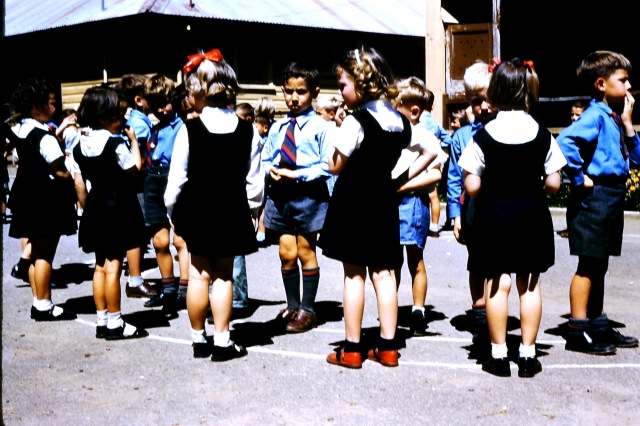
© irene waters 2017
Driving past school playgrounds I find myself saying “If only I could have been a kid now” or ” I wish we’d had that equipment to play on.” This led me to think of the differences that climate may have had on where you might have spent your breaks at school. Perhaps some of the time is taken up with prepared meals or going home to eat and therefore little time was spent in the playground. It made me wonder what would be the differences between countries, city and rural living and between generations. I hope you’ll join in and give us a view of school playgrounds around the world and between generations.
Please join in giving your location at the time of your memory and your generation. An explanation of the generations and the purpose of the prompts along with conditions for joining in can be seen at the Times Past Page. Join in either in the comments or by creating your own post and linking. Looking forward to your memories.
Baby Boomer
Rural Australia
The playground of my primary school was a ripe ground for skinned knees, abrasions and other injuries. It was a huge barren wasteland where the girls were segregated from boys. The girls were allocated to the asphalt area where the only break in the grey hard surface was the white lines painted on it for various ball games. The boys were allocated to a paddock of grass where they played more violent games in their short lunch breaks.
Our school day started on the asphalt with school assembly. The flag was raised. We sang God save the Queen and the Principal gave any notices and orders for the day. It was often quite hot at school opening and I had some unknown sickness that caused me to faint so I was one of the few kids who were allowed to sit on the hot paving.
Morning Classes were broken by morning tea where we’d all spill out onto the asphalt. We all stayed on the asphalt for this short break but the boys naturally avoided the girls. The government had decided that all school children were to get allocated a bottle of milk which had been delivered in crates into the playground during class, heating in the sun. The warm milk was enough to turn your stomach and I was so grateful to my illness that the doctor decided must be due to a dairy allergy that I had the magic letter from him allowing me to forgo my bottle.
When the bell rang for lunch we all filed out onto long benches that were around the perimeter of the playground. Few were in the shade and it was before the days that hats were compulsory. I had a permanently peeling red nose but luckily my olive skin saved the rest of me from the melanomas that were probably laid down for many at this time. Sitting on these benches we ate our packed lunch that we had bought from home. Mine was always a sandwich with a variety of different fillings and an apple or orange. The fruit usually returned home with me unless I could persuade someone else to eat it. We sat there quietly – one teacher was allocated to playground duty – until the whistle blew to let us know we could get up and play for half an hour before classes resumed. The girls tended to play with whatever the fad of the moment was. This could be hula hoops, skipping, hopscotch, yoyos. The only game the girls didn’t seem to adopt was marbles.
Apart from these breaks our playground was also used for classes – sports, dancing (this we all thought was yuk) and the occasional nature class. Even though they were devoid of play equipment and shade we relished the time we spent in our playground.
Now for your memories……
Baby Boomer
Australian City
https://taswegian57.wordpress.com/2017/06/11/1066-and-all-that/
Australian rural
https://christinejrandall.com/2017/06/30/times-past-in-the-school-playground/
UK Working Class Northern England
http://annegoodwin.weebly.com/annecdotal/games-in-the-schoolyard-new-boy-by-tracy-chevalier
Gen Y
USA Texas
© irene waters 2017

© irene waters 2017
You cannot get more simple than a potato scone. Potato, onion and a little milk fried until the outside is crispy, some would say burnt. Cut in half, a little butter add and enjoy the simplicity. Without this type of simplicity we would gourmet all the time. It would become our commonplace. Should this happen what would we find spectacular, a real treat. This is not to say the potato scone tastes yuk – far from it – just good fill you up food.

© irene waters 2017
A branch, a bird surrounded by blue – simple but what a delight.
© irene waters 2017
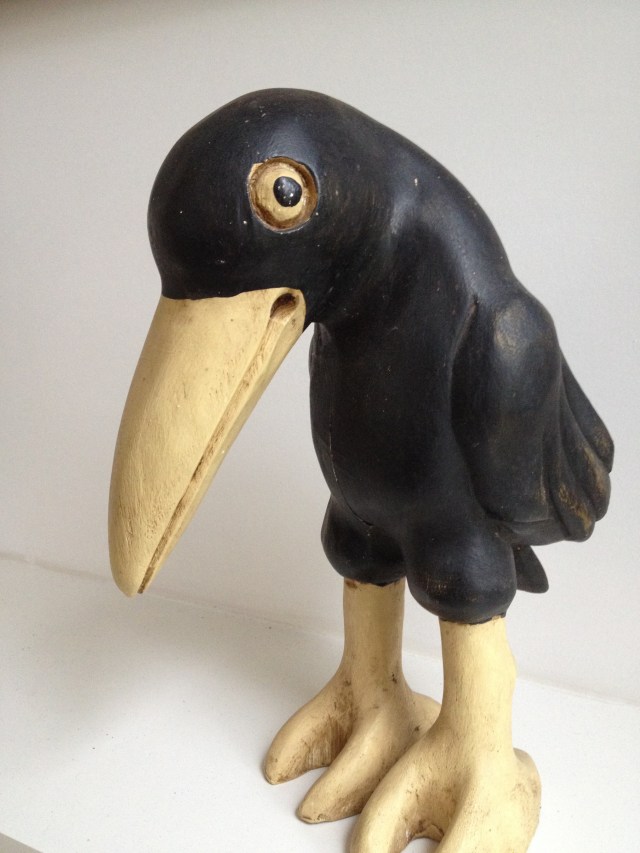
Carved birds also delight by the simplicity of the design – sweeping lines and bold blocks of colour

© irene waters 2017
And even simpler with only the crudest of tools used is this bird. From memory I feel they must have carved as in our years on the island so few birds did we see that I believed that they had all gone in the pot for tea.
© irene waters 2017
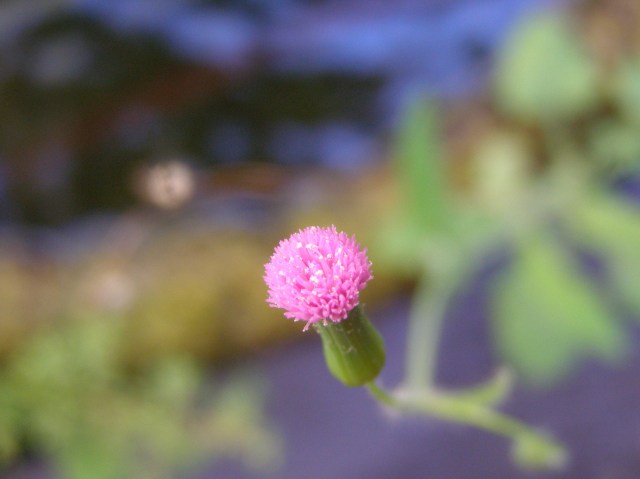
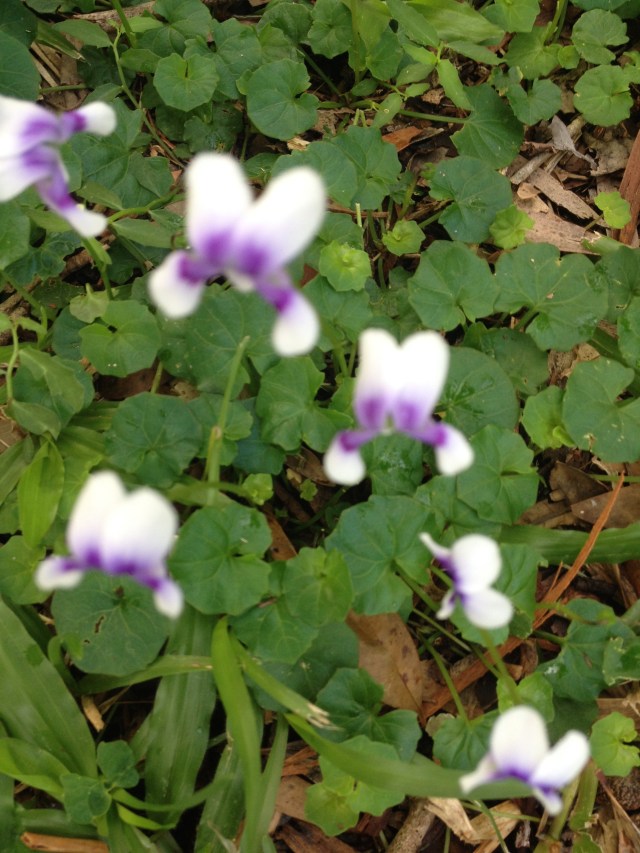
More beauty in simplicity in tiny perfect flowers.
© irene waters 2017
For more entries go to the host The girl who dreams awake
The cabin walls closed in. The fixed porthole prevented fresh air entering and the stale air weighed down on me. ‘I’m a sardine in a can,’ I fought the urge to scream. My heart pounding, I escaped to the deck. I paced, looking for a place I could sit and drink in the velvety night. All the seats, bar one, were occupied with lovers entwined. A solitary man, a priest, sat alone. He patted the seat, inviting me to sit. I did. We sat in silence. Connected. Content. Hours later he stood to leave, saying, “Sometimes, words aren’t necessary.”
In response to Charli at Carrot Ranch who this week prompts:
June 1, 2017 prompt: In 99 words (no more, no less) write a story about feeling content. Explore what is contentment and any direction will do. Go where the prompt leads.
Respond by June 6, 2017 to be included in the compilation (published June 7). Rules are here. All writers are welcome!


 | Big Mouse on Layers |
 | Irene Waters 19 Writ… on Radio Quiz Kid – My… |
 | Kim on Radio Quiz Kid – My… |
 | Friday-Flashback-Pre… on Cee’s Fun Foto Challenge:… |
 | THURSDAY’S SPE… on Over: Thursday’s Special |










SHORTS, NOVELS, AND OTHER THINGS
Traveling Fashion Designers 🌼
My experience of breast cancer diagnosis and playing the shit cancer gameshow
USA Today Bestselling Author
Daily tips for success, business, lifestyles, self-esteem,...
Having fun blogging with friends
A Galaxy of Thoughts and Creativity
Tools, Dials & unexpected Levers
Writing, Publishing, and Marketing Ideas
Writing Fiction and Running Miles! That goes together, right?
Short Stories and Poems - Mostly dark ones!
stories, photographs, adventures...the next chapter
Watch Your Thoughts; They Become Words
Connecting Authors and Readers
Author of The Sound of Water and other books
poetry, prose n pics
Daily Living in the Heart of Dixie
When you choose an alternative lifestyle with no idea what you're doing and make it up as you go.