
© irene waters 2018

© irene waters 2018
© irene waters 2018

© irene waters 2018
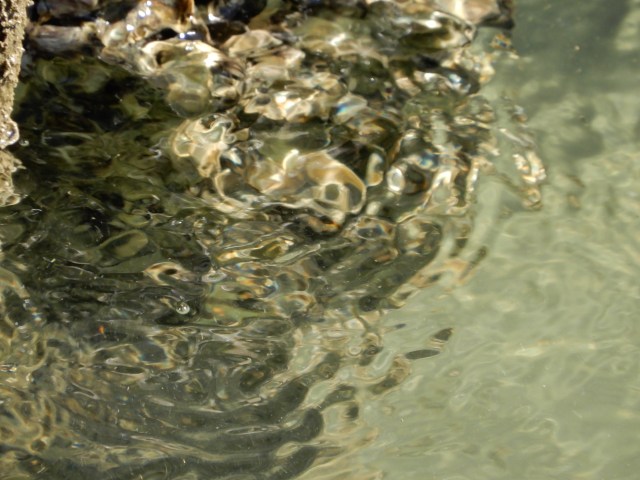
Oysters
razor sharp
washed by water soft and warm
The rope it hangs
smooth with slime
rots.
© irene waters 2018
© irene waters 2018
© irene waters 2018
© irene waters 2018
Oysters
razor sharp
washed by water soft and warm
The rope it hangs
smooth with slime
rots.
© irene waters 2018
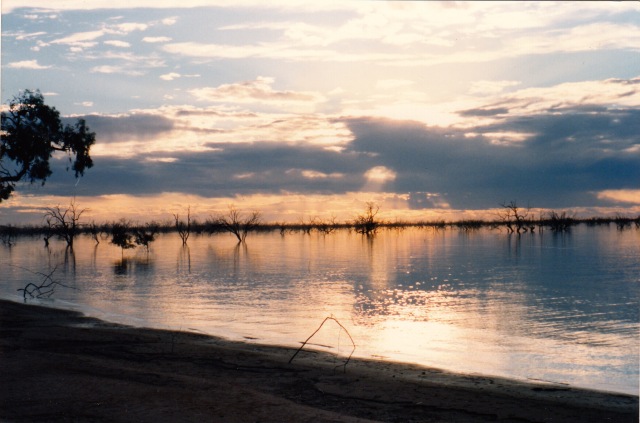
The road stretched out long and straight through the desert. Signs of civilisation appeared. Bait 1 km. Fishing tackle Menindee General Store. “It’s hard to believe…” I stopped for now in front of me I saw a huge lake. An oasis that replaced the red sand.
“Yep, its hard to believe.” The water shimmered in the sunlight. We stopped and bought gear and headed to the waters edge. We fished all afternoon without a bite but our friendship was becoming as solid as cement.
On returning to our friend’s place he said ” Well they caught you hook, line and sinker.”
In response to Charli’s prompt where this week she asks:
April 26, 2018, prompt: In 99 words (no more, no less) write a fish tale. It can be about fishing from any angle, about those who fish, or what might be caught. Go where the prompt leads.
Respond by May 1, 2018. Use the comment section below to share, read and be social. You may leave a link, pingback or story in the comments.
If you want your story published in the weekly collection, please use this form. If you want to interact with other writers, do so in the comments (yes, that means sharing your story TWICE — once for interaction and once for publication). Rules are here.
During our early days when friendship was all there was we did a lot of fishing. Everywhere we went we seemed to pull out a line. Only occasionally did we catch anything which was very lucky as neither of us could do the necessaries to get the fish to the dining room table. We felt so guilty pulling the hook out of their mouths we really were relieved when we didn’t get a bite. The peace and calm and conversation was really all we wanted. To this day we don’t know whether Lake Menindee has fish in it or not.
© irene waters 2018

photo courtesy of Amazon.com
Just imagine what it must have been like to live the life of Cora, a slave girl on a cotton plantation in Georgia if I found reading it torrid and stressful. I have no doubt that the scenes described in this book happened, if not to the fictional Cora, to the real life slaves of the Southern States before the Civil War. It is hard to comprehend such cruelty given that this was such a short time ago. Slavery was the only reality in this pulitzer prize winning book written by Colson Whitehead who created a novel way for an escaping slave to travel. Instead of a metaphorical underground railway the railway becomes real complete with station masters and engine men. This mode of travel allows the escaping slave Cora to travel to a multitude of southern states, each dealing with slavery in different ways from sympathetic to horrific. In some locations she initially believes she has found paradise only to have that illusion tumble down around her leaving me feeling in a small way as she must have done.
Cora is a third generation slave and has never been off the plantation she was born on. Her grandmother died in the fields and her mother left her when she was ten and escaped. She was the only slave from this plantation to succeed at this and this gave Cora some purchase in the slave quarters along with her fierce determination to maintain control over her small plot that had been her mothers. When a new slave tried to take it from her to build dog kennels she attacked him. The same anger overcame her when a white man caned a black boy, she threw herself over the boy getting the caning herself. Both child and Cora were severely punished the next day. These events led Caesar (another slave) to ask Cora to escape with him. Initially she said no but when the white man inherited the plantation she changed her mind.
To ease her restlessness she crept out to her plot and sat
on her maple and smelled the air and listened. Things in the
swamp whistled and splashed, hunting in the living darkness.
To walk in there at night, heading north to the Free States.
Have to take leave of your senses to do that.
But her mother had.
Would I recommend this book: Yes, I would. Although I couldn’t say I enjoyed this book I couldn’t put it down either. I wondered at the relevance of it today and I think there are many members of our society that feel about African Americans as was expressed by the white people in this book. Just this morning I heard that African American babies are often born premature and are more likely to die at or near birth compared to white babies. The research being reported, although in its early stages, is suggestive that the cause of this is racism. I feel that this is a powerful book and one that should be read by everybody in the journey to overcome racism.

Welcome. Come on in for a cup of tea or coffee. You are very welcome and I have most beverages. This week has been a weird week. Anzac Day fell on Wednesday and it has totally thrown my body clock out, not knowing what day it is or what I am supposed to be doing. That is because Wednesday is golf day. I know that because Roger isn’t here and I do what I like which might be clean the house, spend hours on the computer or go out and have coffee with friends. This Wednesday we were collected at 0445 by friends to attend the dawn service in Verrierdale, a small town in the Noosa hinterland.
We arrived in the dark.

© irene waters 2018
to the sound of a solitary piper.

© irene waters 2018
People milled about. Old soldiers catching up with mates.

© irene waters 2018
The Noosa Chorale sang Amazing Grace to start the commemorations off. For those of you that don’t know ANZAC day is the day we remember our returned servicemen from all the numerous battles we have fought in and peace keeping efforts. Our sense of the ANZACs is on the first landing of the ANZACS at Gallipoli which was a bit of strategic disaster. After a campaign of 8 months 56,000 allied soldiers had been killed but the heroism of those there has been stamped into our psyche and is part of what we consider our nationhood to encompass.

© irene waters 2018
Wreaths were laid, the air commodore spoke (though I’m not 100% certain that I got his meaning ) the choir sang again, the last post sounded , a minutes silence, wreathes were laid and the ceremony finished with the Australian followed by the New Zealand National Anthems.
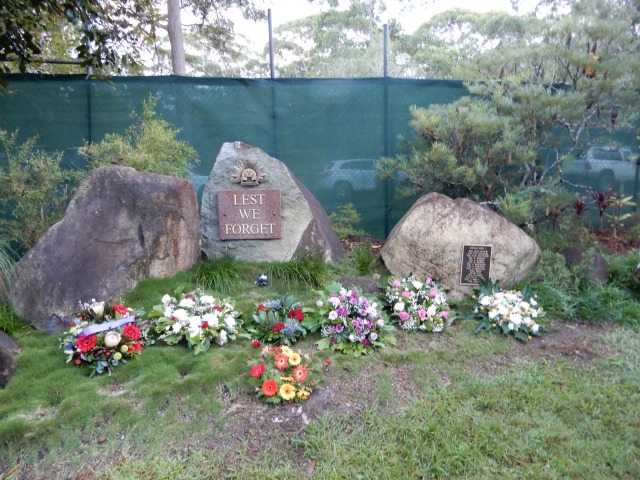
© irene waters 2018

© irene waters 2018
In Gallipoli the ridges had been covered in Aleppo pines but the Turks had removed them to provide cover for their trenches. All that was left was one solitary pine when on the 6th August 1915 the Australians launched a major offensive on what is now known as Lone Pine Ridge. One of the soldiers Benjamin Smith collected three of the pine cones from this solitary tree and sent it home to him Mum Jane McMullin as a memory of his brother and her son Mark who had died on the ridge. She was successful in raising two seedlings from these cones. She planted one and sent the other to the Australian War Memorial. From this seedling more pines, such as the one above, has been raised. This one was given to the Verrierdale community in recognition of the work they had done and completed for the 100th commemoration.

© irene waters 2018
After the ceremony a hearty breakfast was provided in the Verrierdale Hall.
This was the first time Muffin had been left alone at home. She had previously always had Bundy for company when we left. Our neighbours told us she howled. Not a great way to wake up before 5am. I don’t know whether it was the time of day, we’ll have to do a bit of sneaking home when we go out to see just what she is doing.
If we were having coffee I’d tell you that the weather here is just perfect. Warm during the day and cool of a night. A little wind but more like a breeze. Everybody is having a lot of fun down on the river. Now that we can again walk, we are doing long walks of a morning (around 10kms) to reach our coffee shop. This takes a huge slice out of the day but it is most enjoyable.

© irene waters 2018
If we were having coffee I’d tell you that the other thing I have done this week is buy a pushbike. I rode it home on the bike paths from the bike shop probably 7 kms away without any problem. Well that is not strictly true. I wobbled my way home. I haven’t mastered the straight line yet and I panic easily but it is just confidence I need. I have no intention of ever riding on the road so I should be fine. It is just finding the time to ride it.
So that is about it for my week. Have you read any good books or seen any films that should be seen? Looking forward to seeing how your week has been. Thank you for dropping in for coffee, it is lovely to see you. Thanks to eclecticali who is our host of the weekend coffee share.

© irene waters 2018

photo prompt thanks to Alexandre Boucher via Unsplash
“Siri tell me where I want to go.”
” You were saying…… Siri cannot help with that question.”
“I traded in my semi-intelligent phone to get a smart phone that turns out to be not so smart.”
Thank you to Sonya our host for 3 Line Tales
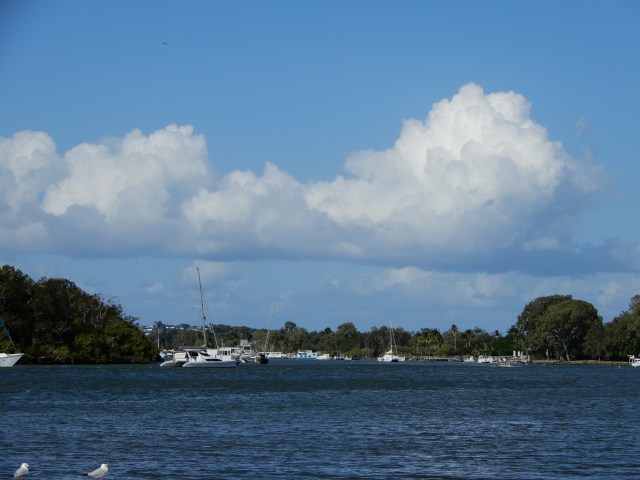
© irene waters 2018
For skywatch Friday where skies around the world can be seen.
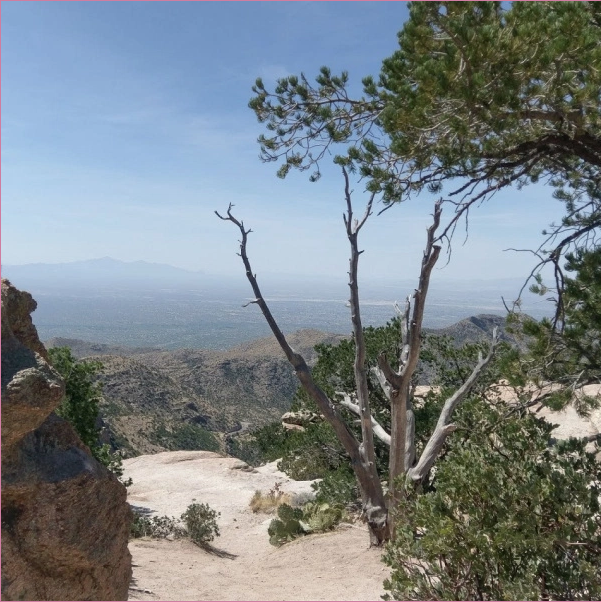
photo prompt © Jan Wayne Fields
The three men looked back at Gregory’s farm. Greg’s wife waved from the verandah, the smallest of his three children clinging to her skirt. He turned, brushing a tear from his eye. The pack horses were laden with six weeks of provisions and if necessary they had five dogs they could eat. The three convicts did the work whilst a fourth oversaw them. Upward they climbed through the rugged bush. The land to the west spread before them, a fertile vista, but the sheer cliffs didn’t allow them passage down yet they celebrated – they were the first to see the other side.
Thank you to Rochelle Wiseoff-Fields for being our hostess for Friday fictioneers and to Jan Wayne Fields for supplying the photo prompt.
My immediate thought when seeing this photo was of the explorers Blaxland, Wentworth and Lawson who were the first men to successfully cross our Blue Mountains in 1813. They did not make it down the other side – a chap named Evans did that in December 1813 and the three explorers were awarded 1000 acres of land each on the west side of the mountain. Wentworth wrote in his journal:
William Wentworth
whilst William Lawson wrote:
William Lawson, 22 May 1813
and Blaxland:
Gregory Blaxland
Thank you to Wikipedia for these diary entries.
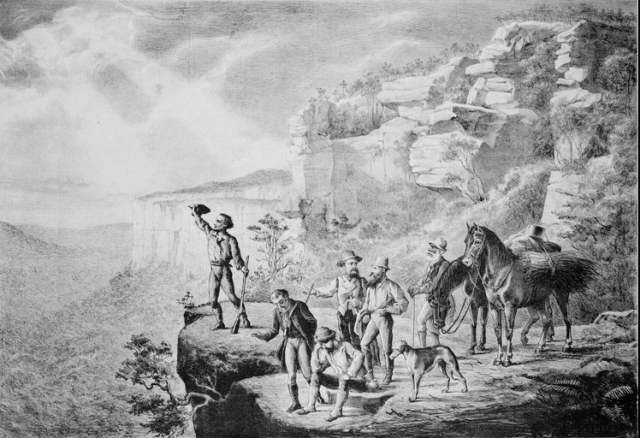
Earliest pictorial representation of the crossing from the Sydney Mail, 25th December 1880


 | Big Mouse on Layers |
 | Irene Waters 19 Writ… on Radio Quiz Kid – My… |
 | Kim on Radio Quiz Kid – My… |
 | Friday-Flashback-Pre… on Cee’s Fun Foto Challenge:… |
 | THURSDAY’S SPE… on Over: Thursday’s Special |










SHORTS, NOVELS, AND OTHER THINGS
Traveling Fashion Designers 🌼
My experience of breast cancer diagnosis and playing the shit cancer gameshow
USA Today Bestselling Author
Daily tips for success, business, lifestyles, self-esteem,...
Having fun blogging with friends
A Galaxy of Thoughts and Creativity
Tools, Dials & unexpected Levers
Writing, Publishing, and Marketing Ideas
Writing Fiction and Running Miles! That goes together, right?
Short Stories and Poems - Mostly dark ones!
stories, photographs, adventures...the next chapter
Watch Your Thoughts; They Become Words
Connecting Authors and Readers
Author of The Sound of Water and other books
poetry, prose n pics
Daily Living in the Heart of Dixie
When you choose an alternative lifestyle with no idea what you're doing and make it up as you go.


