Earlyn country garden is the type of place you discover when you have your sister-in-law and her husband visiting from Germany. Unlike our visits to their town where there are all manner of walks close-by, the miles between places in Australia (and they were walking) was long. We were a long walk from town and they were itching to get out. We had done all of our normal tourist trips and had discovered when we invited them to go out for a coffee that the three quarter of an hour trip to the coffee shop was beyond their comprehension. Discovering Earlyn country Gardens only a fifteen minute drive away was a delightful surprise.
This slideshow requires JavaScript.
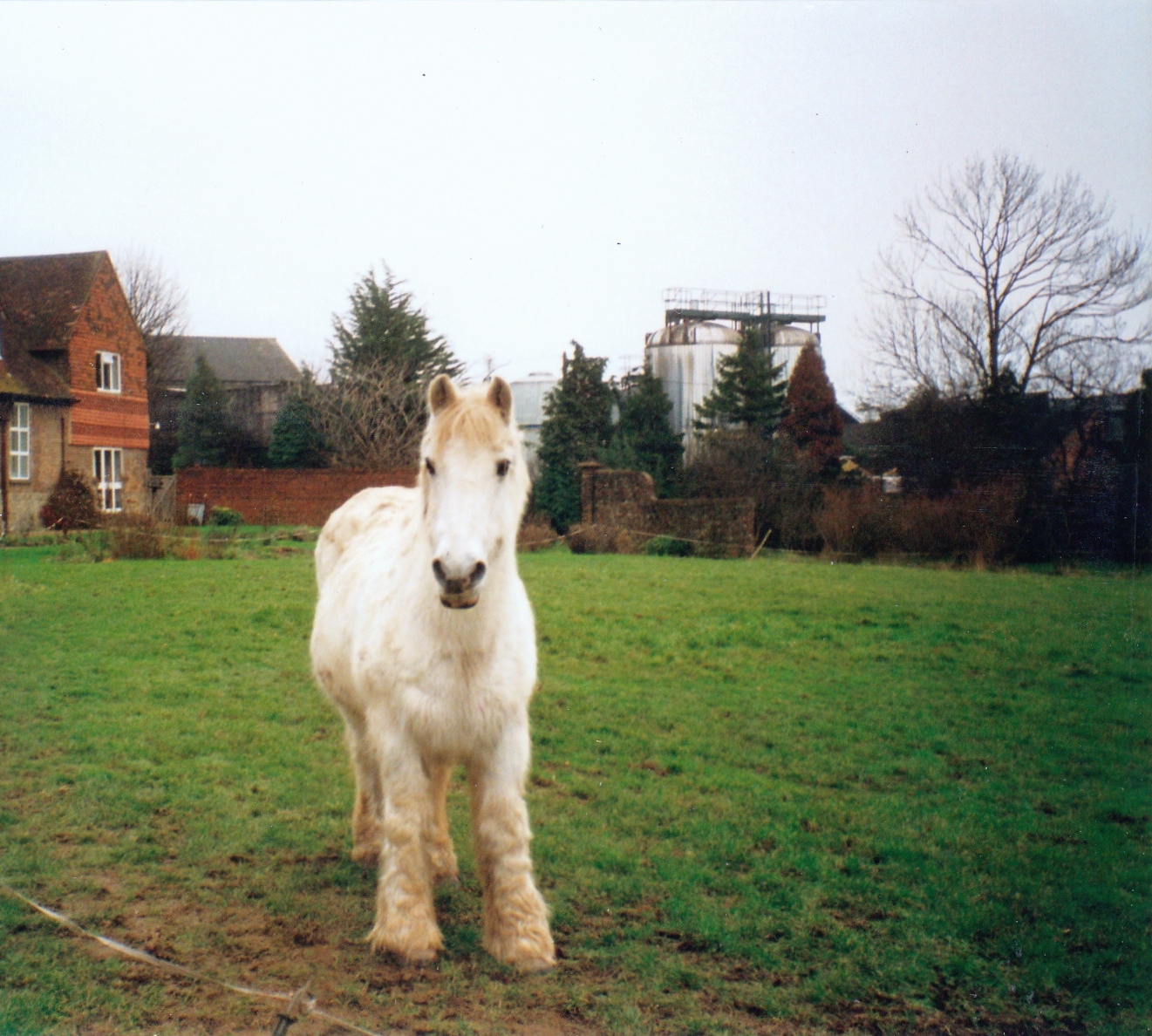
Earlyn was named after the gardener’s mother Lyn and her husband Earl. It was the home garden of a large cattle property, fenced off from the beasts and kangaroos but having a wonderful backdrop of the hills and scrub country on which the cattle grazed. You can see as you wander around the garden on the slide show above the amount of love and care that went into this little piece of paradise. The flowers were magnificent. I went home with cuttings all of which took. After a good wander we sat down in the breezeway where a scrumptious light lunch was served.
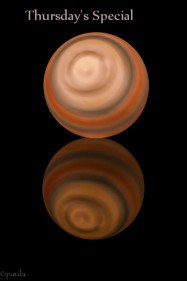
This is in response to Thursdays Special. I read today Paula’s explanation as to why she has started this non-challenge on a Thursday in honour of Jupiter. I found it a fascinating article so if you have the time its worth a visit to read it.
For this Thursday’s Special (colour challenge) you are invited to post photos of something that reminds you of your place, but if you don’t have any, your are allowed to come up with your own special theme/interpretation. Please see Tish Farrel’s prompt.
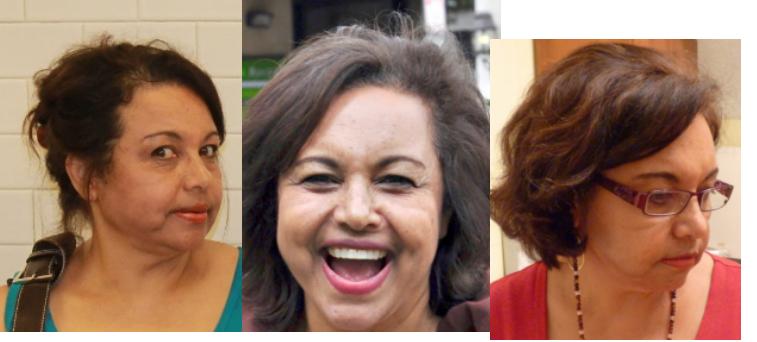
On throwback Thursday I have great pleasure in introducing you to a fellow memoirist, Jennifer Graham. Hair as many of you know is a feature that I have a lot of and have posted about on several occasions. Jennifer has some interesting additions to this subject and I would now like to welcome her – my very first guest blogger.
Guest Blogger, Jennifer B. Graham blogs about hair.
I’ve never liked my hair. Since a child I coveted girls at my school who were blessed with long sleek tresses. I have curly, frizzy hair that looks pretty decent when it’s been coiffed – blow dried, ironed, dyed, rolled, tugged, pulled, swirled and even chemically abused.
You’d think hair is just hair, right? But, throughout the ages our manes have been used to define us racially, culturally and politically, While this blog is by no means exhaustive research on this subject, let’s do a surface exploration.
Definition and Brief History of Hair
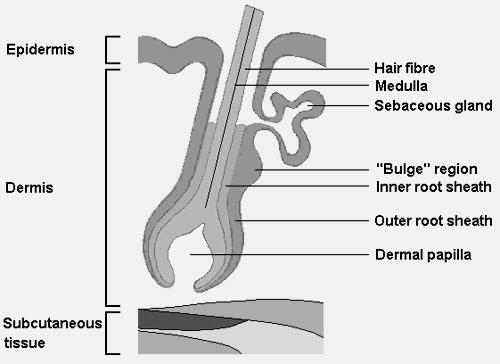
Dictionary.com defines hair as the “cylindrical, keratinous filaments growing from the skin of humans and animals – a pilus.” By why throughout history have our tresses always been an issue in terms of defining human worth? Since time immemorial, especially for females, those “cylindrical, keratinous filaments” have been a perceived cultural and sociological problem.
European cultures, steeped in medieval and mythological beliefs, perpetuated negative stereotypes regarding red heads and blondes – red heads being temperamental and blondes, dumb. In her thesis, Brina Hargro, writes about prejudice an enclave of red-headed Irish immigrants to America encountered around the turn of the 20th century. They were essentially relegated to menial labour. They were taunted by the locals and branded as the “red headed devil.” Being Irish and red-headed denoted being “fresh off the boat,” squalid, poor and ignorant. (Hair Matters: African American Women and the Natural Hair Asthetic by Brina Hargo of Georgia State University 2011)
The next generation of the small enclave, Hargro explains disassociated themselves from these stereotypes. “They wanted to appear less Irish and gain the same opportunities as the city’s non-Irish.” Dyeing their hair either blond or brunette became fashionable and with it gave them an air of sophistication and confidence. Changing their hair colour proved to be only cosmetic change, because now they were branded as “the dyed and non-dyed.” http://bit.ly/1BEz8sy
The Politicizing of Hair
No where else is the world was there such an obsession with how hair defined a person than under South Africa’s former apartheid regime. Straight hair could equal white. Kroes (kinky or coiled) hair definitely equaled non-white. Under the Race Classification Act, the government made provision for people to appeal their classification. For starters you had to be a very light-skinned “Coloured” to stand a chance.
One of the criteria was the “pencil test.” This involved an official inserting pencil into your hair to see whether it was kinky enough to hold the pencil when you bent forward. If it fell out, lucky you, you could be on your way to being white. If it stuck, unlucky you. You were back to where you started. You’re scratching your head in disbelief, right? Believe me, under apartheid extraordinary things happened.
You can well understand for me as a teenager growing up in South Africa in the 1970s, smooth hair was a preoccupation, something seared into my psyche. At school the girls with the long sleek hair were picked as marching majorettes, representing their schools at the inter-school mini-Olympic track meets.
If you had a kroeskop (kinky hair) you didn’t have a prayer. Forget about entering any beauty pageant – forget about entering anything if you had kinky hair. So the name of the game was do whatever it takes to straighten your hair – ironing, swirling and when all else failed, the WellaStrate treatment. These weren’t simple fixes. They were all-day productions. Girls would even turn down dates to work on their hair. Ironing (on an ironing board if your hair was long enough) was the quickest method but it wasn’t for everyone.
On top of that, it was weather dependent. Only girls with long hair could iron and if the weather was damp and foggy, then forget it. Ironing required laying brown paper over your long hair and smoothing it with a clothes iron.
Swirling was the most popular method and wasn’t as weather dependent as ironing. You washed your hair, rolled it in curlers, let it dry and brushed it out. Using the leg of discarded pantyhose, you pulled it over your head, bank robber style, turning it in a swirling motion around the head.Then you let it be. The longer you kept the stocking on, the smoother the result. It wasn’t a pretty sight, but it did the job.
By the early 1970s the Wella brand came out with WellaStrate for girl with very kroes koppe. The stuff stank of rotten eggs when applied – a smelly business, but it made those girls happy. Even when the Afro style was trendy, straightened hair was still preferable.
Good Hair, Bad Hair in America
In the United States, like South Africa, in the black female culture, hair is not only a big deal, but big business. So much so, comedian, Chris Rock was persuaded to make a documentary, Good Hair, after his little daughter asked him, “Daddy, how come I don’t have good hair?”
In his film, Rock poses these questions,
“How do we decide what good hair is?”
“What feeds this hair machine?”
The answer? The city of Atlanta, Georgia, “where all major black decisions are made.” Who feeds the hair machine? Bronner Bros Co. Inc. Twice a year for over for over sixty years this family business has hosted their impressive hair shows with over 120,000 hair professionals in attendance, 28 main hotels reserved exclusively and over 60 million US dollars pumped into the Atlanta economy.
“Good Hair is good business,” Bernard Bronner, the company president and CEO, tells Rock on camera. Blacks make up 12 percent of the population but buy 80 percent of the hair and products, according to Bronner. “All I know is we spend a ton of money on our hair. No matter what, we’re gonna look good,” he quipped.
Actress Raven Symone, who participated in Good Hair, told Black Tree TV, when interviewed, that she was “okay” about speaking about her wearing a hair weave. “The reason I feel that way is because underneath it all I’m confident in my own personal hair. My hair is not me, I am me,” said Symone, who first appeared on television, in 1989, on The Cosby Show as Olivia Kendall.
“What is your definition of good hair?” Rock asks a young woman. She replies, “Within the black community, if you have good hair, you’re [perceived] as prettier or better than other women. The lighter, the brighter, the better.”
Rock also does an in-depth investigation into the hair straightening industry with startling revelations. “So your hair is addicted to the relaxer,” he asks to a teenaged girl.
“Creamy crack,” she replies unabashedly.
Inevitably time brings change. Taboos and stigmas associated with hair have waned considerably. Today, thankfully, the way you choose to wear your hair is not such a big deal anymore. Like, Raven Symone, I’m learning to be okay with my own hair but nowadays with it thinning with age, it needs a bit of enhancement with wigs and hair pieces, certainly not because I’m ashamed of my natural hair, but to be able to wear fun and fashionable styles. I’m not ready for the old lady Jheri Curl look to which my hair, left to its natural bent, tends to gravitate.
Bio: Jennifer B. Graham is a self-proclaimed global nomad who began life in South Africa, left when she was 19 and since then hasn’t looked back. She’s also lived in England, Canada, USA and New Zealand.
After earning her degree in communication/print journalism from the University of Mobile, Alabama, USA in 2001, she wrote freelance feature articles on topics such as food, health, travel and profiles for miscellaneous publications that include Destinations, Connections, The Press, The Citizen, The Fairhope Courier as well as Triond.com.
Jennifer is a member of the Writers’ Community of Durham Region. An Immoral Proposal is her first book. She lives with her husband near Toronto, Canada. Her five grandchildren split between the USA and Canada keep her happily wandering.
(2 photos)We have recently become involved in NFA – Noosa Federation of Arts a group whose aim is to bring world-class cultural events to Noosa at an affordable price, to sponsor ($30,000) the Dame Joan Sutherland Award which gives opportunities to rising opera singers of further singing education overseas, sponsoring the Rick Farbach Jazz scholarship and they also have a range of musical instruments available for young folk to learn on who would not otherwise have been able to afford the instrument.
The night pictured here is an event raising the funds to pay for these activities. After a scrumptious two course meal and glass of wine at Berados restaurant, the lights were turned off, spot lights turned on and Roger turned his chair to face the piano. We were entertained to an evening of opera. Front row seats (I was in the second row as I was opposite on the table but still closer than close). What a joy to hear.
The singers were the winner of the Dame Joan Sutherland Award mezzo-soprano Jade Moffat, soprano Petah Chapman and baritone Samuel Piper. accompanying them on the grand piano was Leanne Warne. These are all names I’m sure we’ll be hearing more of.
I don’t know whether these were a mistake as I don’t remember taking them. Sometimes I practice taking macros using Zack as subject but I feel this pair of photos was me clicking the button with the camera pointed to the ground. I have more cement path photos than anyone I know. All accidents.
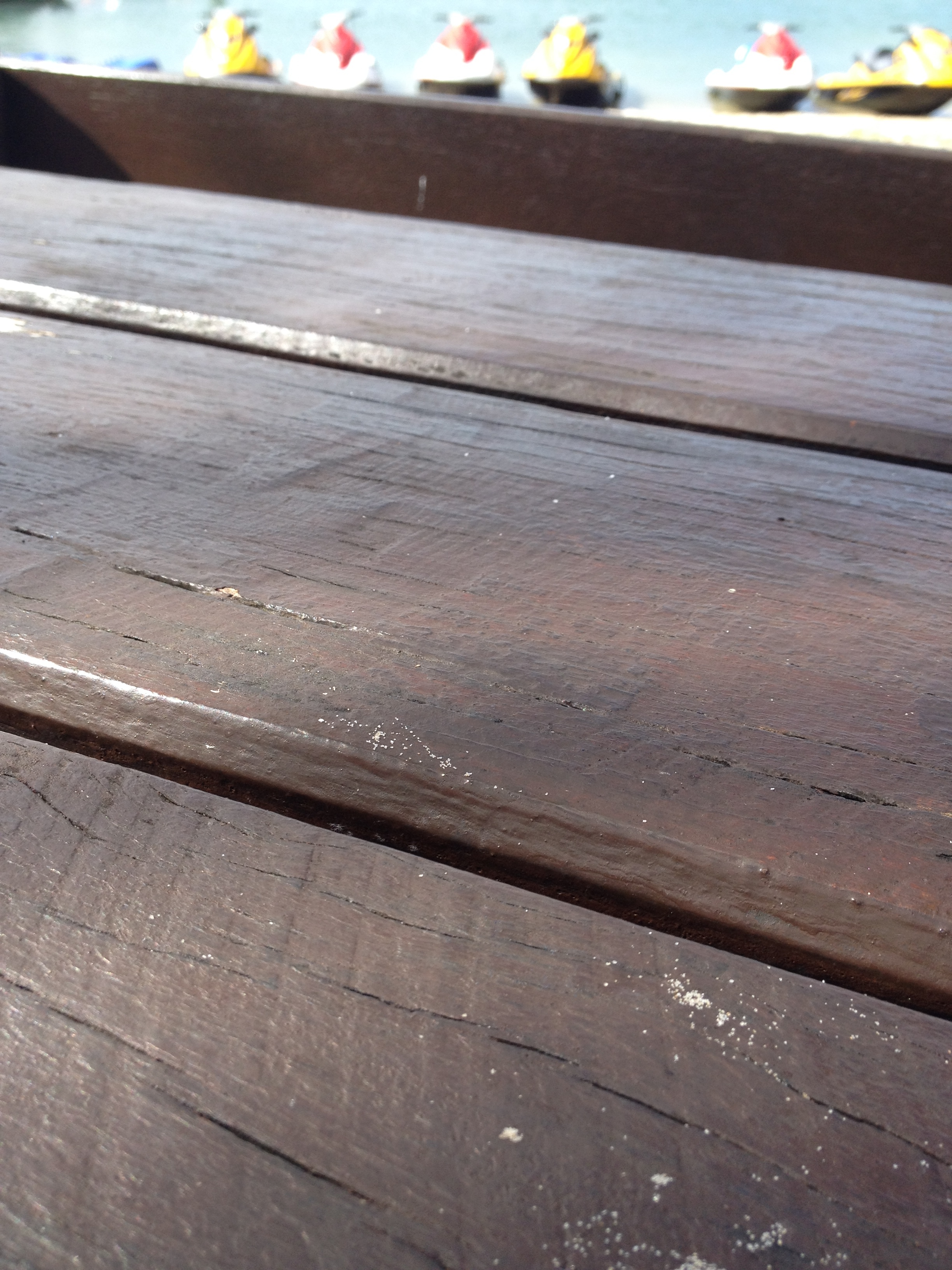
This puzzled me for awhile. Did I lie on the board walk to take this photo. I knew I hadn’t. It is simply too hard to get up from that position these days. The next photo explained it.
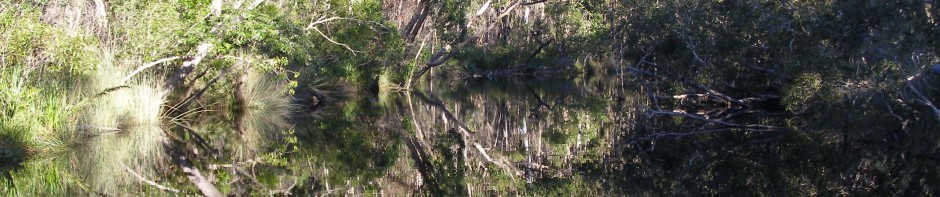
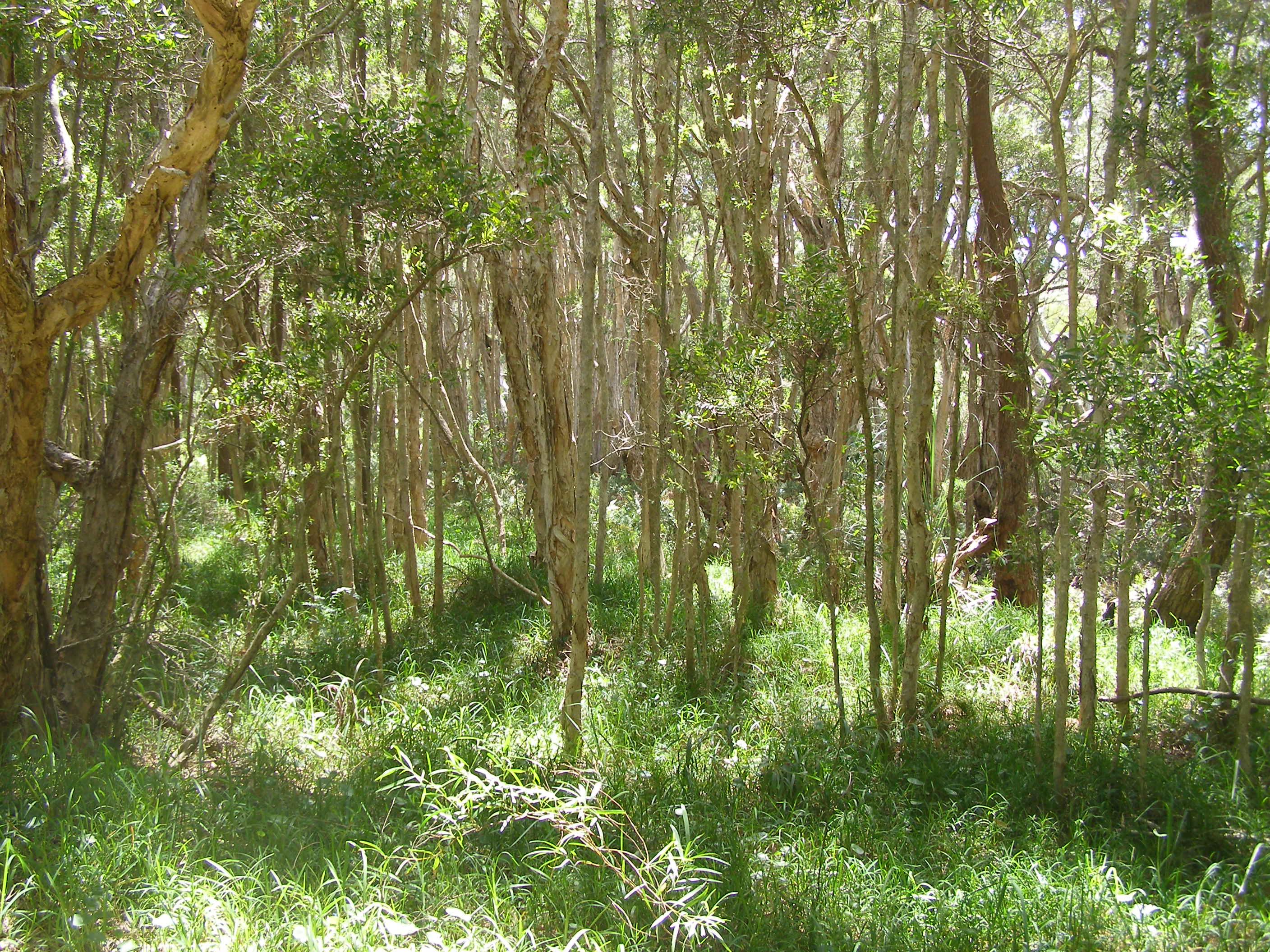
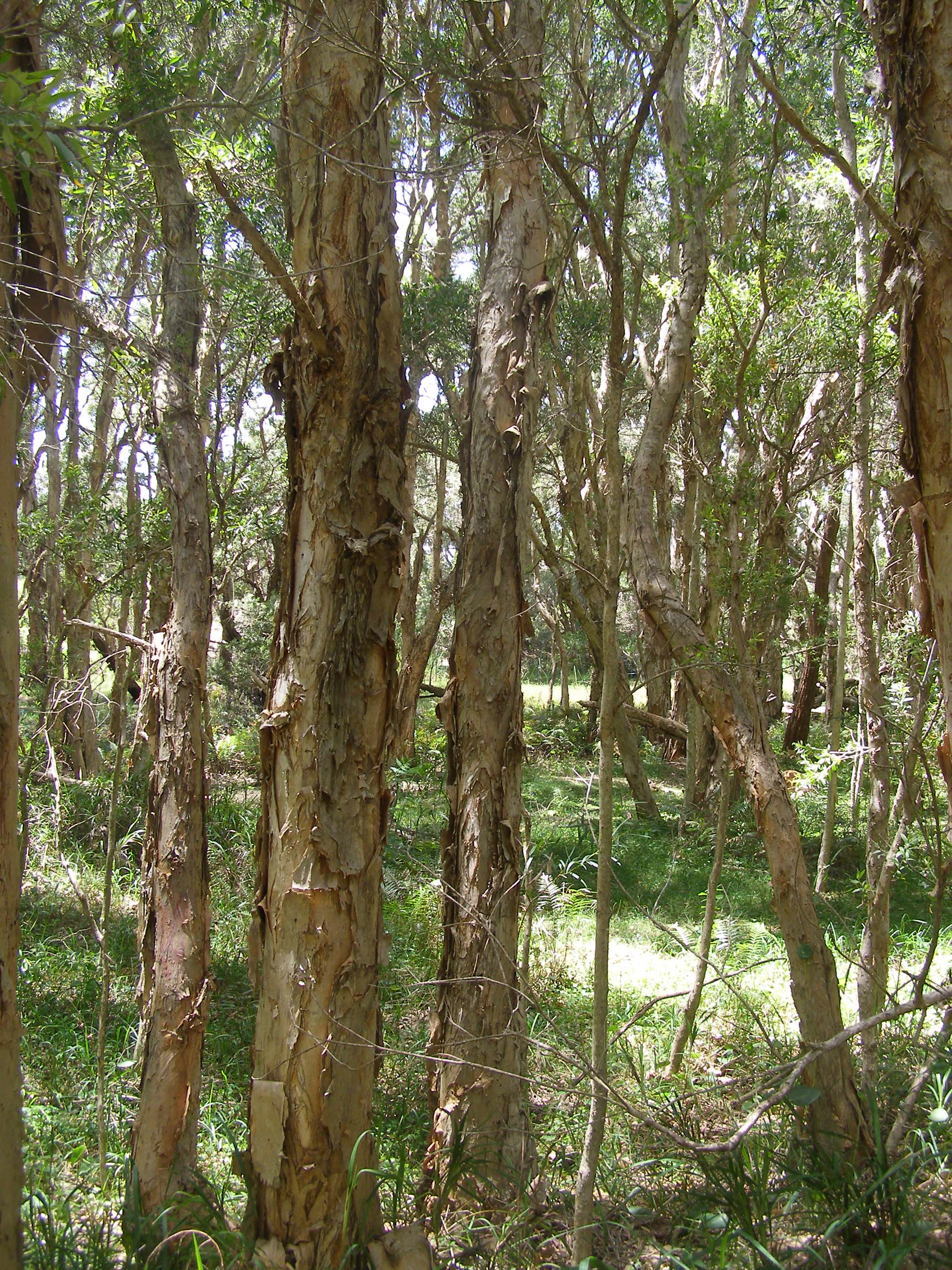
Melaleuca have over 200 different species in the family of which most are endemic to Australia. There are three main types – the tea trees whose roots colour any nearby water brown. As a kid we used to swim at Lake Ainsley at Lennox Head and everyone would be there with their shampoo washing their hair. The tea tree was great for softening the hair.
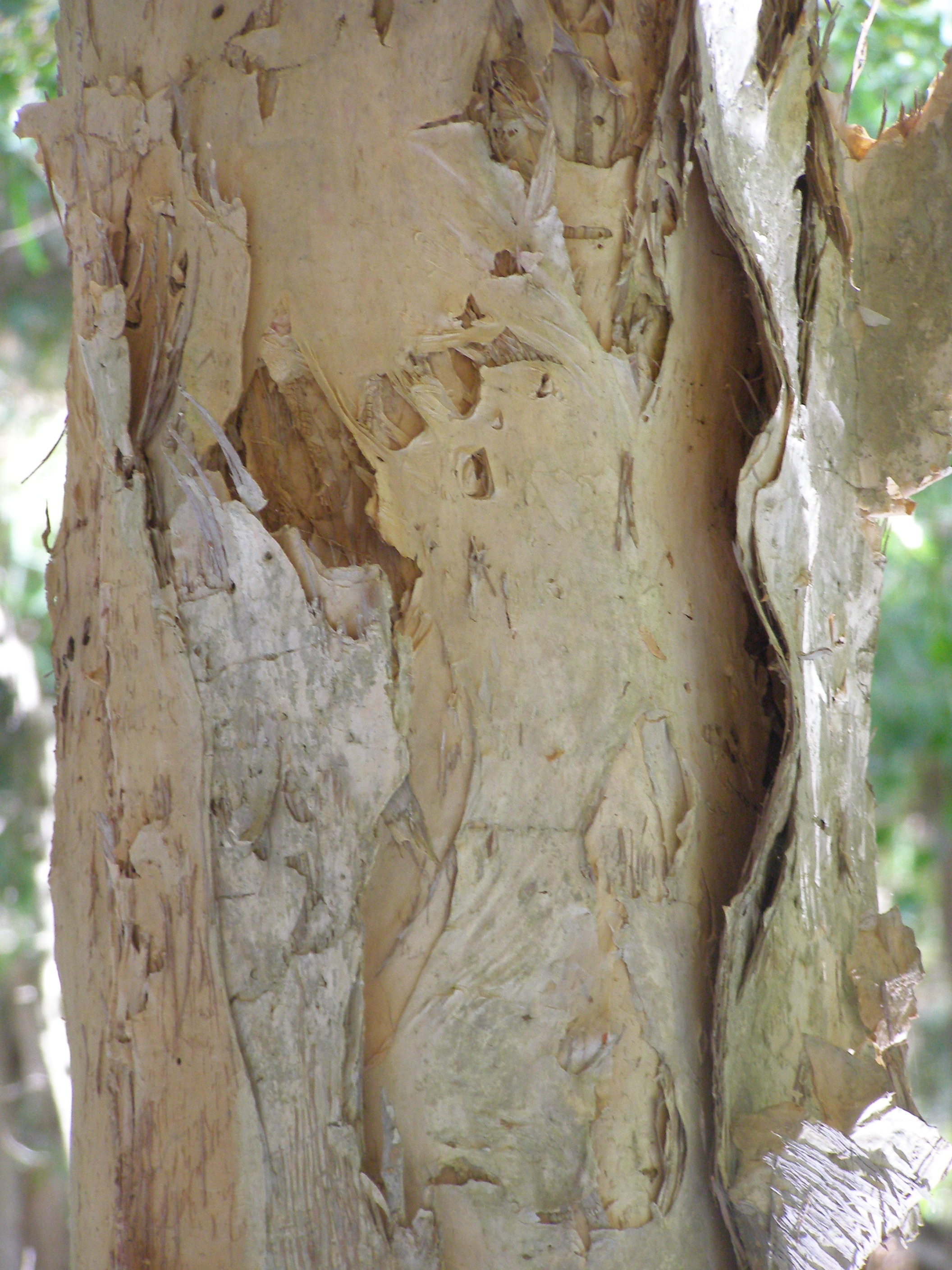
Honey myrtles are a smaller variety but very common whilst the paper barks are known for the bark which comes off in sheets. This is a tree that you feel like hugging the bark has such a soft texture.
The paperbarks are well known for thriving in wet areas and suck up swamp water. One species was imported to Florida to help drain swamp lands and as happens when you move things to where they shouldn’t be (prickly pear, rabbit, possum in NZ to name a few) the paperbarks are now declared a noxious pest having not only quadrupled in number in ten years but also pose a huge fire risk as they are highly flammable.
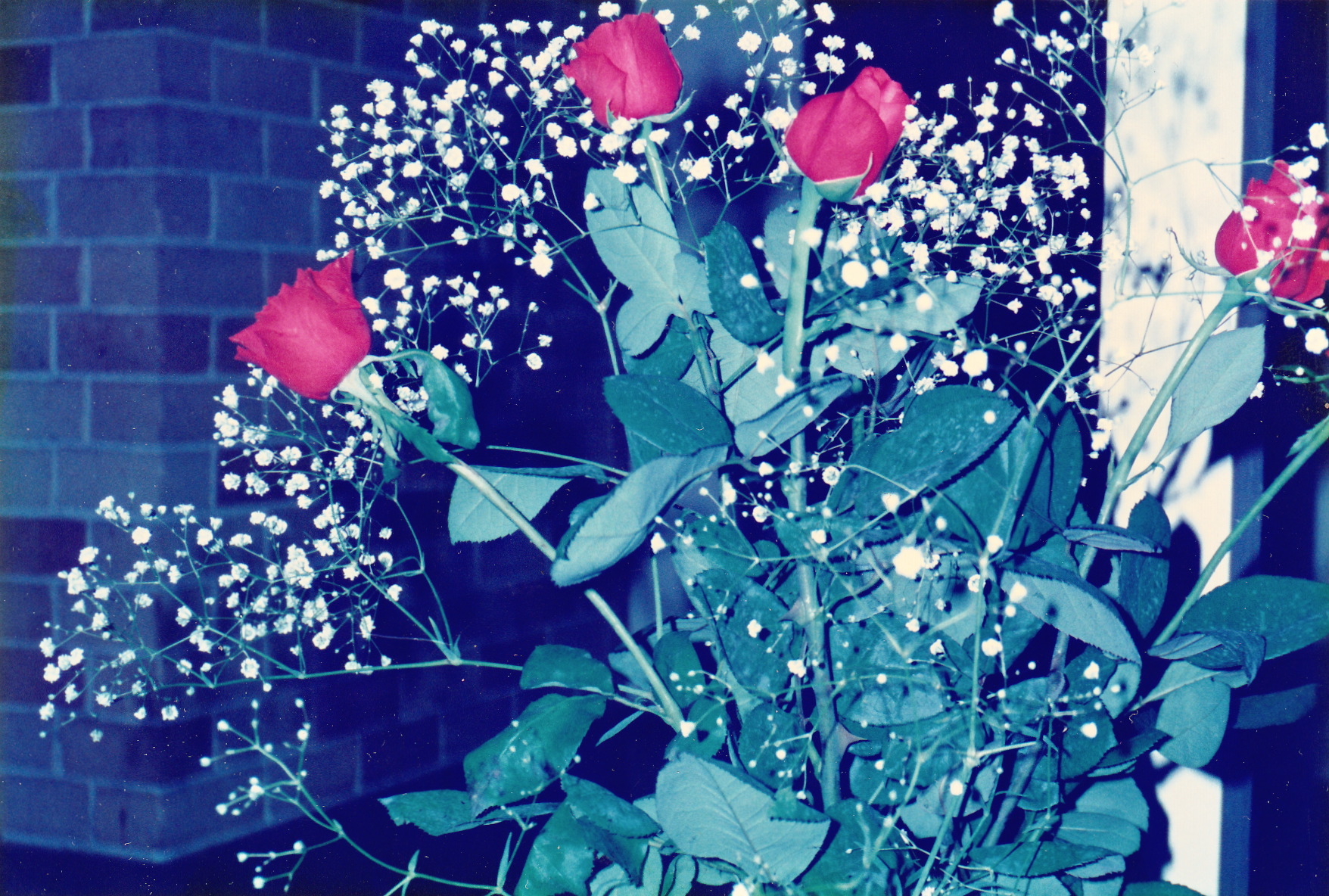
The florist delivered more buds. Listlessly she read the attached card, these from a childhood friend of his. Not many had known him from birth. This was close. Happier times. They’d have better memories than her. The career failure, withdrawal, excessive drinking, anger. How that anger had hurt her. And him. His abuse caused his body to fail. The dementia that came and left him needing care. Those final hours as he battled for breath, his legs and face both purple.
Now the flowers arrived. A sick joke. She preferred the cards. Flowers, like him, buds one day then dead.
January 14, 2015 prompt: In 99 words (no more, no less) write a life span. It can a life of a person as if flashing by or the life of a honey bee. What key elements would show a lifetime in brevity? Does it add to a character’s development or create tension? What is the emotion or is it void?
Respond by January 13, 2015 to be included in the weekly compilation. Rules are here.
I began my working career as a reluctant potato peeler whilst waiting to commence my training as a student nurse. On completion I worked mainly in intensive care/coronary care; finishing my hospital career as clinical nurse educator in intensive care. A life changing period as a resort owner/manager on the island of Tanna in Vanuatu was followed by recovery time as a farmer at Bucca Wauka. Having discovered I was no farmer and vowing never again to own an animal bigger than myself I took on the Barrington General Store. Here we also ran a five star restaurant. Working the shop of a day 7am - 6pm followed by the restaurant until late was surprisingly more stressful than Tanna. On the sale we decided to retire and renovate our house with the help of a builder friend. Now believing we knew everything about building we set to constructing our own house. Just finished a coal mine decided to set up in our backyard. Definitely time to retire we moved to Queensland. I had been writing a manuscript for some time. In the desire to complete this I enrolled in a post grad certificate in creative Industries which I completed 2013. I followed this by doing a Master of Arts by research graduating in 2017. Now I live to write and write to live.