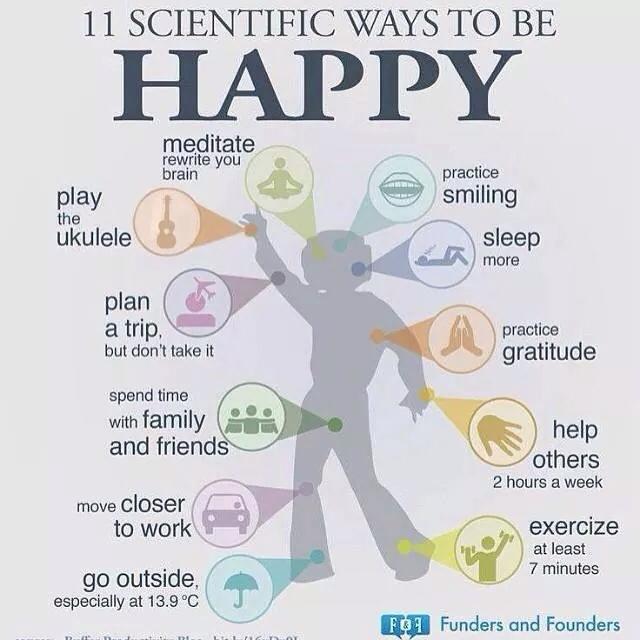
Happiness is essential for well-being and is recognised by the United Nations as being essential for our well-being although our society has increasingly developed a lifestyle which is isolating to people . Money and Possessions don’t make people happy. It is their connectedness to other people.
Some good tips are given in the happiness pack which I am sharing before looking at one problem — drug addiction.
People will forget what you said, people will forget what you did, but people will never forget how you made them feel.
__ Maya Angelou
Ten Ways to Make yourself Happy – a GREAT DREAM and easy to remember.
Give, Relate, exercise, Appreciate the world around you, Try out new things
Direction (having purpose), Resilience, Emotion, Acceptance (of yourself), Meaning (be part of a community)
Today Take Some Action:
Do something kind for others
Volunteer your time, energy or skills
Get to know neighbours better
Understand each other’s Needs
Look for the good in those around you
I have written posts on Happiness here and here and here but today I’m going to write on something that we could do to make a difference to not only one sector of society but I would argue to society in general. That is how we deal with our growing drug problem. I read an article (sadly I neither remember where or what the article was called as I would like to reference this) where the sentiments expressed I have not forgotten and I’d like to pass on to you on International Happiness Day a way forward into the future.
It is now over 100 years since drugs were first legislated against. We’ve been waging a war against them ever since and we are now informed by the United Nations that over 200,000 people die each year from drug addiction. World Health Organisation has predicted that this will only increase as the developing world takes on a more and more western style society. What can we do to stem this tide of meaningless deaths and the associated cost to society. Is our current strategy that is obviously not working the right strategy? The question we need to ask is “What causes drug addiction to start?”
This is easy to answer for of course the answer is drugs. Take drugs for a number of days and the chemical hooks of the drug will grab you and, if you try to stop you will have cravings and you would be addicted.
This was shown to be true in an experiment carried out on rats in the sixties. A rat was put in a cage with two water choices. One pure water and the other water laced with drugs. The results were that ninety percent of the rats tested drank the drugged water until they died. This experiment was used for years to show the dangers of drug taking.
In the seventies another scientist Bruce Alexander saw flaws in this experiment and set up his own. He had noticed that life in the rat cage was solitary and boring. He set up Alexander Rat Park where the rats had playmates, items to play with, stimulation and the best food possible in addition to the two choices of water. He found that although the rats tried the drugged water their life was too good and they shunned it, consuming less than a quarter of the drug than the isolated lonely rats.
At the same time there was an equivalent although unintentional human experiment occurring. The Vietnam War. It was feared that the 20% of American soldiers who became heroin addicts whilst stationed in Vietnam would pose a huge public health risk on their return to America. This proved not so. 95% without rehab shed their addiction on their return. They had left the bad cage for the good cage and no longer wanted the drugs.
Alexander went on to run further experiments. He isolated a rat in the boring cage and after an addiction of 57 days replaced it in the good cage to find that after minor withdrawal symptoms the rats no longer chose the drugs and returned to a normal life. He concluded that it is not the brain being chemically addicted but rather which cage you find yourself in as to whether you will suffer with addiction or not. A good cage can save you.
This can be seen too by the medical use of pain killers. A patient may be given drugs for several months and on return home they don’t carry an addiction with them and go out trying to buy the drug illicitly. They return to their life. This is in comparison to a street user who will be addicted in much less time.
This has huge implications for addiction generally. A psychologist, Professor Cohen says we all need to bond and form connections. If we can’t connect we will connect with drugs or a poker machine.
The solution therefore is not to wage a war against drugs. Rather it is to offer human connection to the addicted person. I can hear you saying “but the chemical hooks?” Where I ask you are the chemical hooks in a poker machine or a roulette wheel, in a dog or horse race? Why do only a small percentage of smokers manage to give up cigarettes despite supplying the chemical in the form of patches?
It is time that we rethink our treatment of drug addiction. Forget putting people in jail (the bad rat cage) but rather aim treatment at reforming human connection. We need to ensure affordable housing, and jobs to give back purpose to their lives. We need to be warm and welcoming. Portugal who has decriminalized drugs has seen after an initial slight rise a decrease of around 50% in drug use.
It won’t be easy. Firstly, the politicians need to be convinced. For them to be convinced we have to change our attitudes. We have to open our hearts and learn to love those addicted, working to social reform. That is their only hope and possibly the only hope of society generally as we live in a more and more isolated environment. Forget the war on drugs. Instead of chanting war songs, lets sing the songs of love.
# international happiness Day