Unaware of the steps his momentum sent him flying through the air, arms and legs akimbo. The letter he’d been reading floating gently in the breeze behind him. His thoughts were those of a drowning man. This is what it feels like to fly? First his childhood, then the small amount of adulthood he’d experienced. Should have told Alison I love her. Should have written a will. A bellyflop onto concrete that’ll hurt.
He landed hard. He momentarily felt like Humpty Dumpty before all thought left him.
Alison screamed. “Don’t die. Not when you’ve just inherited and can live.”
August 13, 2020, prompt: In 99 words (no more, no less), write a story about a first flight. It can be anything or anyone that flies. What is significant about the first? Go where the prompt leads!
Respond by August 18, 2020. Use the comment section below to share, read, and be social. You may leave a link, pingback, or story in the comments. If you want to be published in the weekly collection, please use the form. Rules & Guidelines.
Love in the Time of Cholera by Gabriel Garcia Marquez is the story of three people. Florentino Ariza who as a teenager sees Fermina Daza, falls in love and decides he will marry her. He is a poet and spends hours writing to Fermina who eventually believes herself to be in love with him. Her Father does not approve and removes Fermina taking a trip to his home country. Unknown to him they maintain a correspondence and agree to be married. On her return Fermina takes one look at Ariza and decides that he is not the man for her and marries a doctor Juvenal Urbino. This leaves Ariza heartbroken but determined that one day she would be his as Urbino was eleven years older than Fermina. Although he keeps his heart for Fermina his body is shared around 655 women in all sorts of ways enabling an examination of different types of love from a mother’s love to perverted love in the extreme. We would classify him as a stalker as he watched Fermina from afar, and at closer quarters as she lived her life with her husband and children.
The characters are extremely well drawn although I didn’t find any of them likeable; Ariza I positively abhored. The story spanned three people’s lifespans in a culture that was quite foreign to me. It was set somewhere in the Carribean. Marquez himself is a Columbian. I found the names difficult to follow as to my eye they were unfamilair names and therefore similarly sounding to my ear – this meant that I had to concentrate and often backtrack in the early stages to remind myself of who was who.
The writing was lyrical. Beautiful. However this also made it difficult to read as the dense narrative with its intricate language made it necessary to concentrate. The chapters were long (at one point on my kindle it told me the chapter was going to take me 2 hours + to read) with no passage breaks to make a natural stopping point. It meant that every time I halted I had to reread the last few pages to get back into the story. Despite this I wanted to read it. It just took me more time than a normal novel would take and it is one of the few books that I would consider reading again as I believe there was much that I didn’t take in on the first reading.
There were definite themes. Ageing being a big one. We go from teenager to into their eighties and it examines the changes that are wrought in that time, the perceptions others have to love when older and the difficulties that arise.
Another theme is love in all its forms and how what is seen isn’t necessarily what is the reality. My guess is the name of the book comes from the symptoms of love being similar to those of cholera but that may be too simplistic as I believe there is a lot of symbolism in this book that isn’t necessarily apparent on a first reading. The river, for example, is in my opinion, a metaphor for Aziza’s life. If you read it let me know what you think.
Would I recommend this book: Yes I would. It is quite different to anything I have read before (Joseph Conrad is the closest and strangely he was mentioned in it) and so beautifully written.
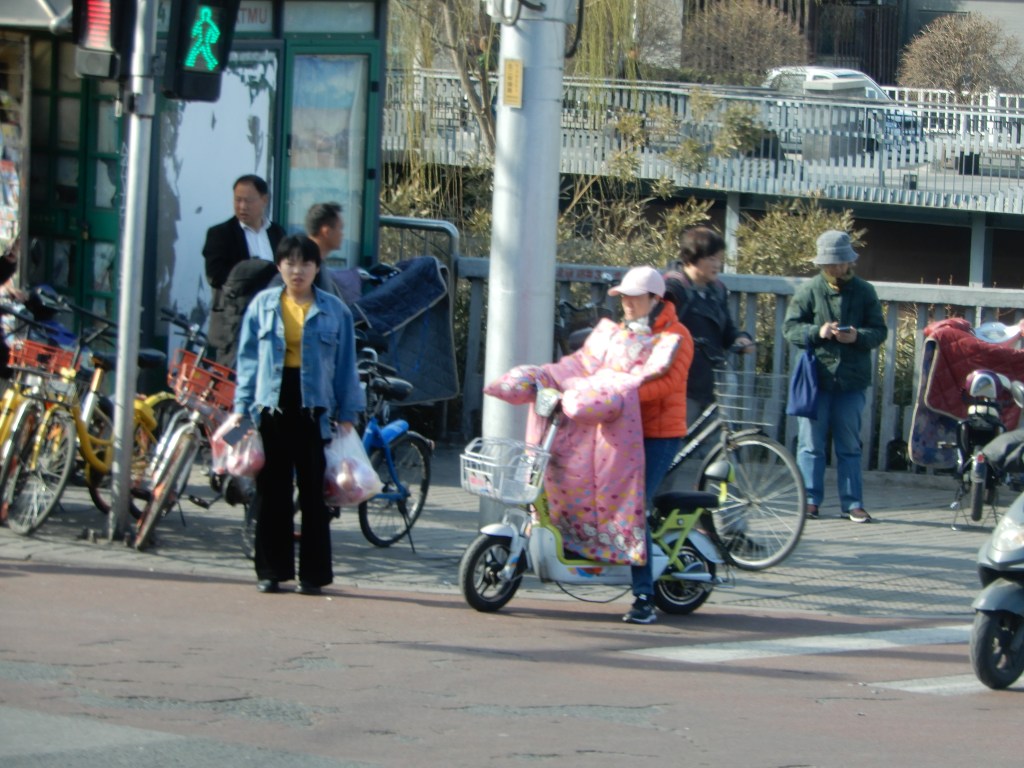
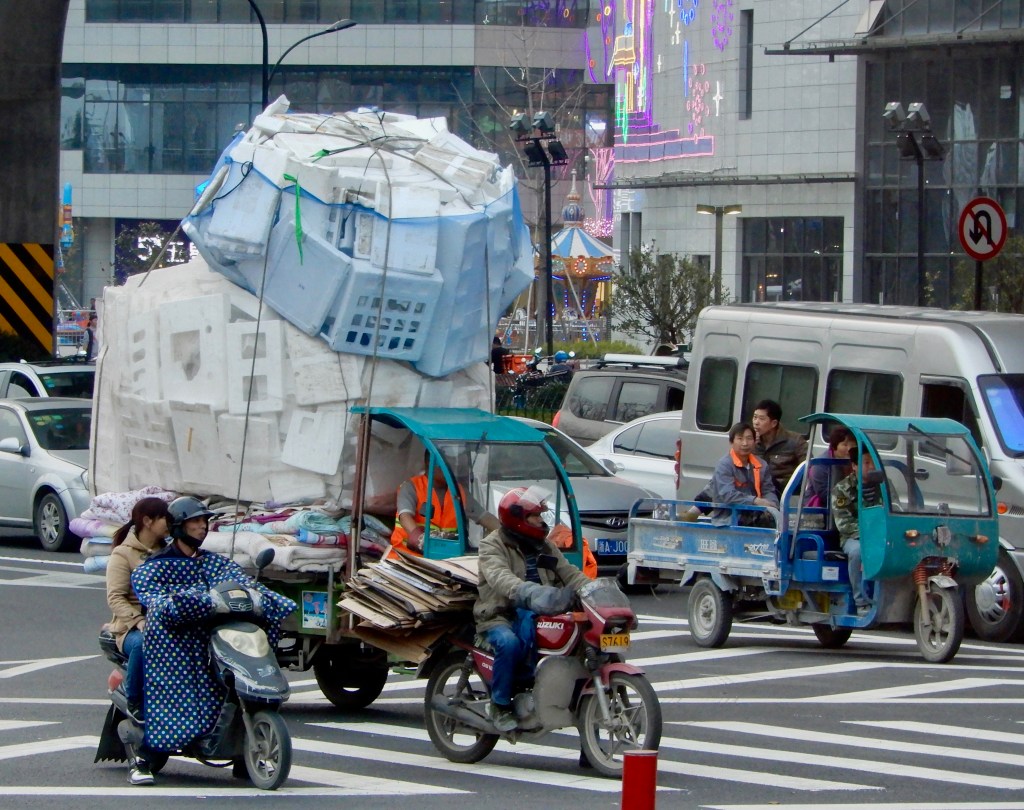
Another aspect of China that we found surprising was how few bicycles, and motorbikes there were. Predominantly the modes of transport were modern cars. All the motor scooters were electric and perhaps the lack of sound made those that were there a little more inconspicuous. Additionally, the motorcycles had their own lanes which were often removed from the general car lanes. When you saw them parked en masse you realised there were more than you were aware of.
and there was room after room filled to capacity in this underground parking area. Coming from a tropical climate and travelling in spring, I found it interesting how the bike riders kept their hands warm.
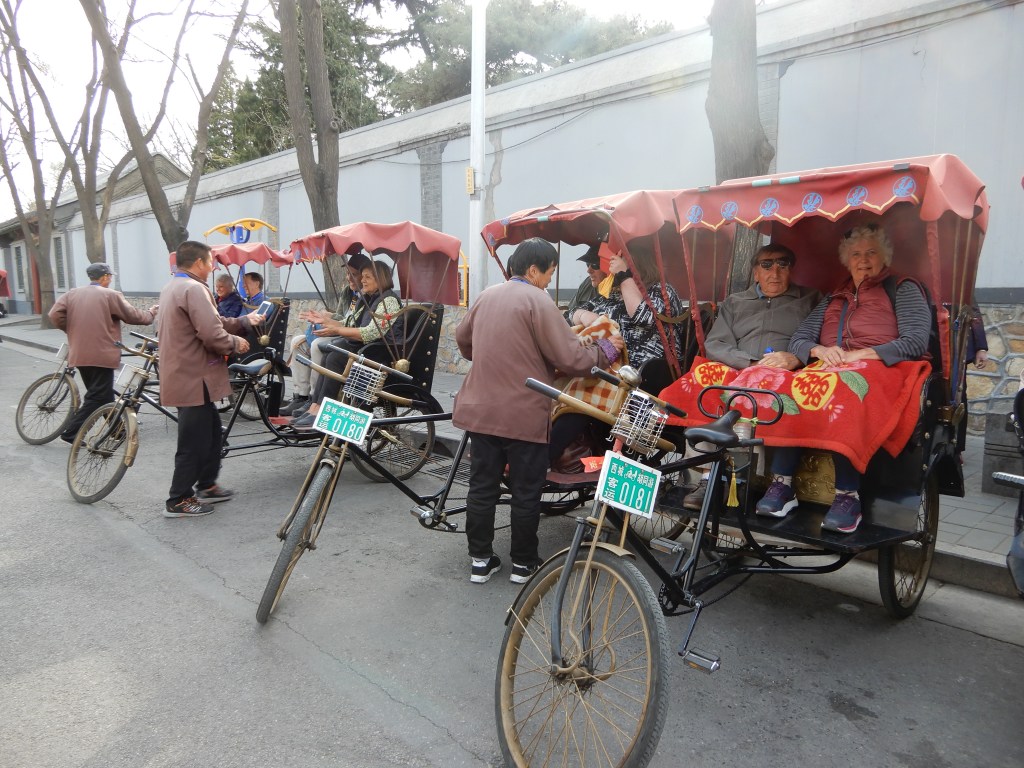
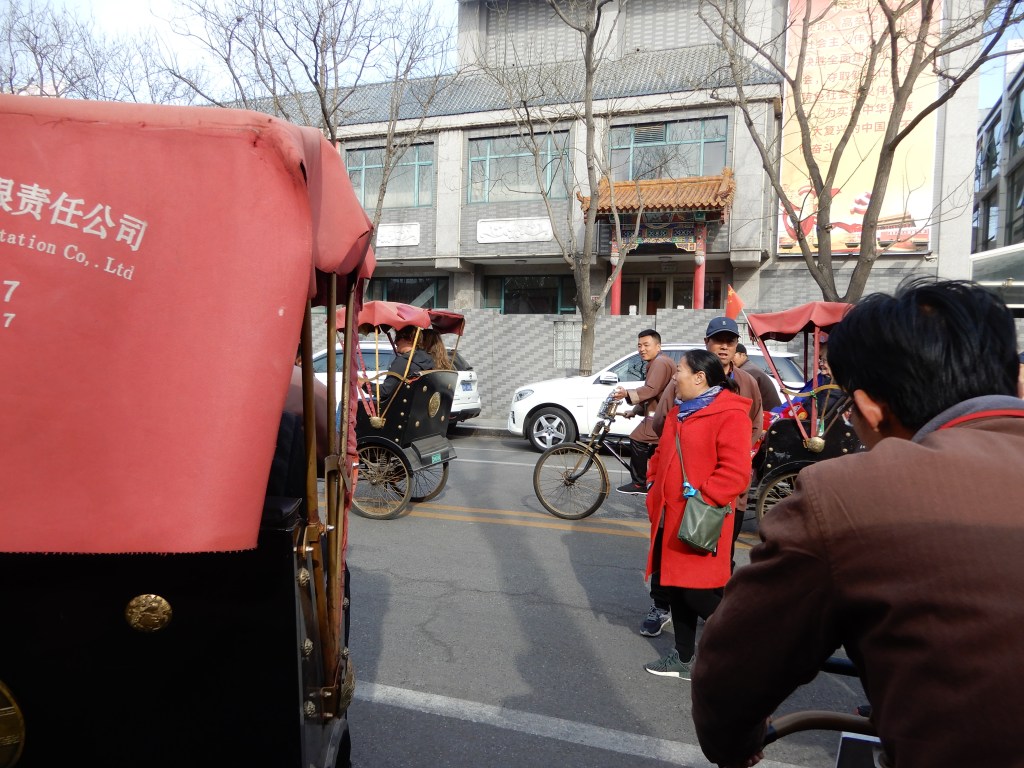
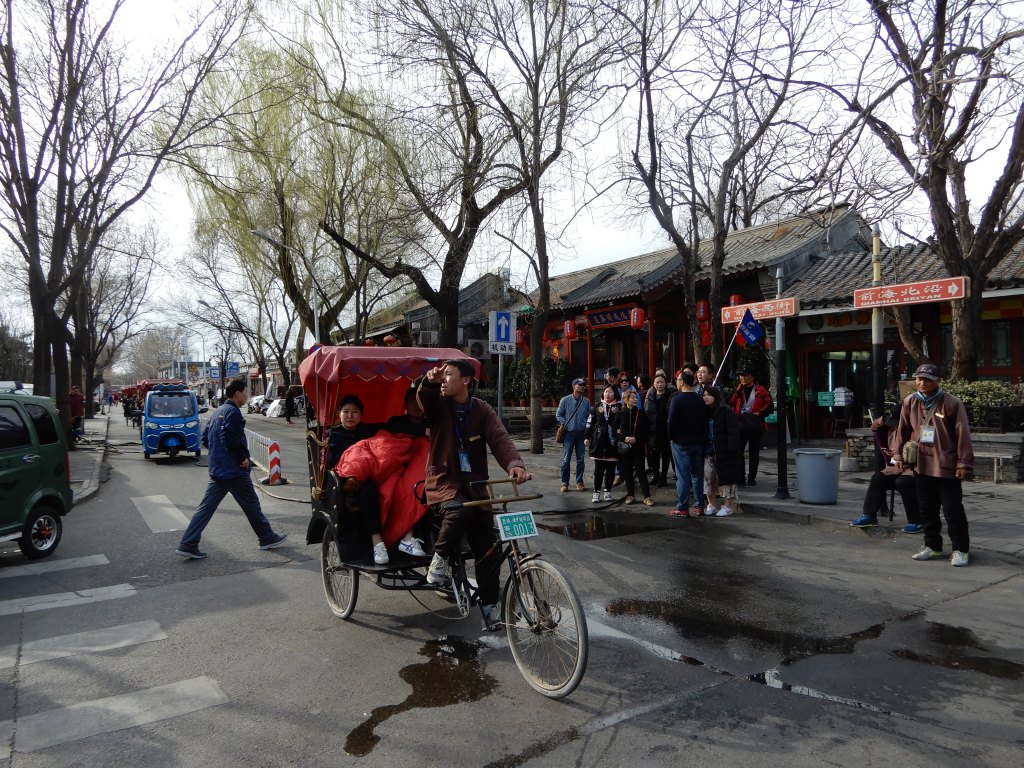
Bicycles were seen even less often although we were taken for a ride through the Hutongs (an old part of Beijing) on the modern equivalent of a rickshaw.
I did feel a little guilty at having someone pedal us around the narrow lanes of the Hutong but if it wasn’t for tourists these people might have little income and at least they weren’t pulling the rickshaw as they would have in bygone days and the experience was much better than the horse and carriage in Egypt.
Thanks to Cee for hosting Cee’s Fun Foto. Join in – its fun.
He guided his wife to the toilet block worrying about food poisoning. As he looked beads of perspiration dotted her brow and her crowning glory became wet and lank.
“Ahhhhhhhhhhhh!” His strong grip prevented her collapsing. He guided her into the first stall.
“Gosh it’s big. There’s a loo for everyone………..”
His wife moaned. “Feels like a ring of fire.”
“You’re Not pregnant?”
“No.”
He pushed her back and looked. “You’ve crowned. ” He caught the baby. “Who knew the family loos would be where we became a family. Let’s call her Glory”
July 30, 2020, prompt: In 99 words (no more, no less), write a story that uses the phrase “her crowning glory.” (Thanks to Anne Goodwin for the prompt idea.) It can be in the traditional sense of a woman’s hair or applied to any idea of a best attribute. What happens if you play with the meaning or gender? Go where the prompt leads!
Respond by August 4, 2020. Use the comment section below to share, read, and be social. You may leave a link, pingback, or story in the comments. If you want to be published in the weekly collection, please use the form. Rules & Guidelines.
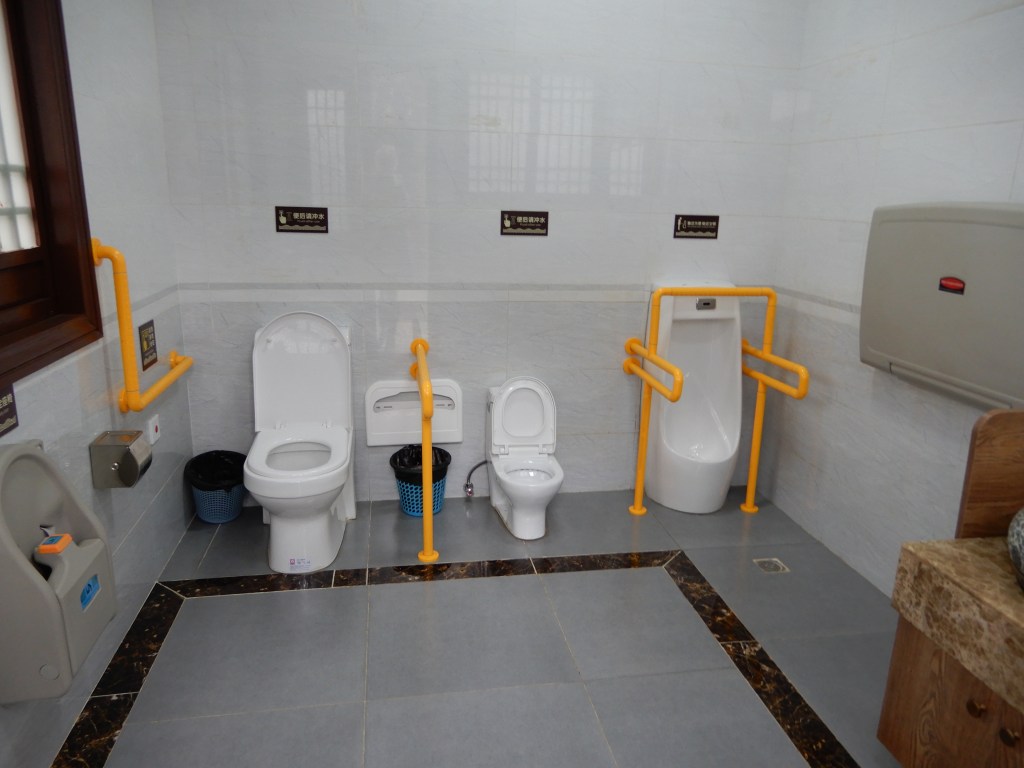
You may be wondering where the toilet came into it. Charli suggested that we set the story in an exotic background, in the loo… and the story was born. I had been taken with the family toilets that we came across in China. I had never seen anything like it in my travels to any other place. Naturally I photographed a selection. Toilets are something that I’m drawn to and I have posted about them in the past here and here and finally here. This toilet I was particuarly taken with because not only did it come with instructions, it also gave a philosophy on life.
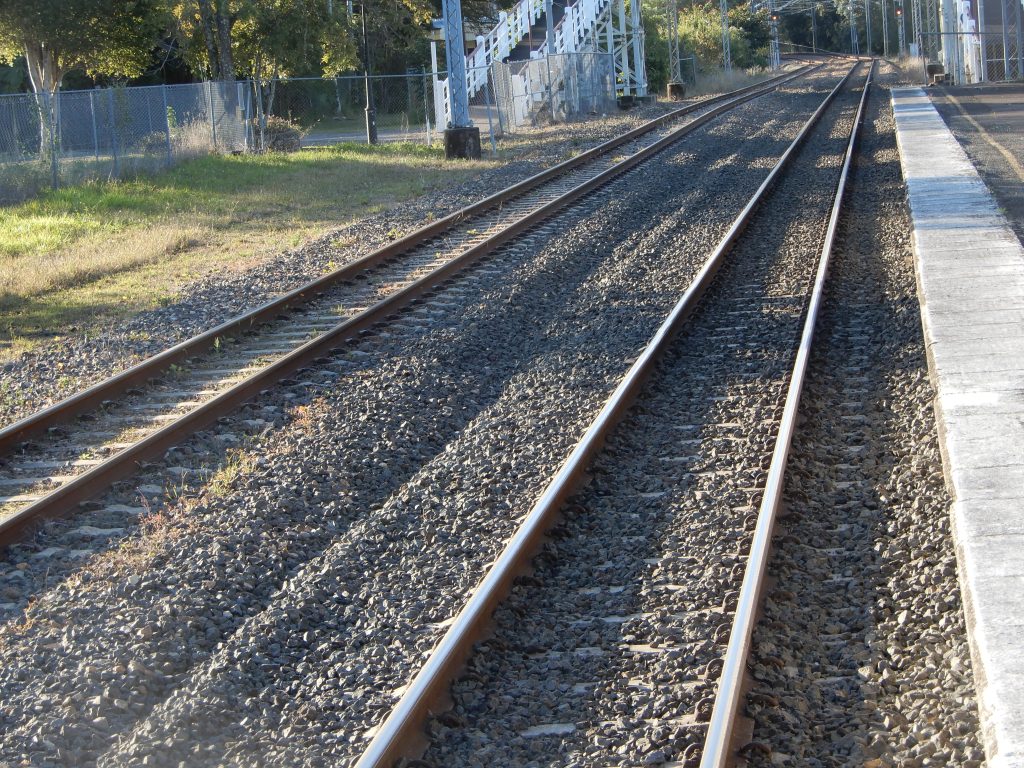
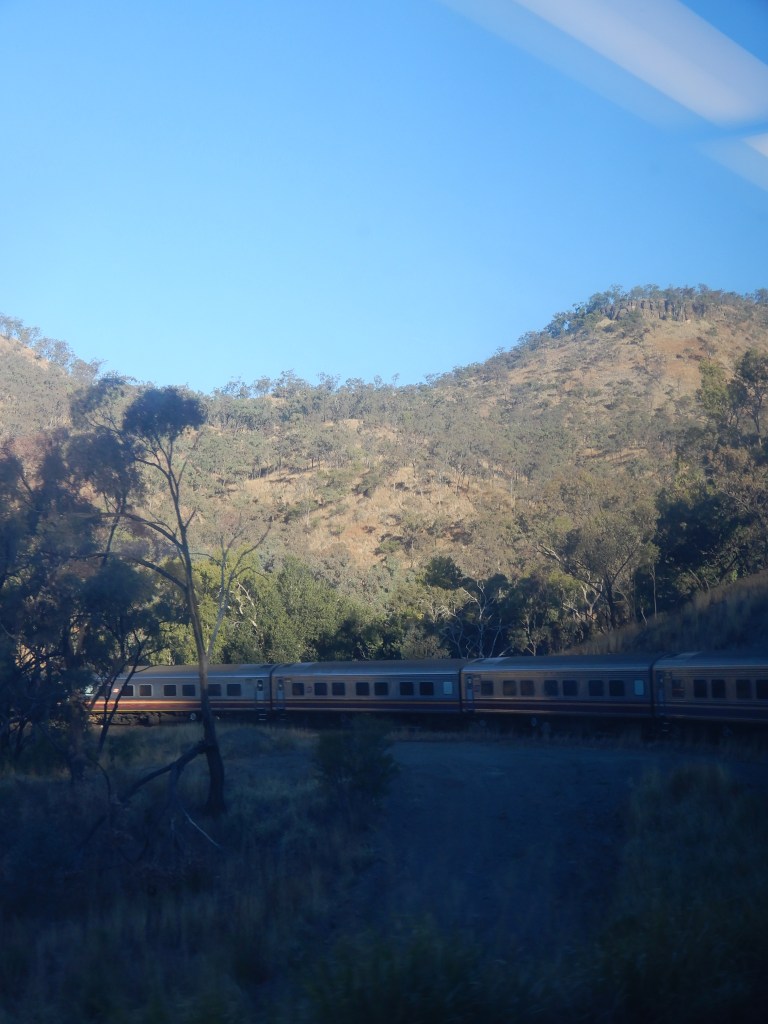
As an adult I have had three distinct train/railroad experiences. One at Dorrigo when I stumbled across a train museum, another in New Zealand when we went from Dunedin to Taieri Gorge an incredibly scenic journey. For today’s challenge I have the fortune of just returning from a train trip to Winton. Winton is in the far west of North Queensland, 1,325 kms by train from where we live. We decided to travel by economy class as it is part of Australia my husband has not experienced, it is steeped in dinosaur history and it was a place we could travel with COVID 19 restrictions.
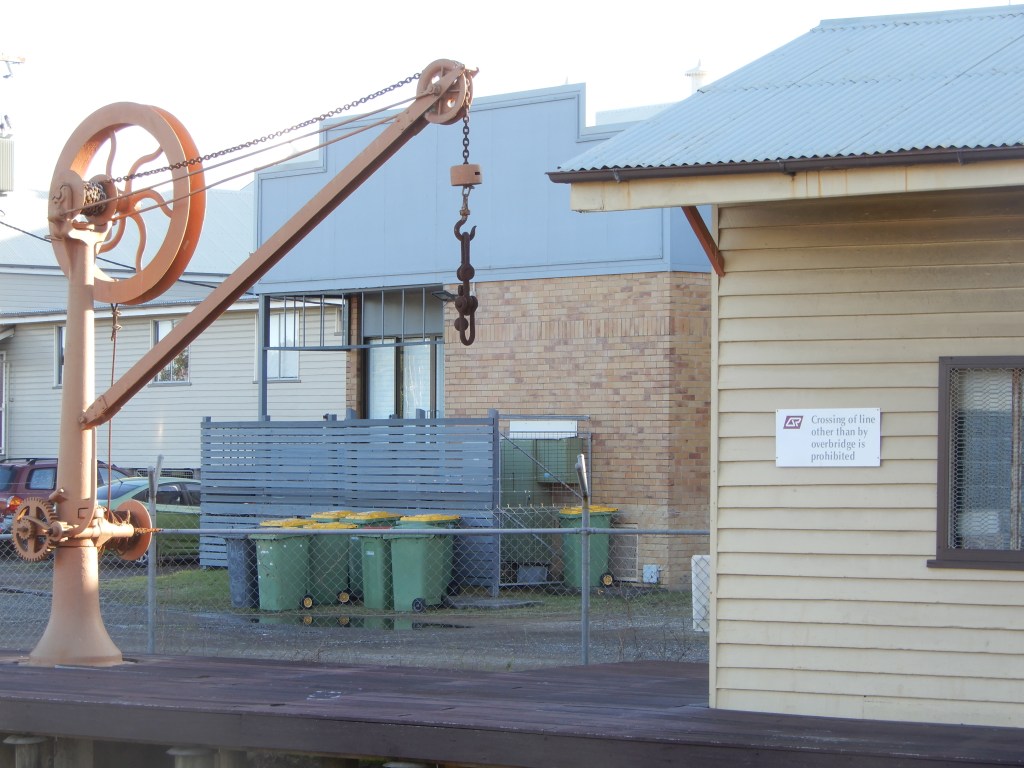
I was excited until I realised that the length of time we would be sitting up would be longer than a trip to Switzerland and that knocks us about. We hopped on at Cooroy late afternoon. Not 100% certain what the equipment on the platform was for – perhaps grabbing the mail bags or dropping coal in when the train was steam powered but I’m fairly certain it is no longer in use. As night fell we flashed past the odd light and then the odd town.
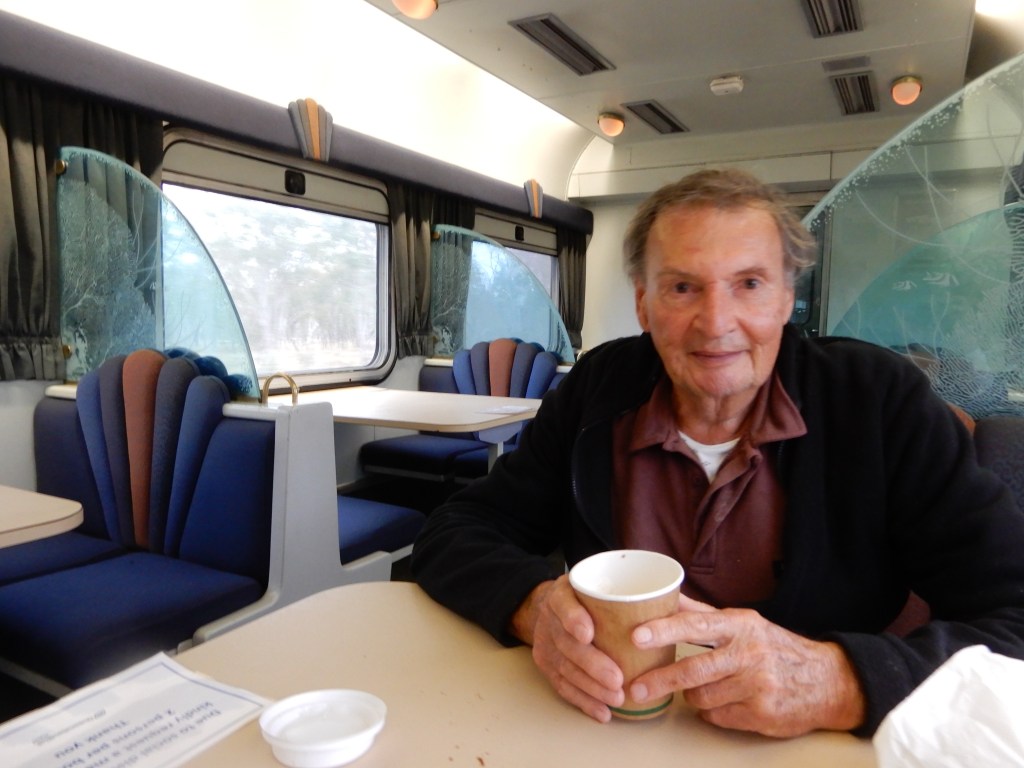
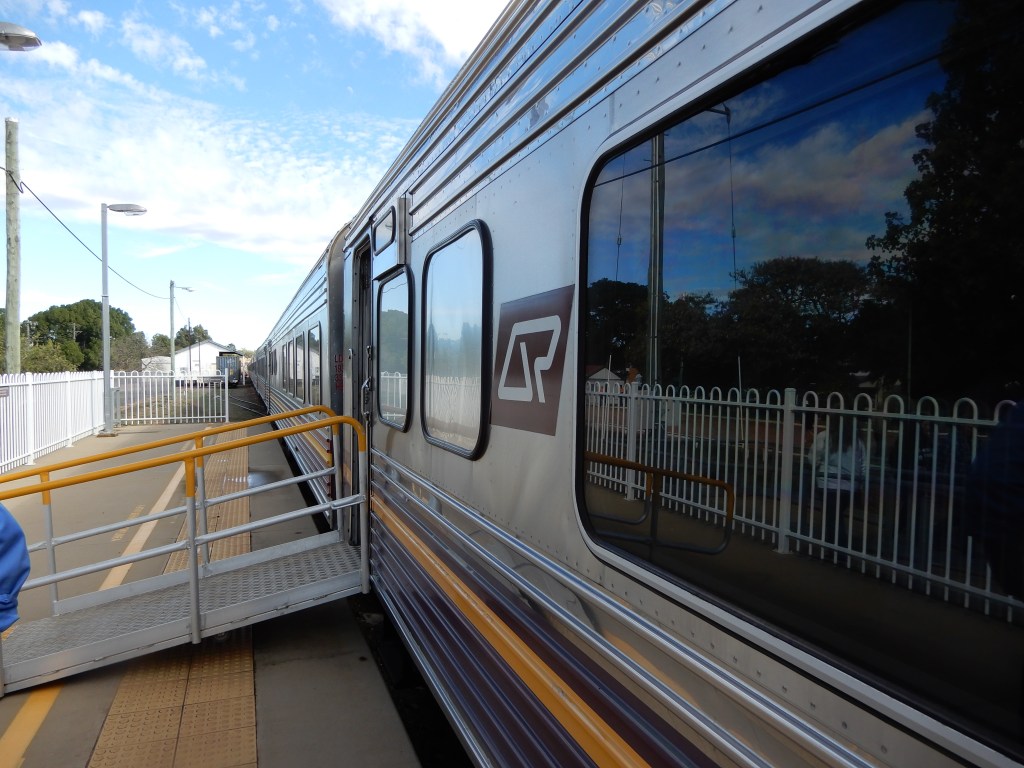
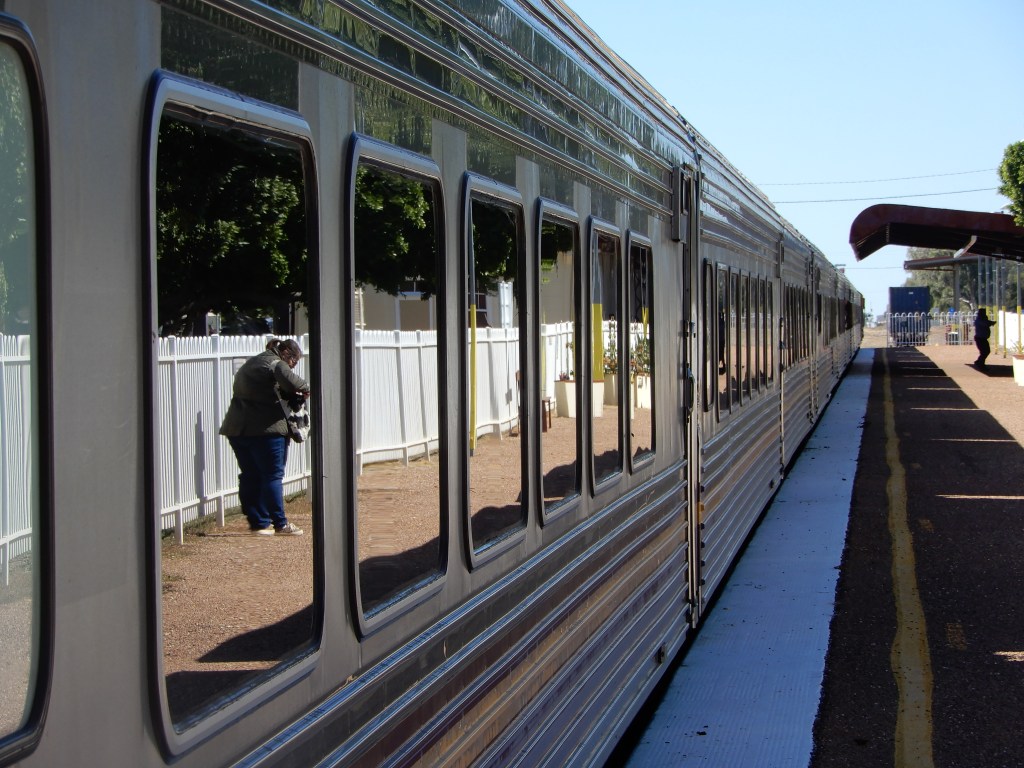
Because of the pandemic there were no people sitting either in front or behind us and we were given the entire row. The seats were from the first class seating from the Sunlander (another Queensland rail route) and incredibly comfortable allowing us to sleep reasonably well. There was also the dining car shown above and below. We went and ordered our meal from the galley which was a bit of a test for Roger, who is a little unsteady on his feet, as we had to move between cars but it made a big difference being able to move around.
We were allowed out for a 10 min stop. The platform was tiny (reminded me of the Australian film Wake in Fright) and the train hung over at either end of the platform. Anyone who wanted to get off had to come down to our carriage so where you see the ramp that was where we were situated on the train.
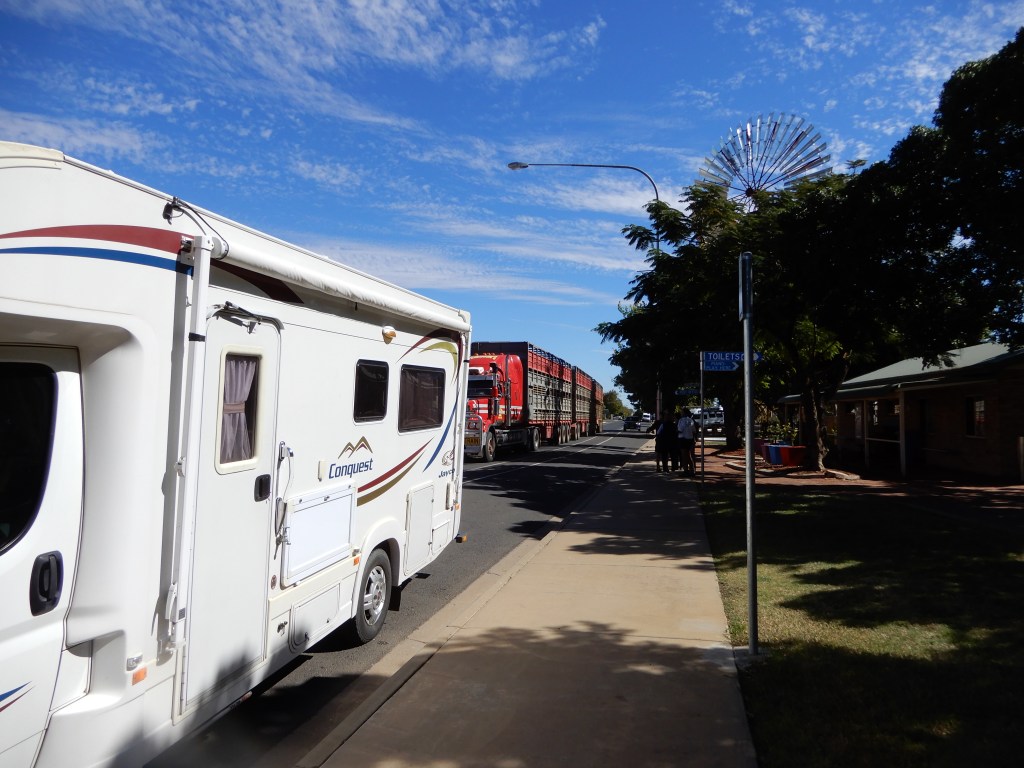
Whilst there we saw our first road train. These are lorries that have a minimum of three hook ons at the back and are very common in the Northern Territory, Queensland and probably Western Australia. They hurtle along at great speed and are terrifying to attempt to overtake. Back to our train…
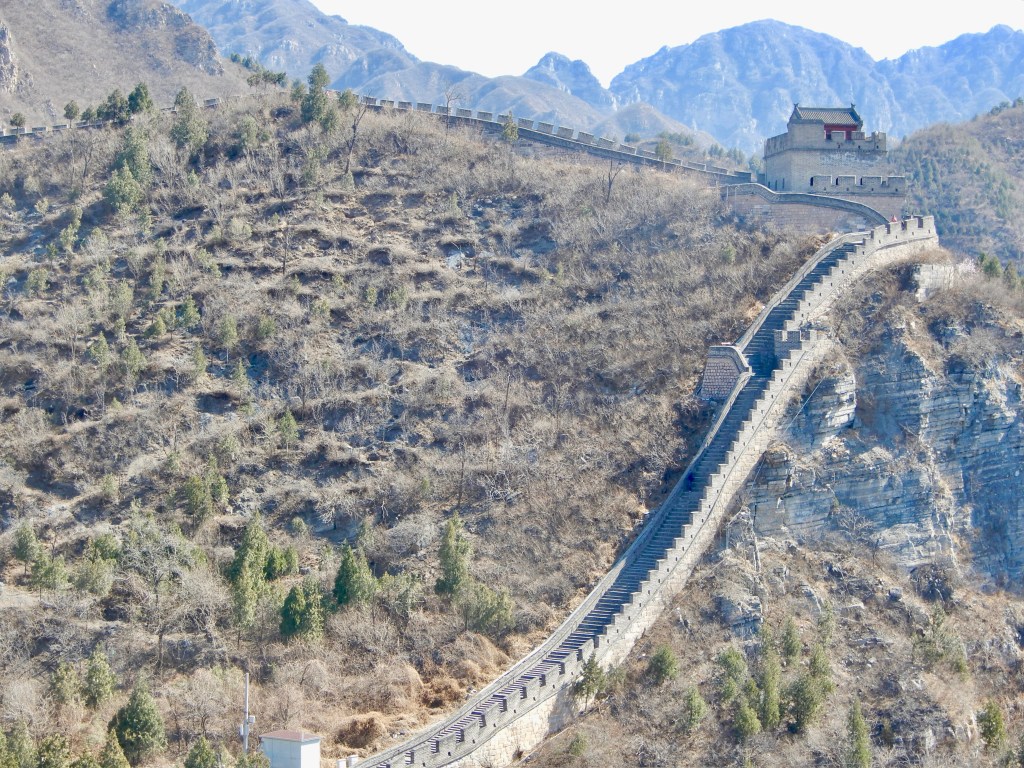
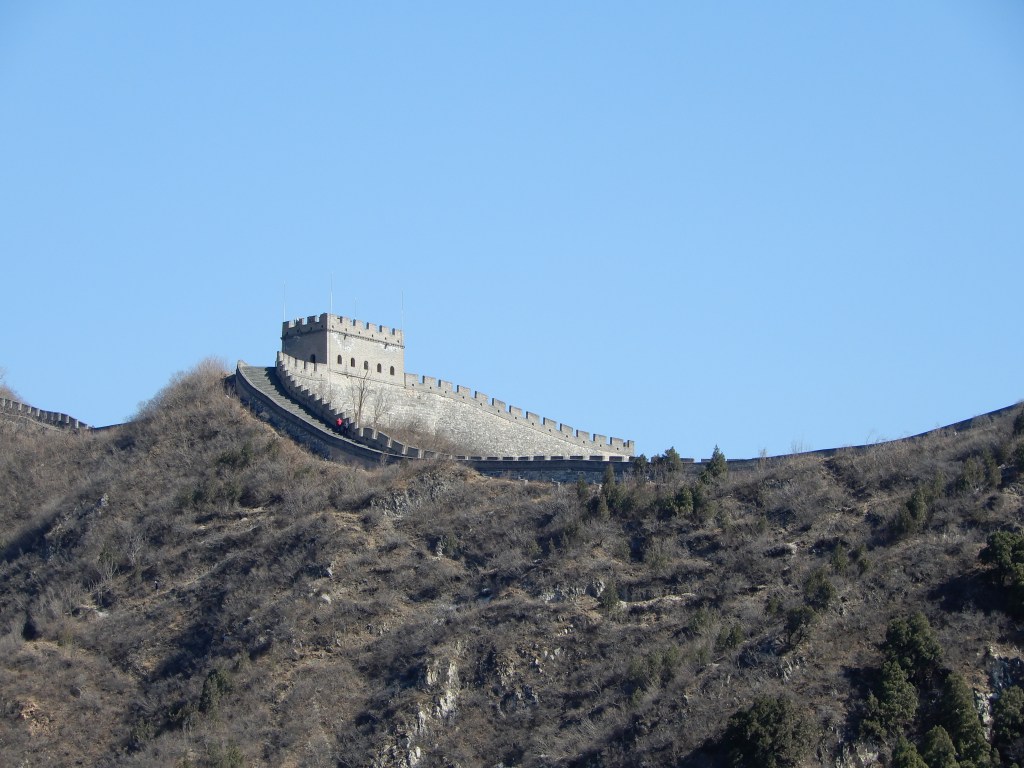
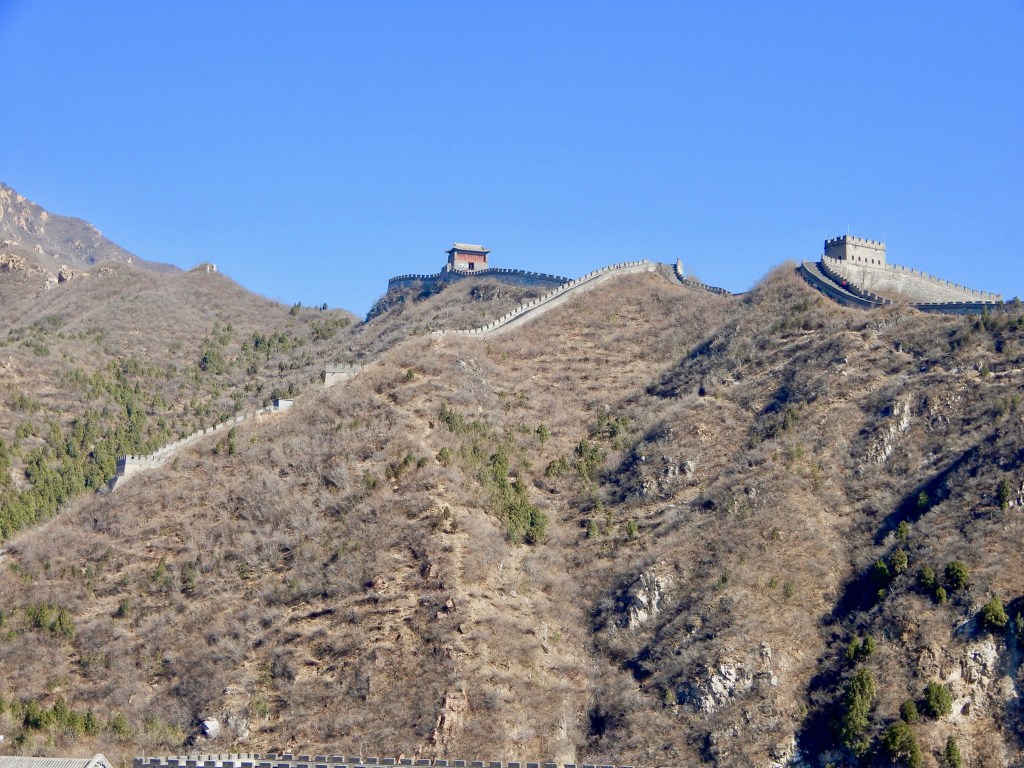
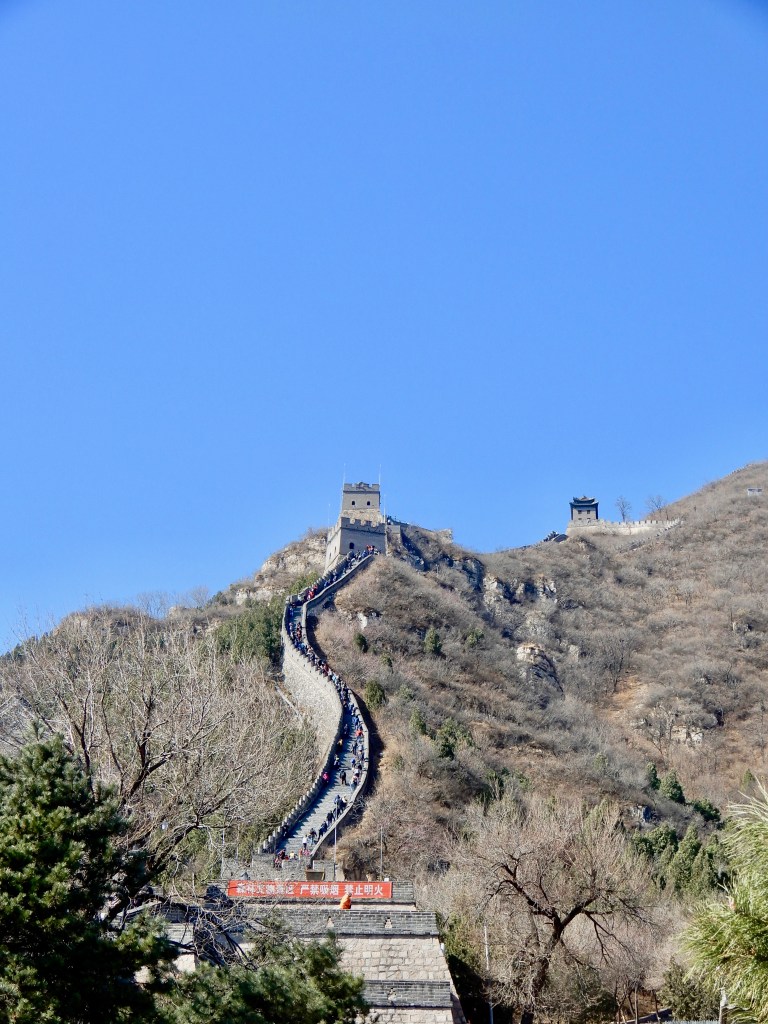
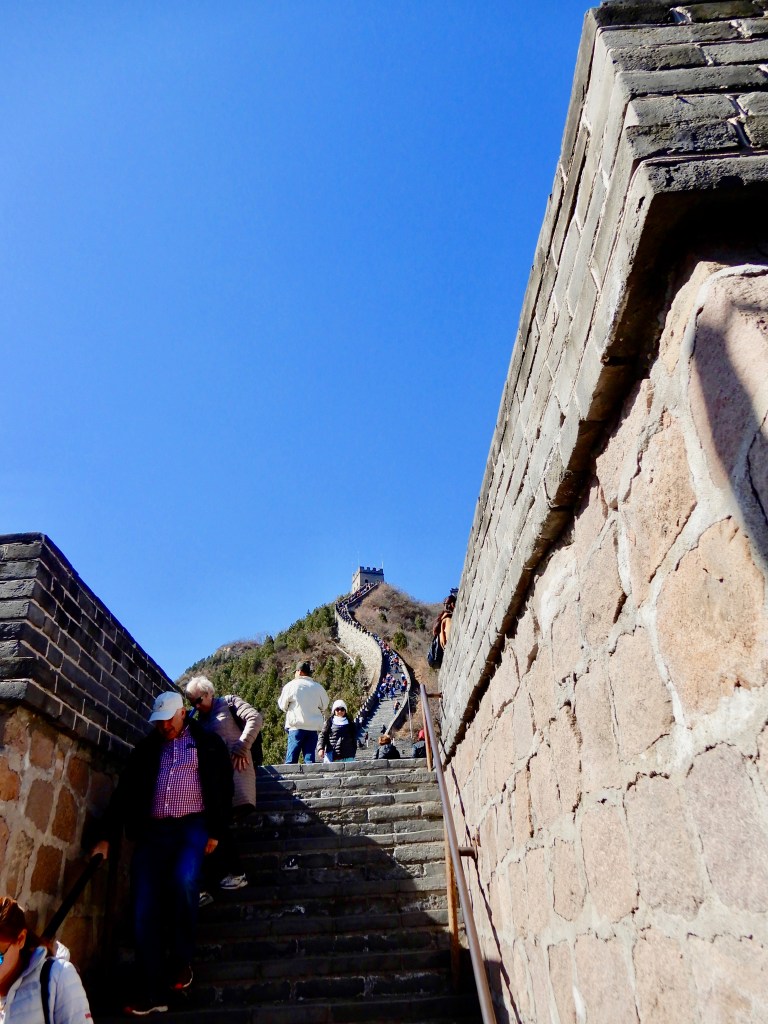
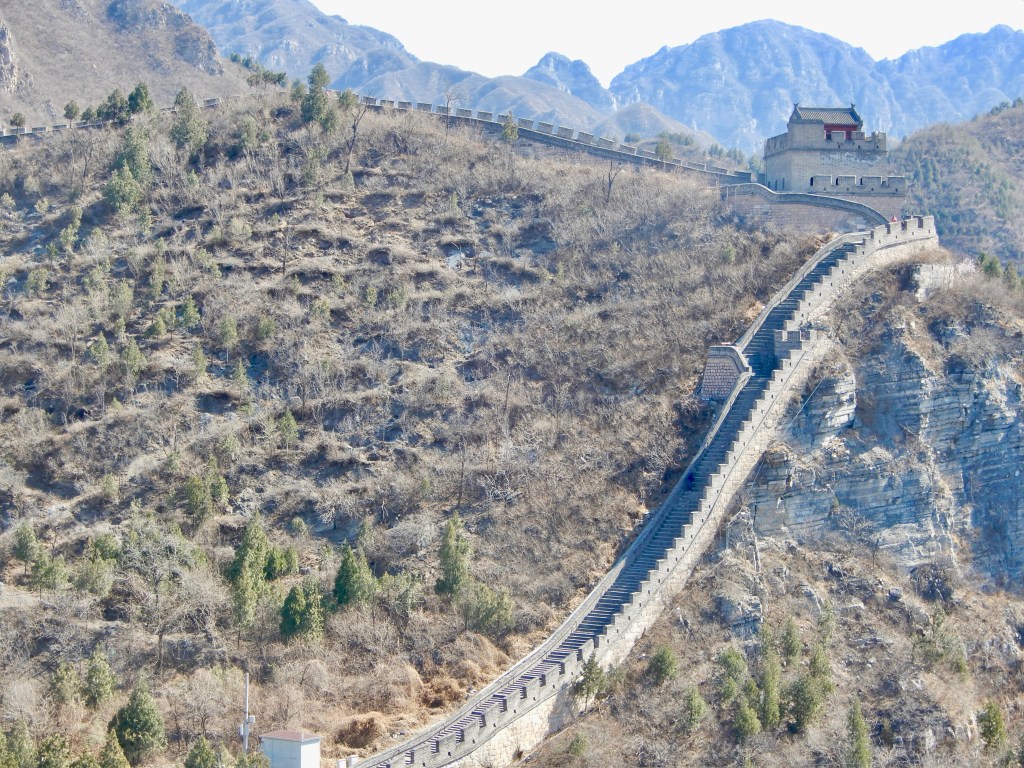
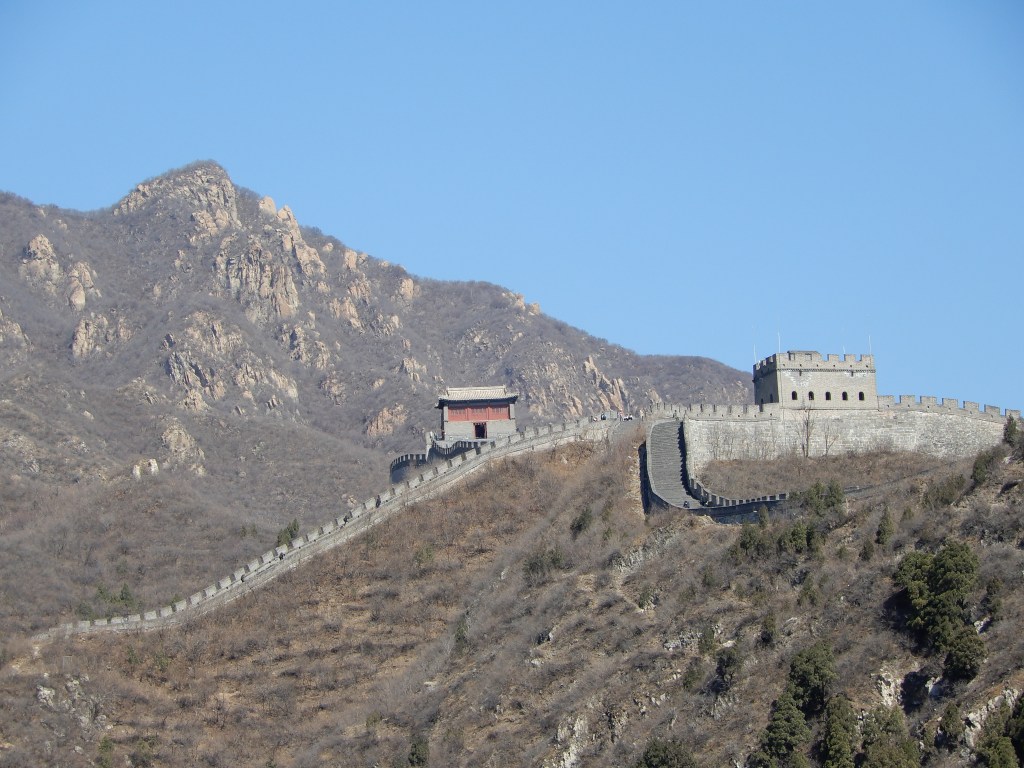
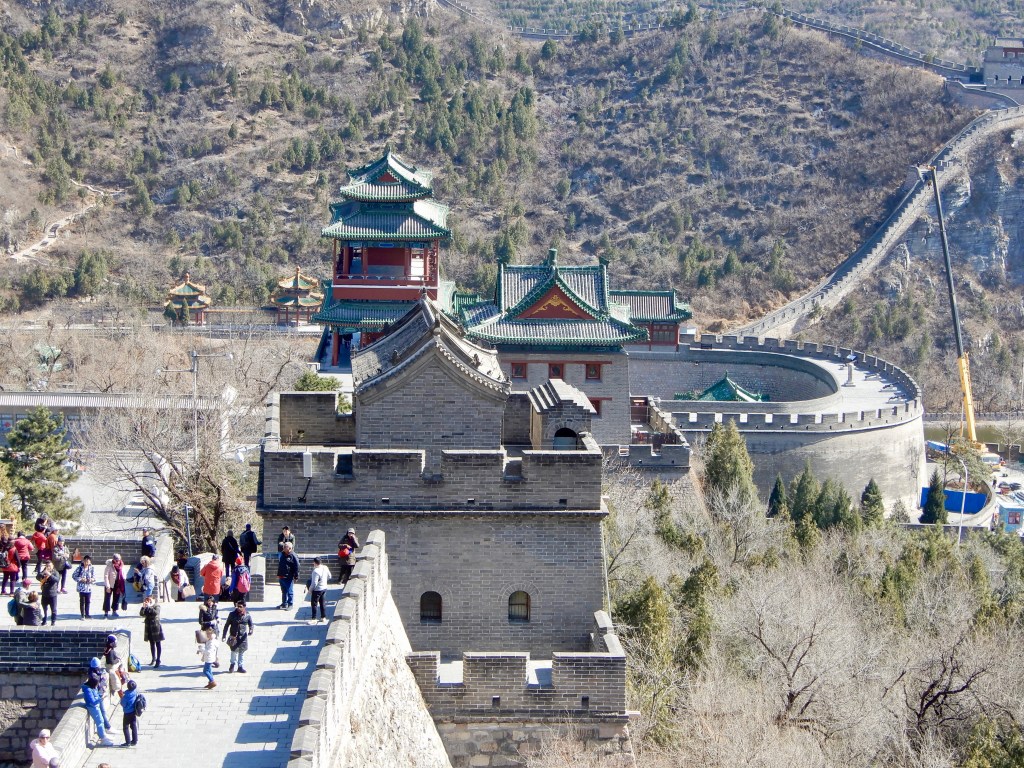
We were taken to a part of the Great Wall approximately 35 kms to the north from Beijing. The Juyongguan Great Wall was the first of three passes that previously had proved impenetrable. Our tour company sold it as the best part of the wall because not many tourists went to it and therefore you didn’t have to wait in queues to climb.
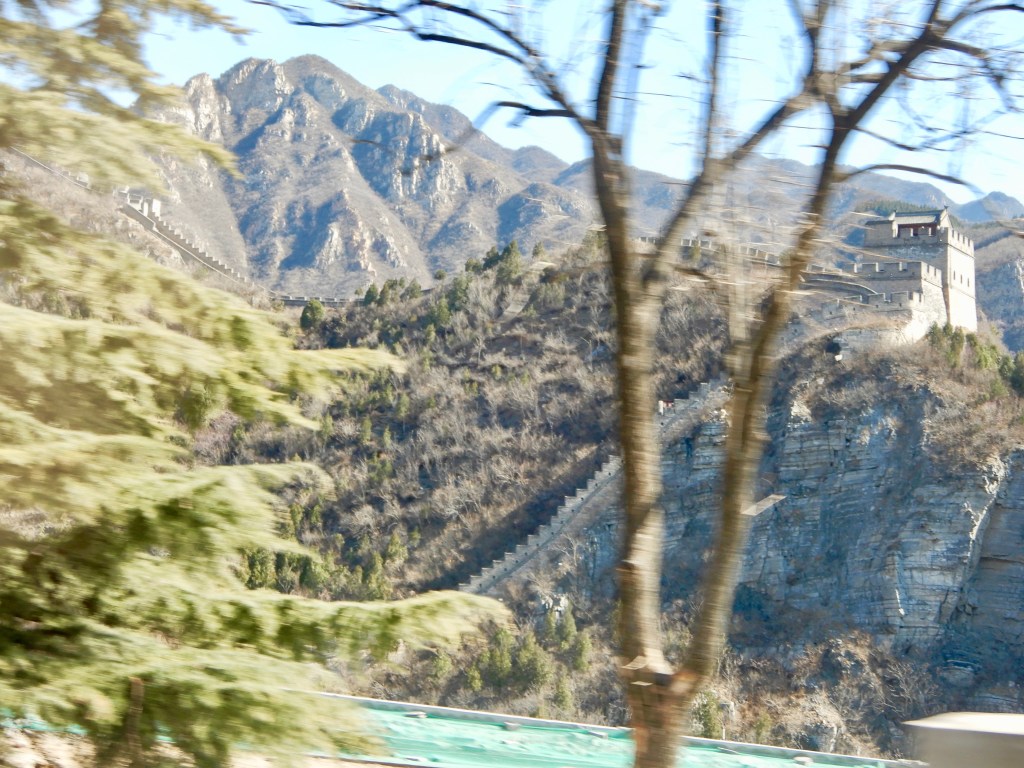
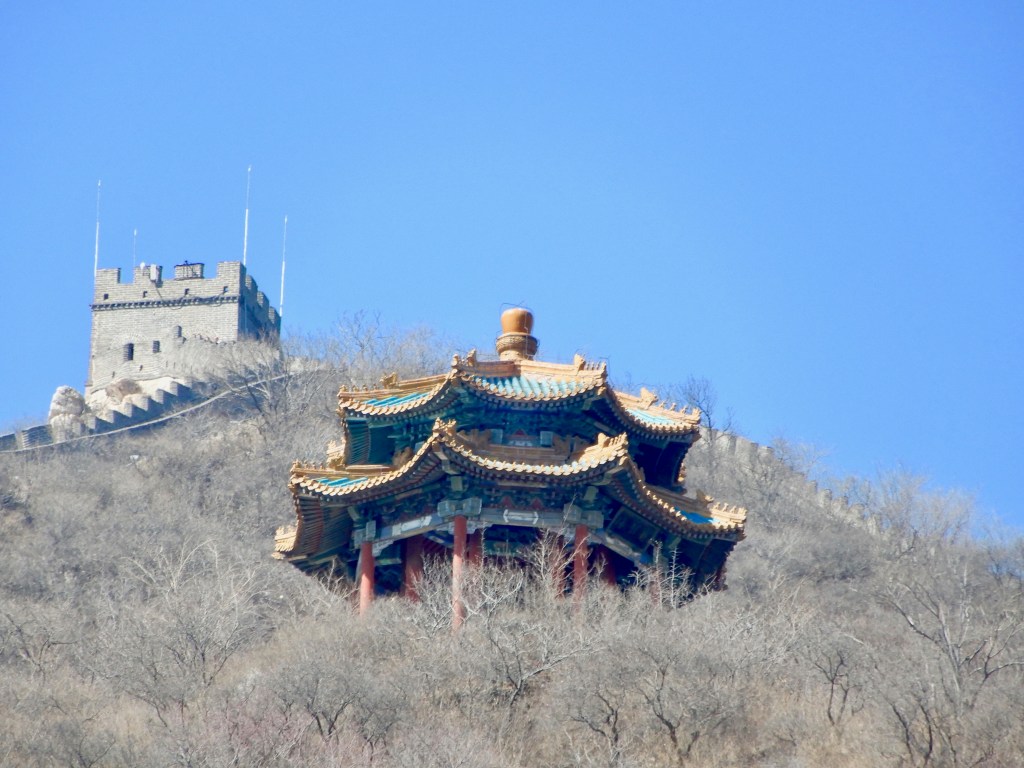
I had then read up on this part of the wall and discovered not many tourists visit because of the difficulty in climbing the stairs and in order to get to the best views you had to clim to at least the 7th station. I can do it I thought. As we travelled in the bus I kept an eye out for the wall and wondered if the above photo was part of it. I still don’t know.
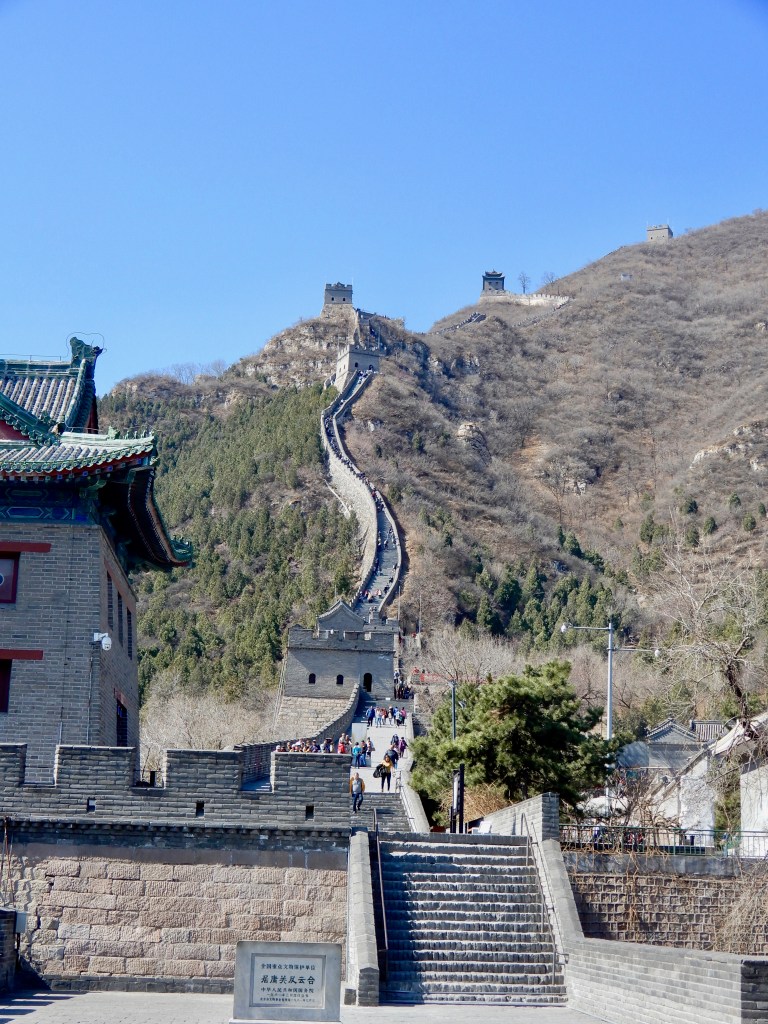
It was quite clear however when we did see it and looking out to the right I thought I can climb that easily. The right however was not accessible to us and we turned into a parking area on the left and saw the steepness of the incline. I still was determined to climb it.
We were told that an easier way to the second station was via a bushwalk and as it was easier I decided to take it. Roger had taken one look at the stairs and said he was happy with the view he could get from the entry level. I took off alone and the track was hit and miss. Obviously few people used it and I was uncomfortable so I returned to the conventional stairs upwards.
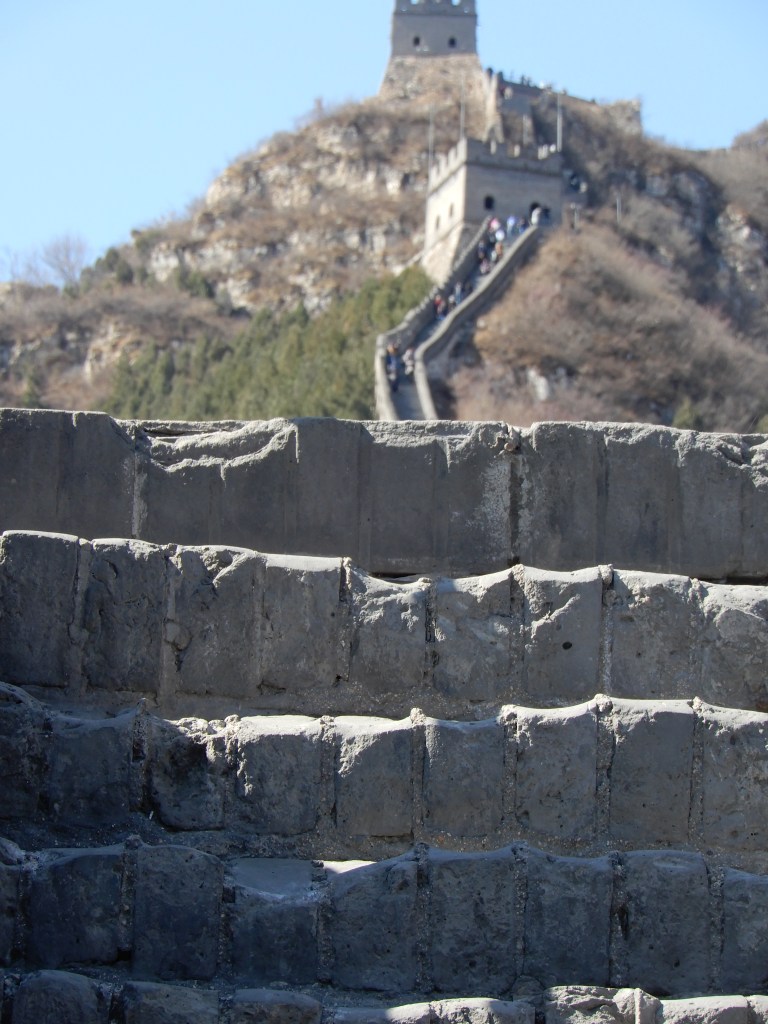
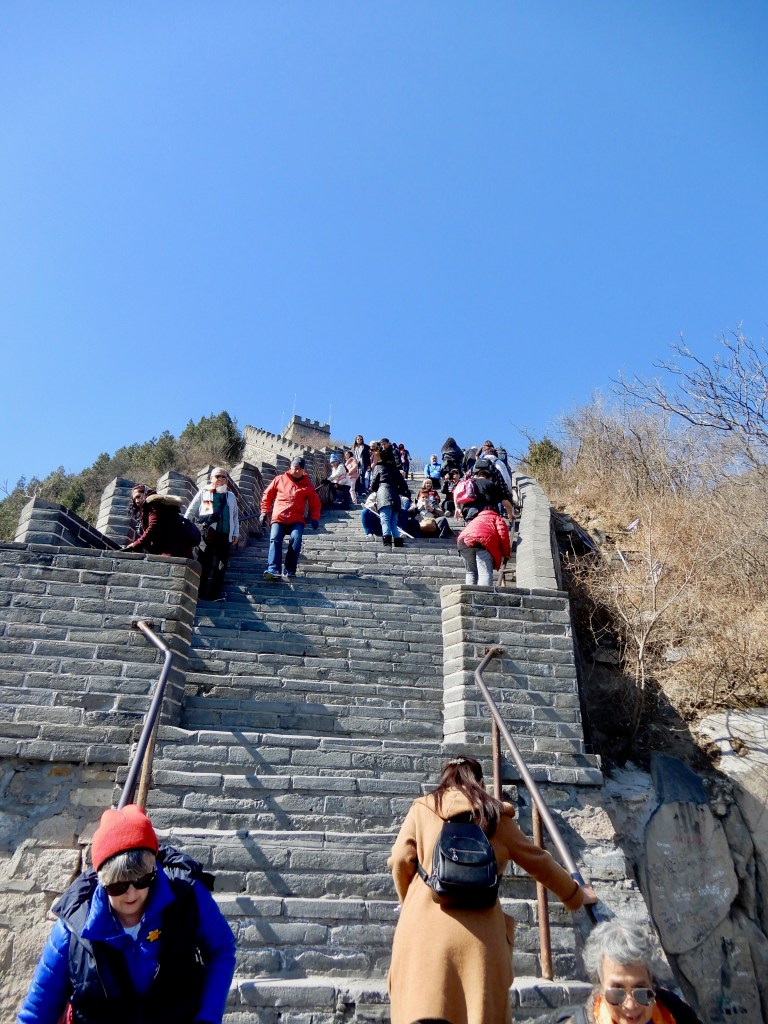
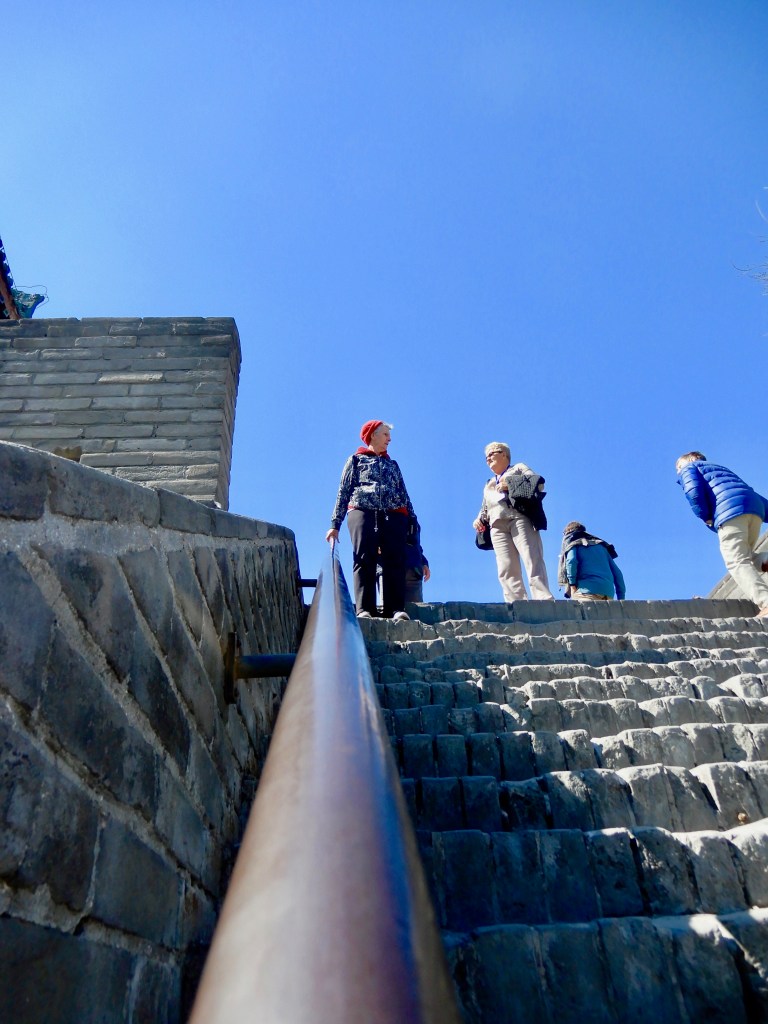
The rise on the stairs was high the step was narrow making it difficult unless you did a kind of crawl. The hand rails were of little use for me because I had to bend almost double to reach them they were so low to the ground.
People sat unable to move further – I made it to the second station and decided that I couldn’t afford to take a tumble and if up was so difficult I could only imagine that down would be worse with legs turning to jelly and doing the involuntary shake as used to happen when I climbed the giant staircase at Katoomba in the Blue Mountains west of Sydney.
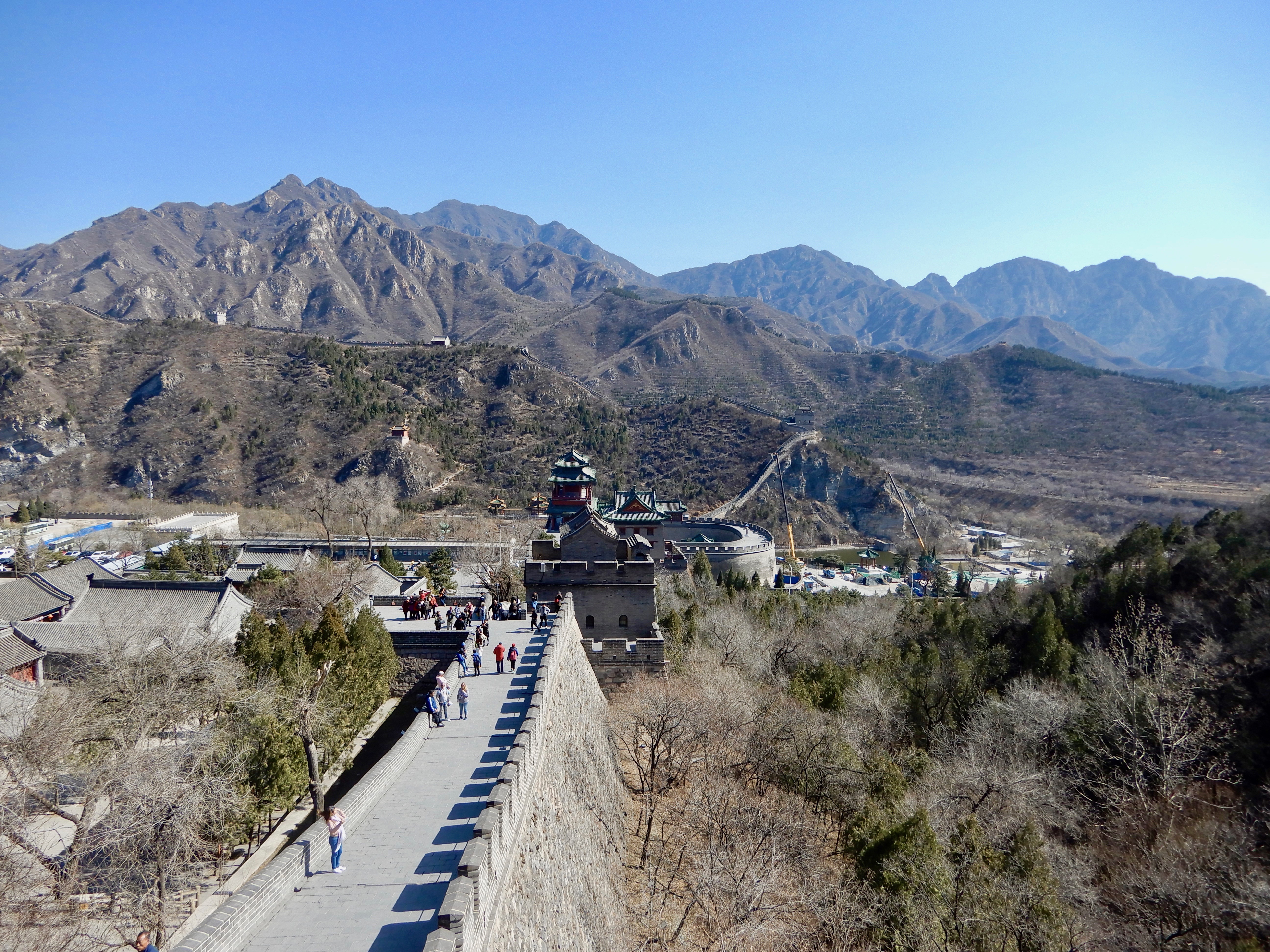
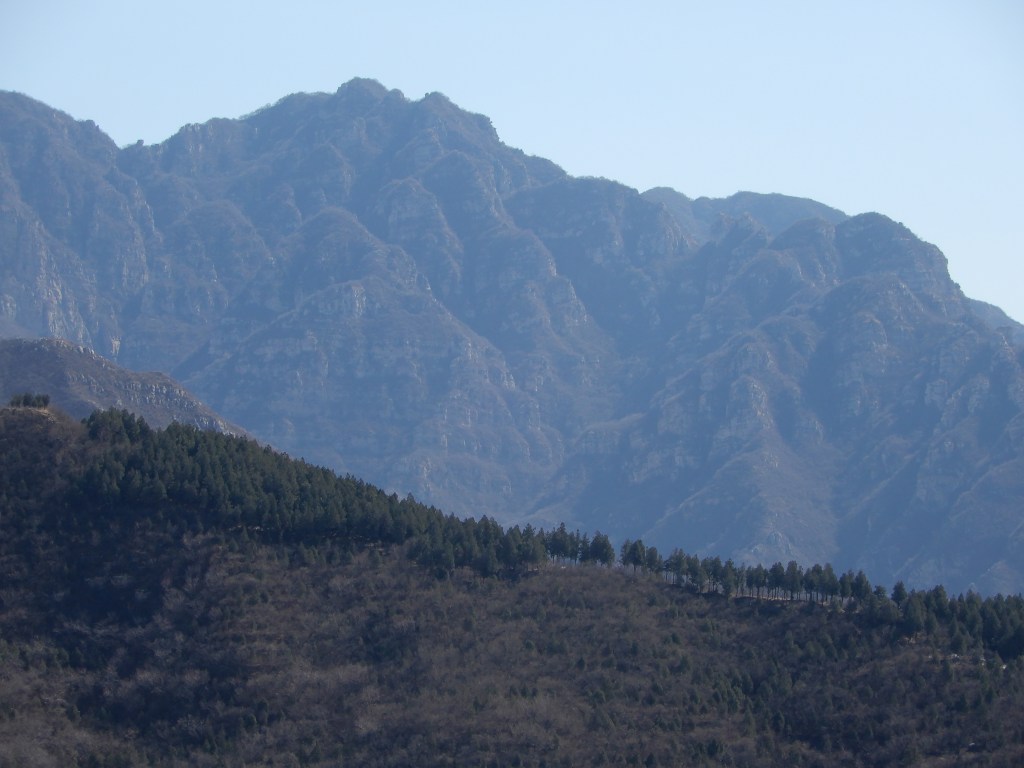
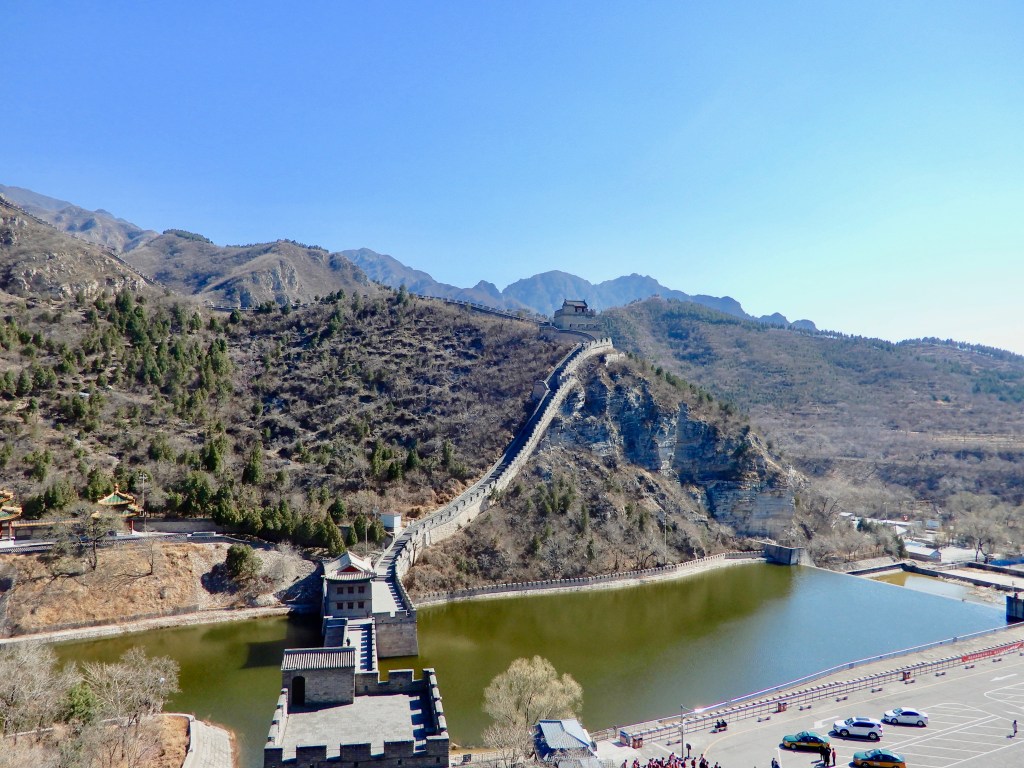
I could see how spectacular it would be from higher up where you got a 360 degree view but I was happy with what I could see. It was obvious the strategic military advantage that was afforded situated in a lower area (valley ridge?) surrounded by two huge mountains.
We could not cross over the river however, you could buy a ticket that let you do both sides and you could do a full loop starting on the east side – a gentler climb and descending on the west. We did not have the time to do that.
We departed the Great Wall glad that we had seen a structure of such immense proportions it can be seen from outer space, overawed at the structural feat this must have been for such a long time ago but perhaps a little disappointed that I was unable to climb as far as I needed to get that 360 degree view. Still, it was a great adventure.
I began my working career as a reluctant potato peeler whilst waiting to commence my training as a student nurse. On completion I worked mainly in intensive care/coronary care; finishing my hospital career as clinical nurse educator in intensive care. A life changing period as a resort owner/manager on the island of Tanna in Vanuatu was followed by recovery time as a farmer at Bucca Wauka. Having discovered I was no farmer and vowing never again to own an animal bigger than myself I took on the Barrington General Store. Here we also ran a five star restaurant. Working the shop of a day 7am - 6pm followed by the restaurant until late was surprisingly more stressful than Tanna. On the sale we decided to retire and renovate our house with the help of a builder friend. Now believing we knew everything about building we set to constructing our own house. Just finished a coal mine decided to set up in our backyard. Definitely time to retire we moved to Queensland. I had been writing a manuscript for some time. In the desire to complete this I enrolled in a post grad certificate in creative Industries which I completed 2013. I followed this by doing a Master of Arts by research graduating in 2017. Now I live to write and write to live.


































 Reflections and Nightmares- Irene A Waters (writer and memoirist)