© irene waters 2015
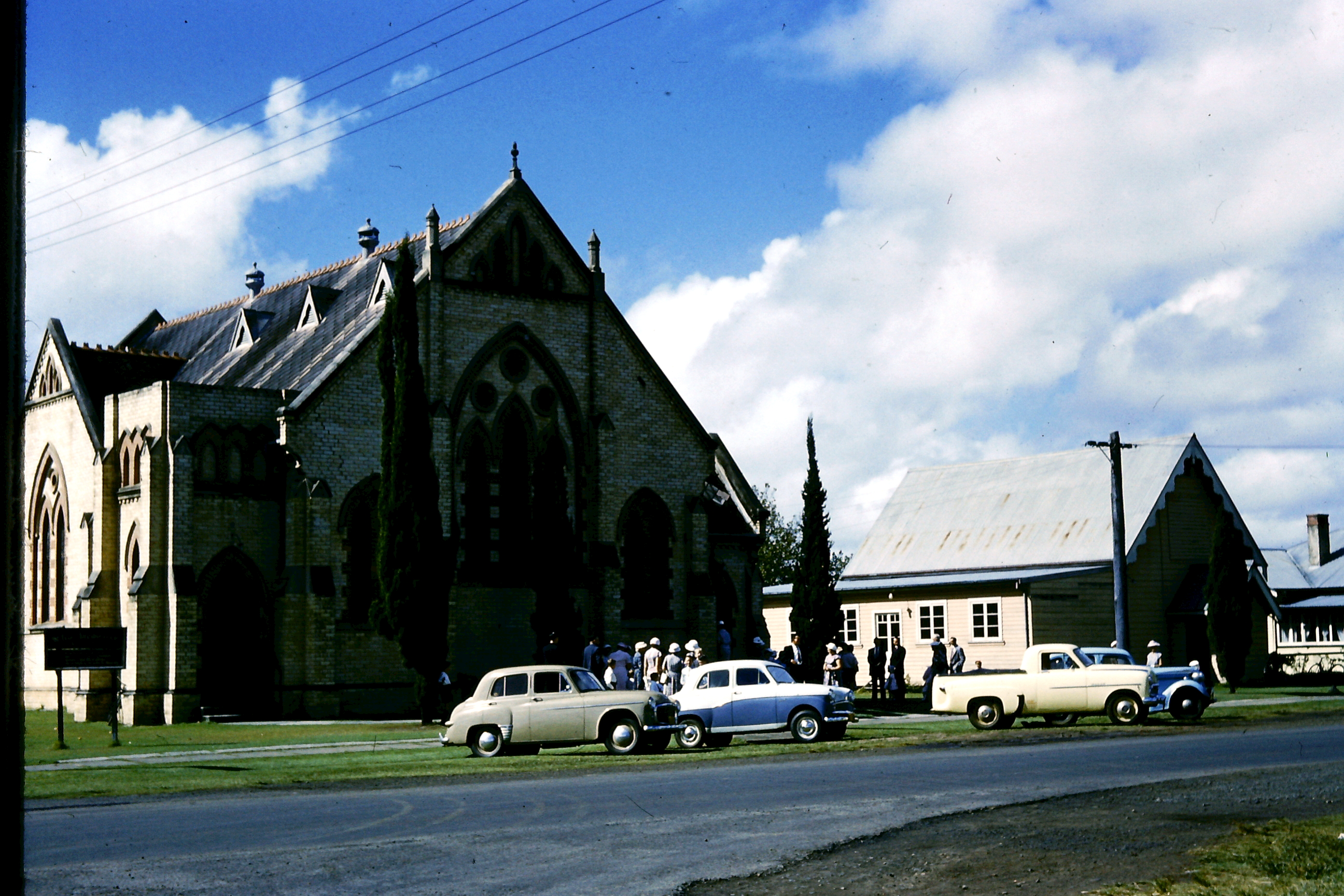
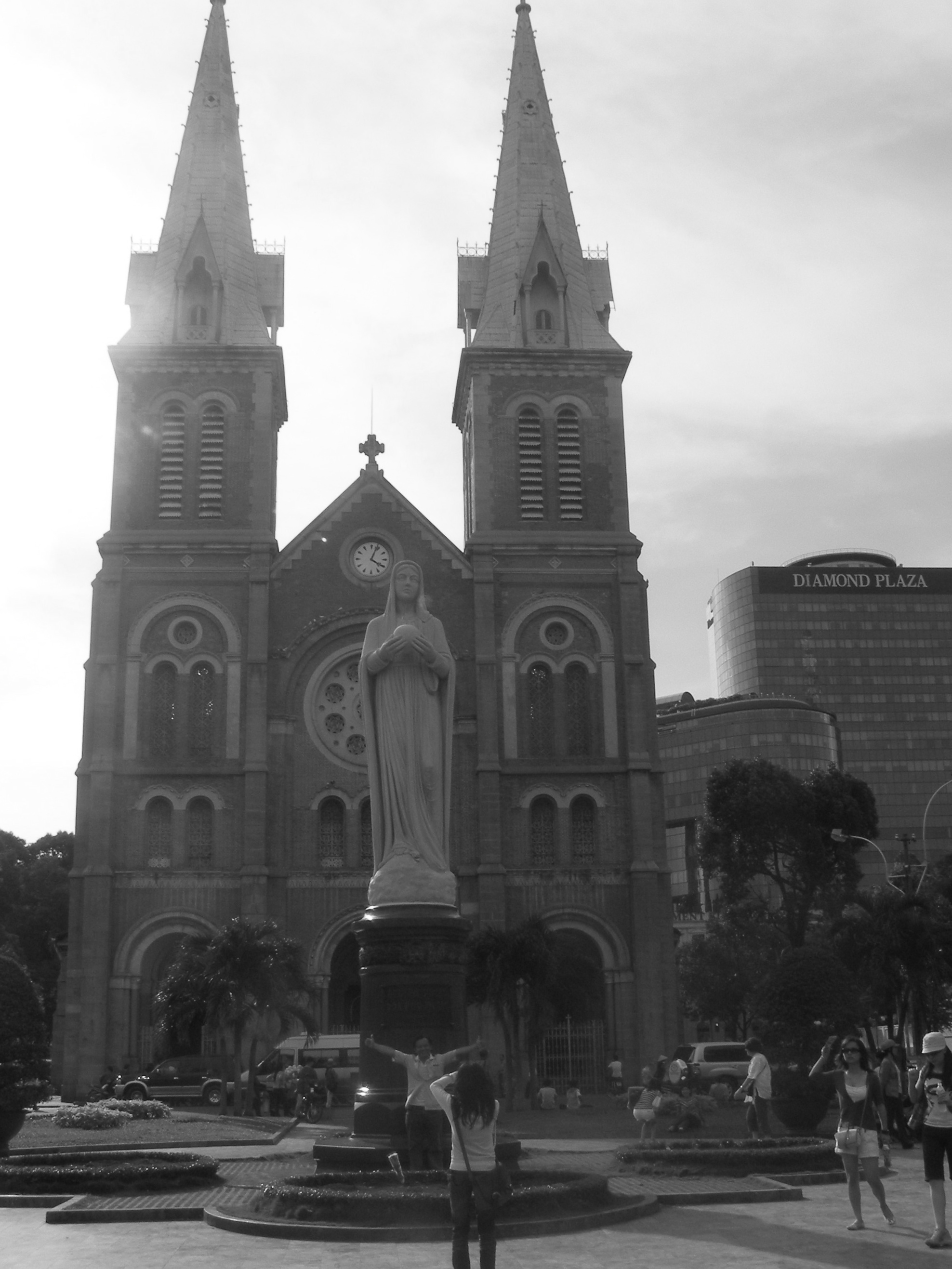
Being a minister’s daughter the church naturally loomed large in my childhood life. St Pauls in Casino was my Dad’s parish church during my primary years. On Sundays he would take a service at the church at West End (the far side of town) followed by the service in St Pauls. After this service we hopped in the car and went off to a different country town each week of the month for the third morning service. These were in tiny towns with names like Darrabba and Rappville. He would then take another service in the evening. Four services each Sunday. There was also the midweek service of a Wednesday at yet another town. All these churches were typical small wooden buildings, apart from St Pauls.

© irene waters 2015
St Pauls was a magnificent structure compared to the old church standing beside it which is now used as the church hall. The new church boasted a fantastic pipe organ, the only one in town. My father was a ‘with it’ man for his time and we children loved the days we entertained the congregation to bongo drum playing and theme days. Looking at the flags it makes you aware of just how much the world has changed. Most of these flags have changed and many of the country names also differ. This particular International Day I was Miss Ethiopia. You may be able to pick me in the back row.

© irene waters 2015
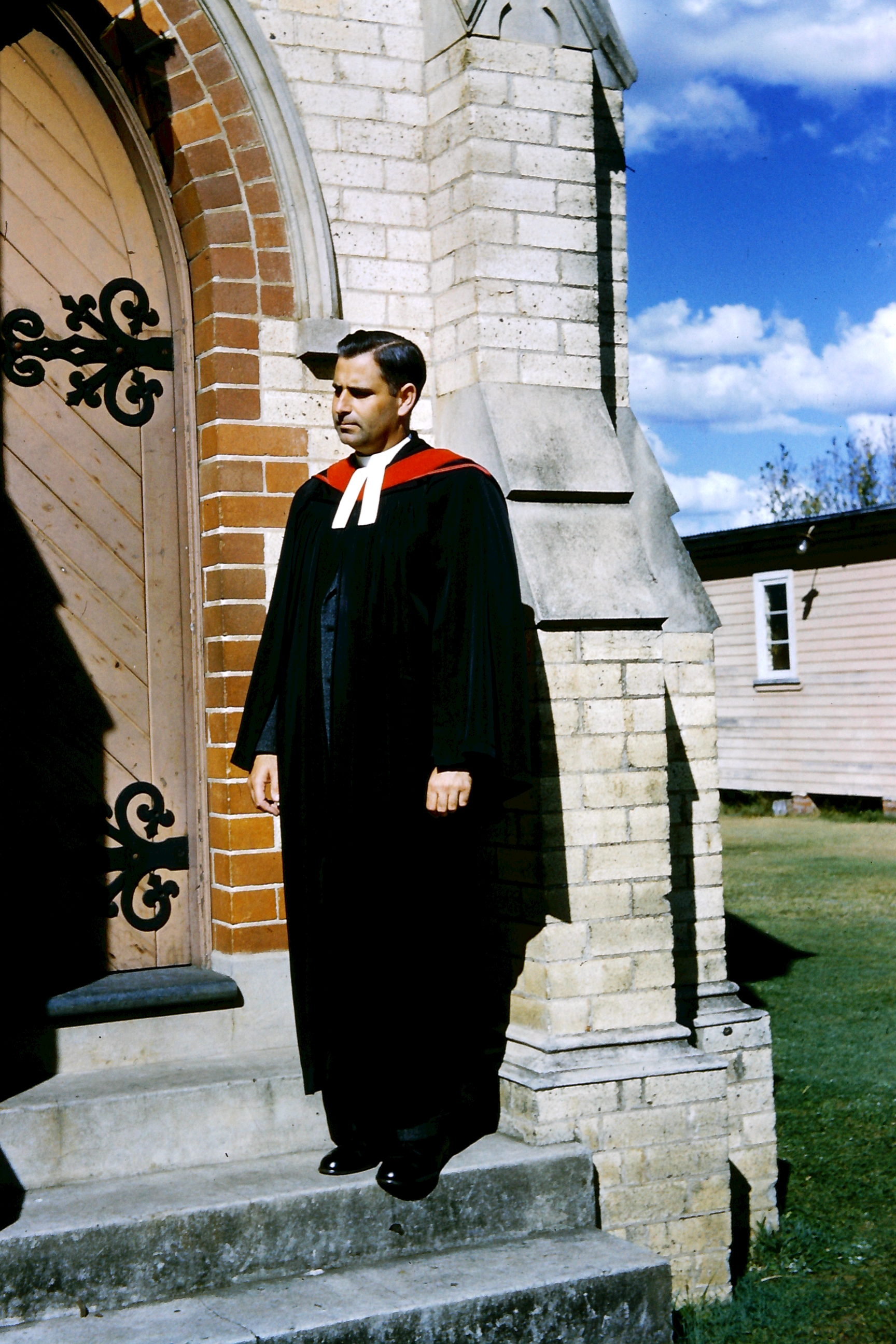
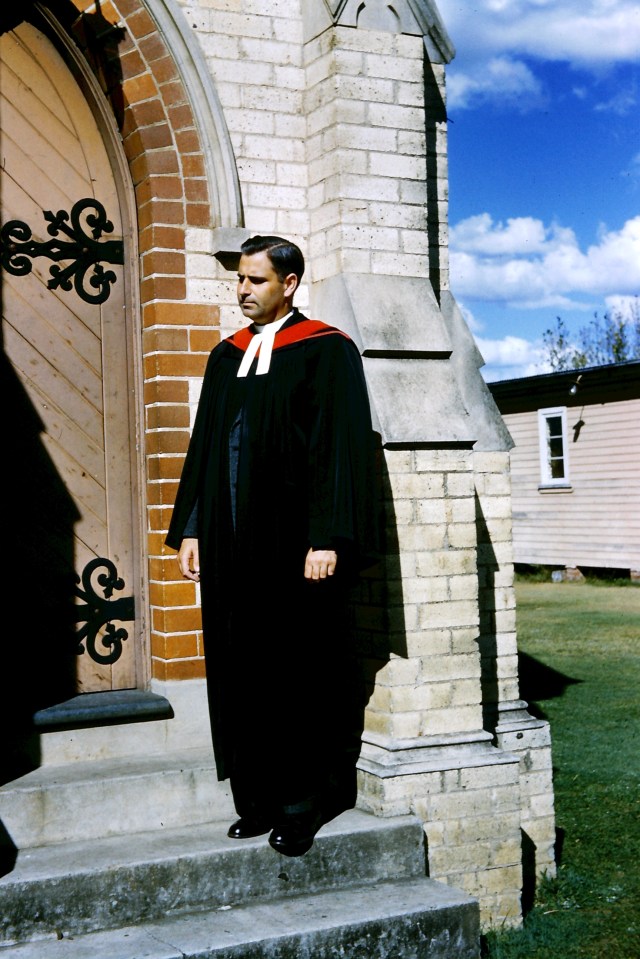
At the end of every service my Father would stand at the church entrance and greet everyone as they left the building.
© irene waters 2015
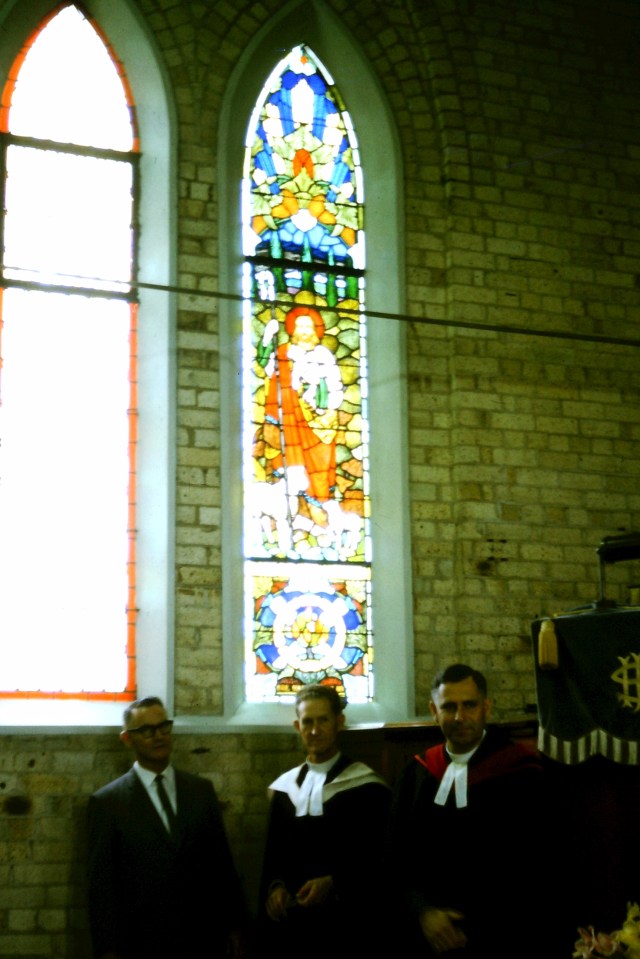
I can remember fund raising to gain the funds for the purchase of a stain glass window for the church. It was an item of great beauty and special thanks were given at the first service after its installation.
© irene waters 2015
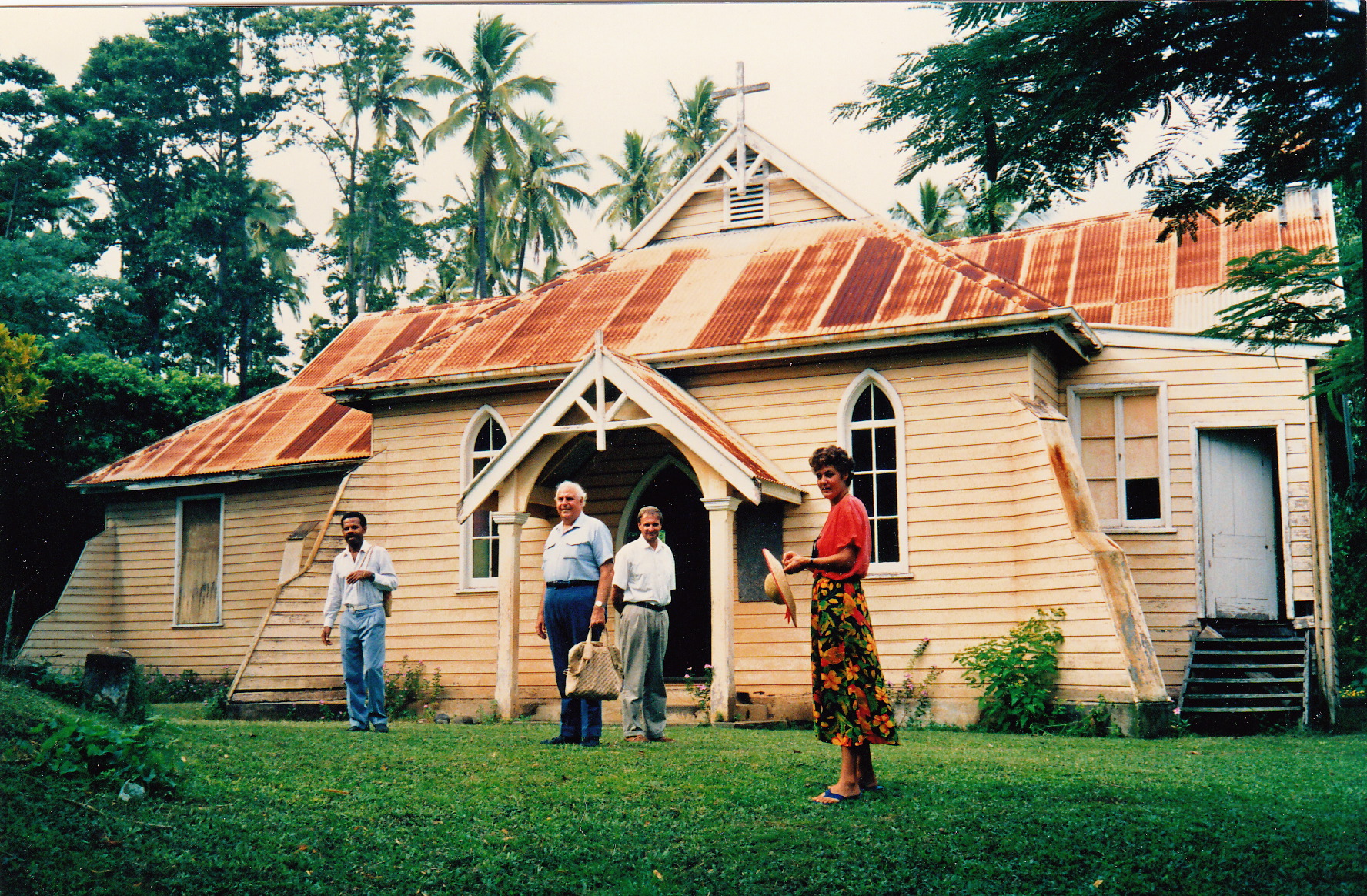
This church was so different to the church that was on our island Tanna in Vanuatu which was different again from the wooden structures of our country services of my childhood. It really was a case of “termites holding hands.” The harmonic singing of the congregation was truly beautiful. My Father, when visiting us, was invited to give a sermon.

© irene waters 2015
It was decided no interpreter would be required so it was a total shock when after his first sentence someone jumped up and translated into Bislama, the national language. Then another jumped up and translated into local language. With each translation his sentence seemed to grow longer.

© irene waters 2015
The only comment we heard post sermon was that it was a pity the visiting preacher didn’t speak for longer. They would have been happy to have it go for an hour or two. I was relieved it was as short as it was because with the translations it was already long enough.
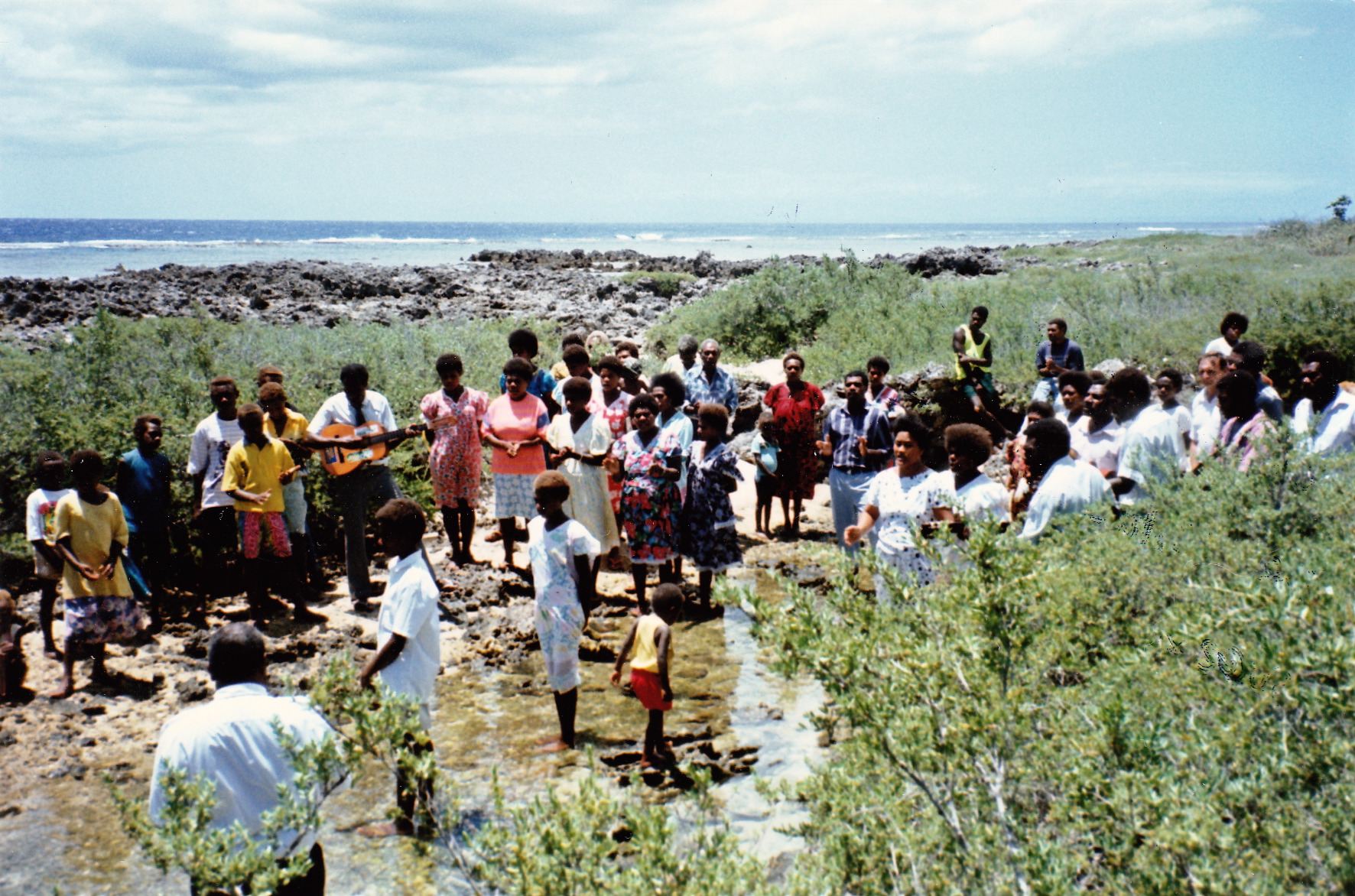
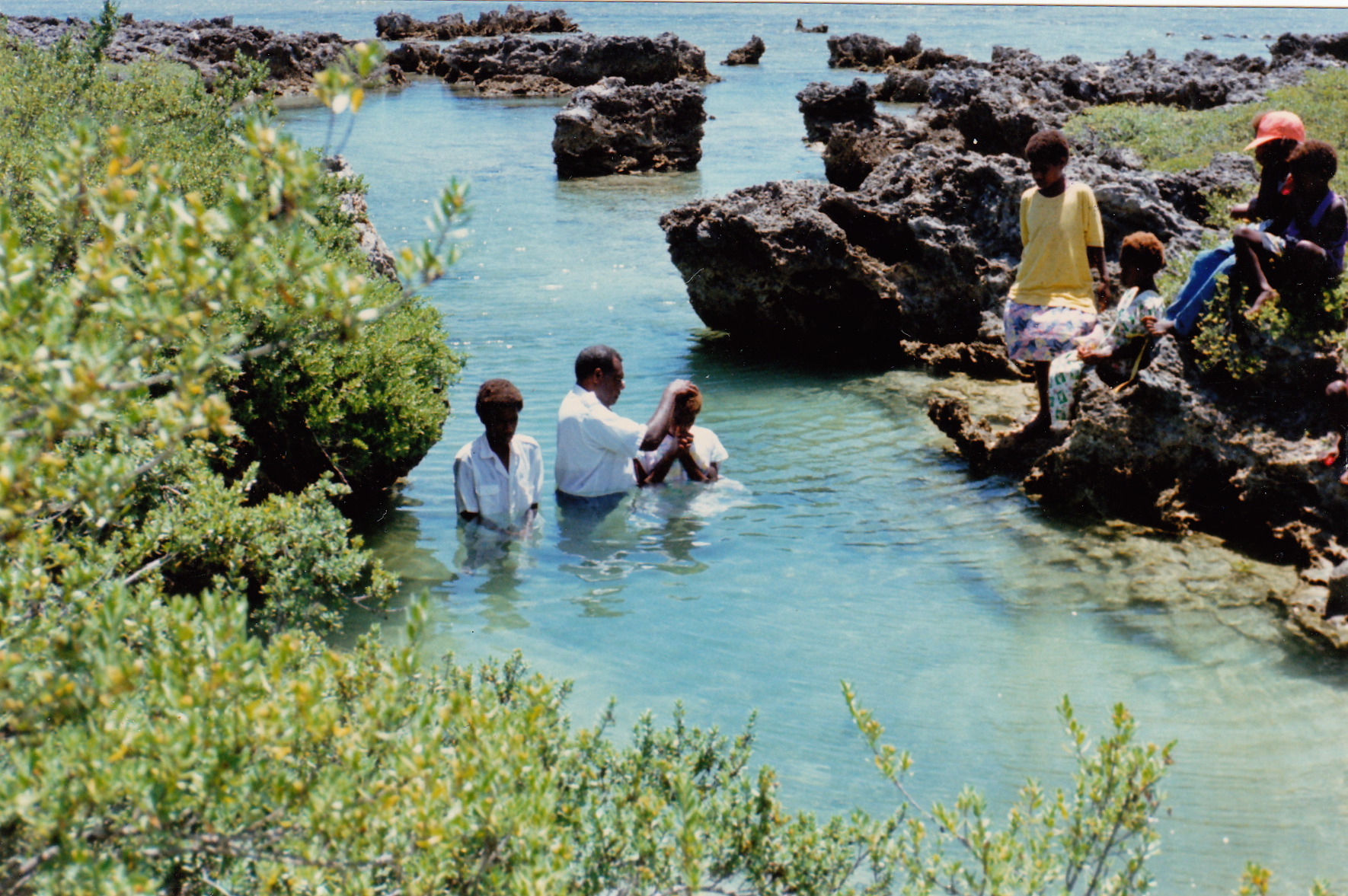
This was the only church of a conventional type on the island although there was a Catholic priest and perhaps we didn’t see his church. However one doesn’t need a church building to worship as nature provides its own cathedral. Perhaps the most moving service I attended was Palm Sunday which corresponded with yam harvest. The two were celebrated together in a clearing in the bush. The congregation then followed the minister (Chief Tom) down to the beach for the baptism of two children.

© irene waters 2015

© irene waters 2015
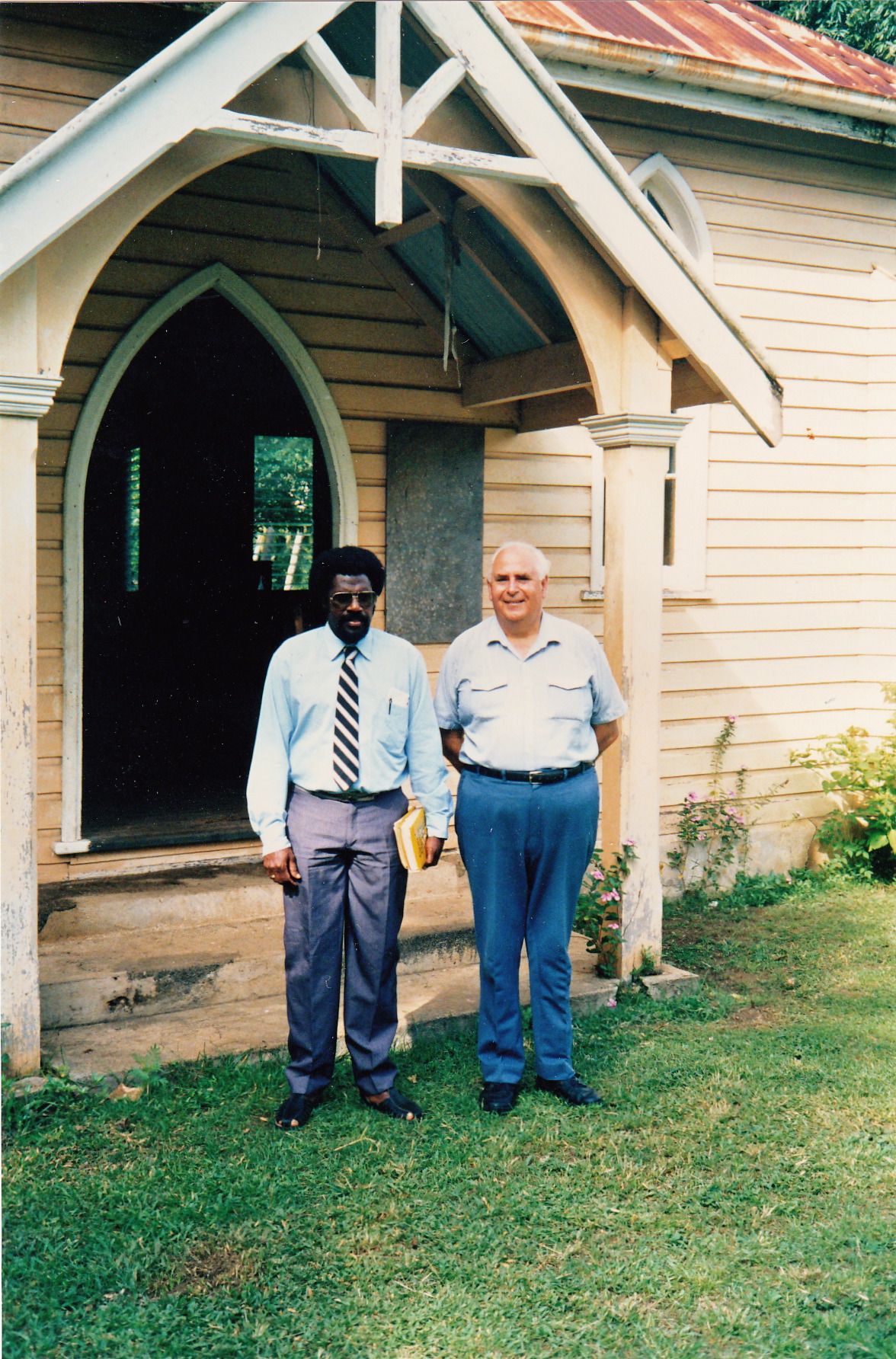
Not all on Tanna were Christian although every denomination was represented on the island. Chief Jack had a shrine to Prince Philip whom he worshiped. Here he is holding a tin we bought back with us from London, a present from the actor Ken Campbell who wrote and starred in the award winning play, Jamais Vu, set on the island of Tanna. We saw it in the west end and were introduced by Campbell to the audience at the completion of the show. We then

© irene waters 2015
went back stage and were given a biscuit tin (empty) with a picture of Prince Phillip on the lid to take back to Tanna with us. The book he is holding is about Ken Dodd given to him by Ken Campbell when he was on the island doing research for his play.
In response to Cee’s Fun Foto Challenge