© irene waters 2017
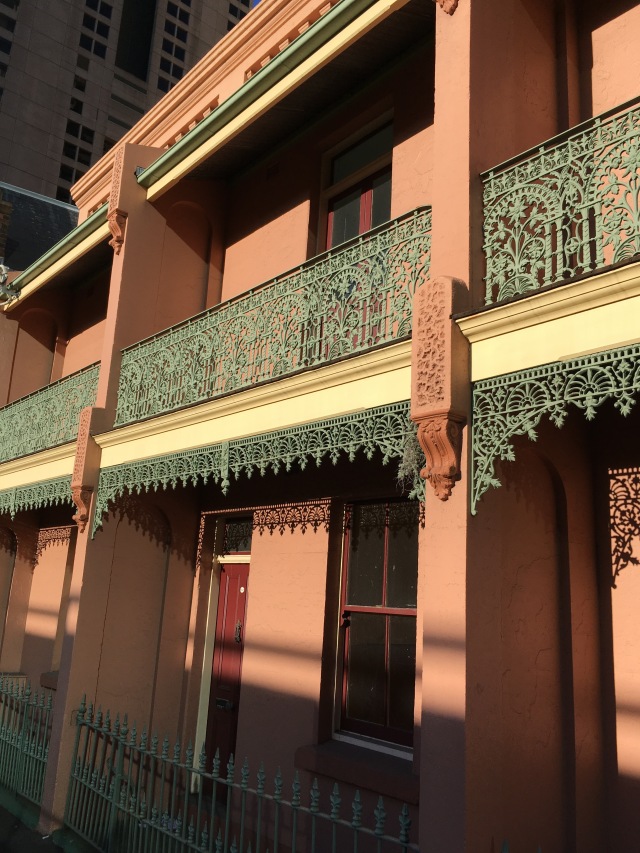
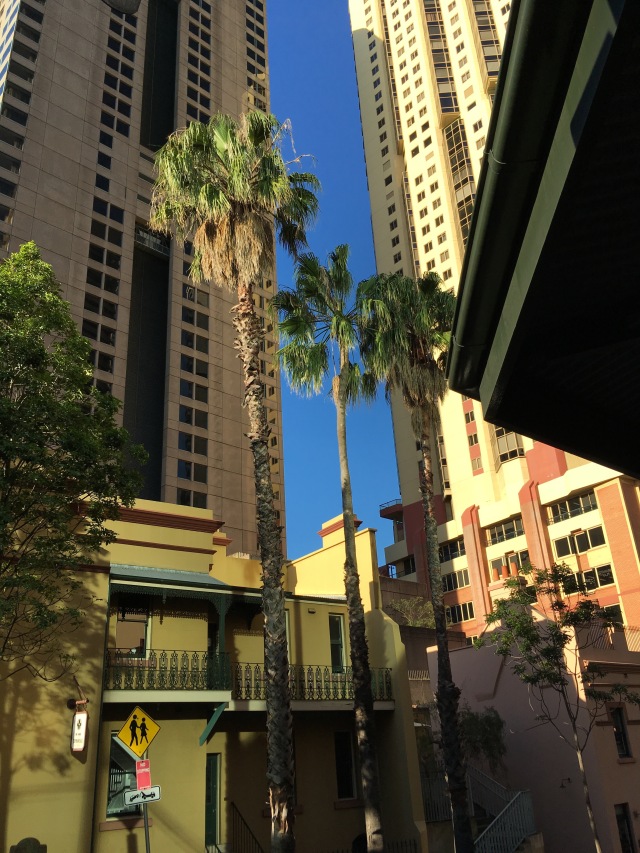
The Rocks is an old area of Sydney with European settlement starting in 1788, soon after the first settlement at Sydney Cove. This slum area in the early days was full of sailors, convicts and prostitutes and became known as a rough area to visit. It was called the Rocks as local sandstone was used to build houses, replacing the original wattle and thatched huts. By 1823 there was a population of around 1200. Terrace houses started being built from 1830 onwards and are a direct copy from London and France (even complete with the pitch of the roof to allow snow to fall off)
© irene waters 2017
Today these old terraces live under the shadow of the modern city. Luckily some have survived. I say lucky because after the plague of 1900 the plan was to knock these buildings down. Many were but the outbreak of World War 1 saw the cessation of the demolition at that time.
© irene waters 2017
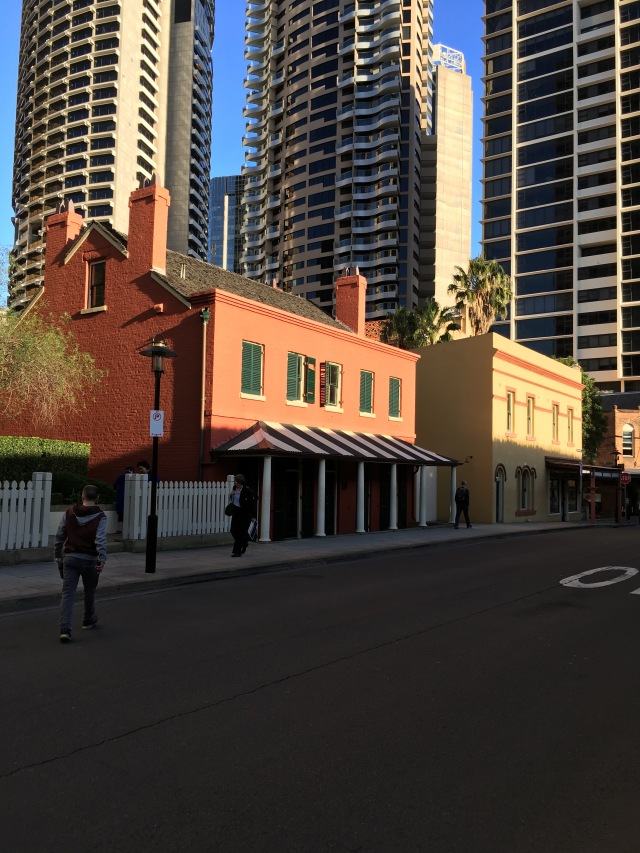
The pink cottage is Lilyvale Cottage built in 1845 for an innkeeper Michael Farrell. Originally it was constructed as a gentlemans residence but has predominantly been used as a tavern and boarding house and is considered a good example of colonial Regency architecture. The house was sold to the Crown in 1903. The yellow house was built as a butchery with the front with big windows the shop and above a residence. Both buildings are built into the slope of the land with another story visible from the rear. These building survived not only the demolition during the plague but also the proposed demolition in the 1960/70s. Fortunately the trade unions put a ban on demolishing these old buildings (resulting in an ugly period of NSW history) but in 1975 the decision was made not to demolish any more buildings.
© irene waters 2017
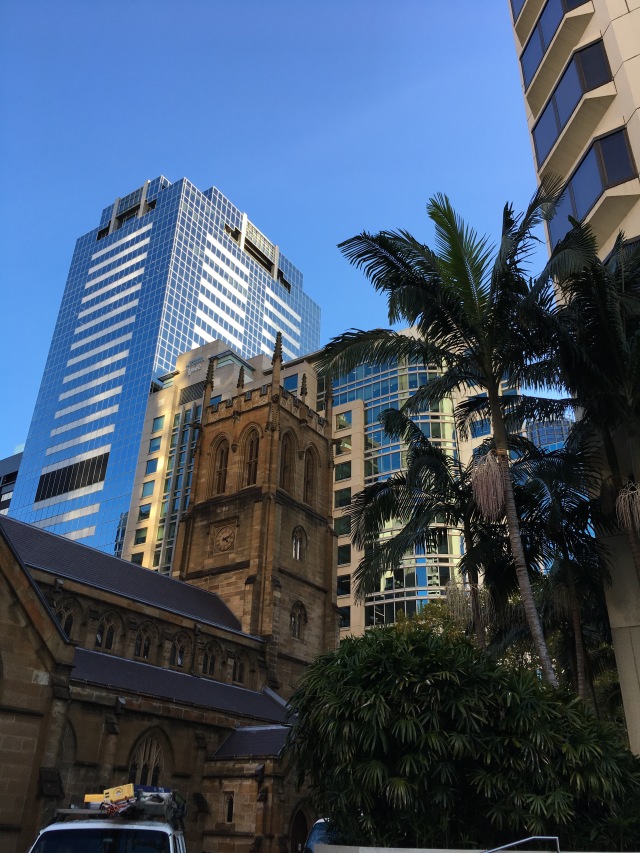
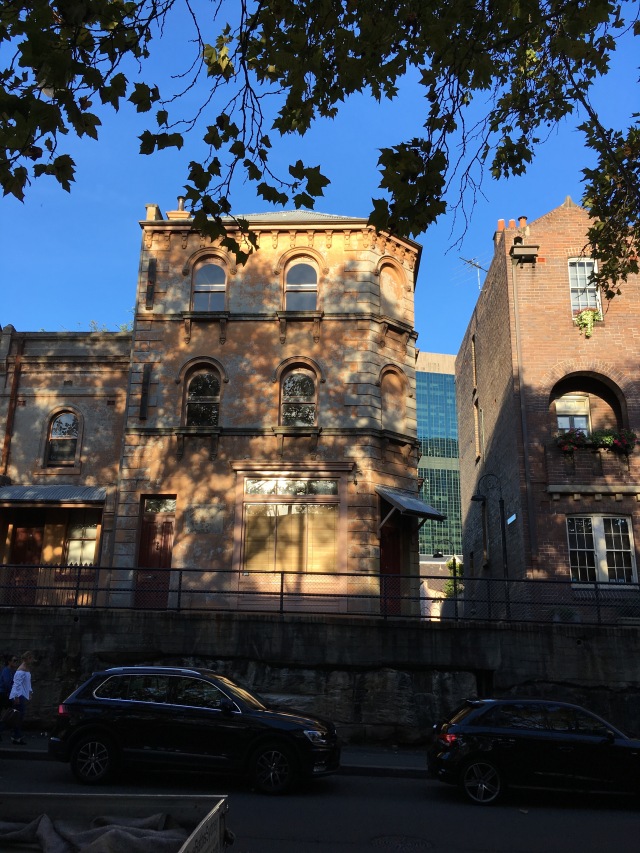
Today, these buildings are nestled in amongst the modern sky scrapers and have a diverse population living inside, from the very rich to the very poor. Many of the houses are still housing commission (public housing) accommodation and a popular tourist destination.
© irene waters 2017
© irene waters 2017
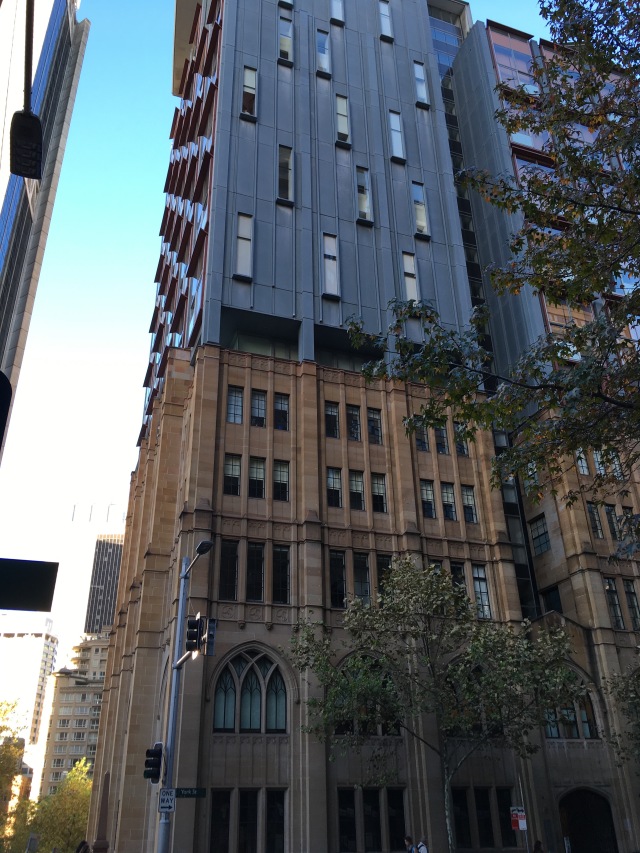
My own history is linked to the Rocks. My Father’s office was the top three windows on the left in the sandstone building. This was the administrative building of the Presbyterian Church where my Father was Clerk of Assembly until Church Union led to the foundation of the Uniting Church in 1977. I wonder what my Father would have thought at the modern structure placed on top of the old Scotts Church building that was constructed in the 1840s.
© irene waters 2017
My history in the Rocks goes back further. My great -grandfather migrated from Glasgow to Sydney in 1897 arriving on the steamship “Austral.” He started his mission work in the Rocks area of Sydney almost immediately with the Sydney City Mission which had been founded some 35 years earlier based on the model of the London City Mission.
Millers Point and The Rocks in those days had a population of around 112,000 people (almost a 1/4 of the popn of Sydney at the time). The area had more men than women (a result of the sailors that lived in the area) and was a poor, rough and violent area rife with disease, alcoholism and opium dens. After his first day of work he wrote
I cannot express my feelings as I thought of the strange place and a strange people, but looking up to God, the thought flashed into my mind; human nature is the same in Sydney as it is in Glasgow, and so is God. So I made a start determined to take every door.”
He involved himself in the lives of the people, with no care to what religion they may follow. He set up free breakfasts for the people and intervened in domestic disputes. His diaries are a fascinating read (although at times heavy going). He became beloved by one and all, gaining many converts along the way.
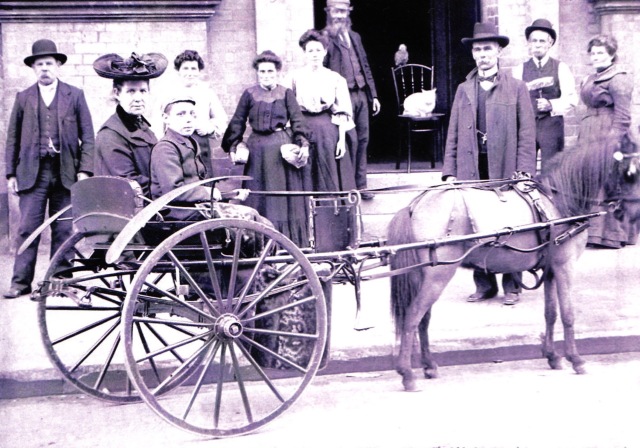
The boy in the trap is my Grandfather, the man standing alone by the horse is my great grandfather. The cat and the bird just leave me wondering.
In response to Paula’s Thursday’s Special
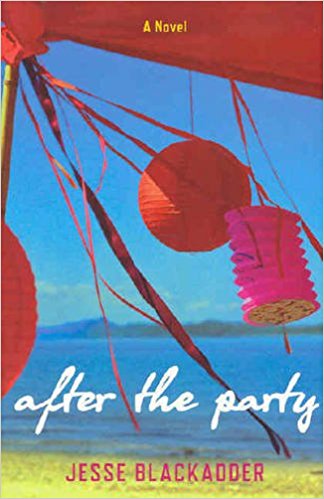 The first Jesse Blackadder book I read was