© irene waters 2014

© irene waters 2014
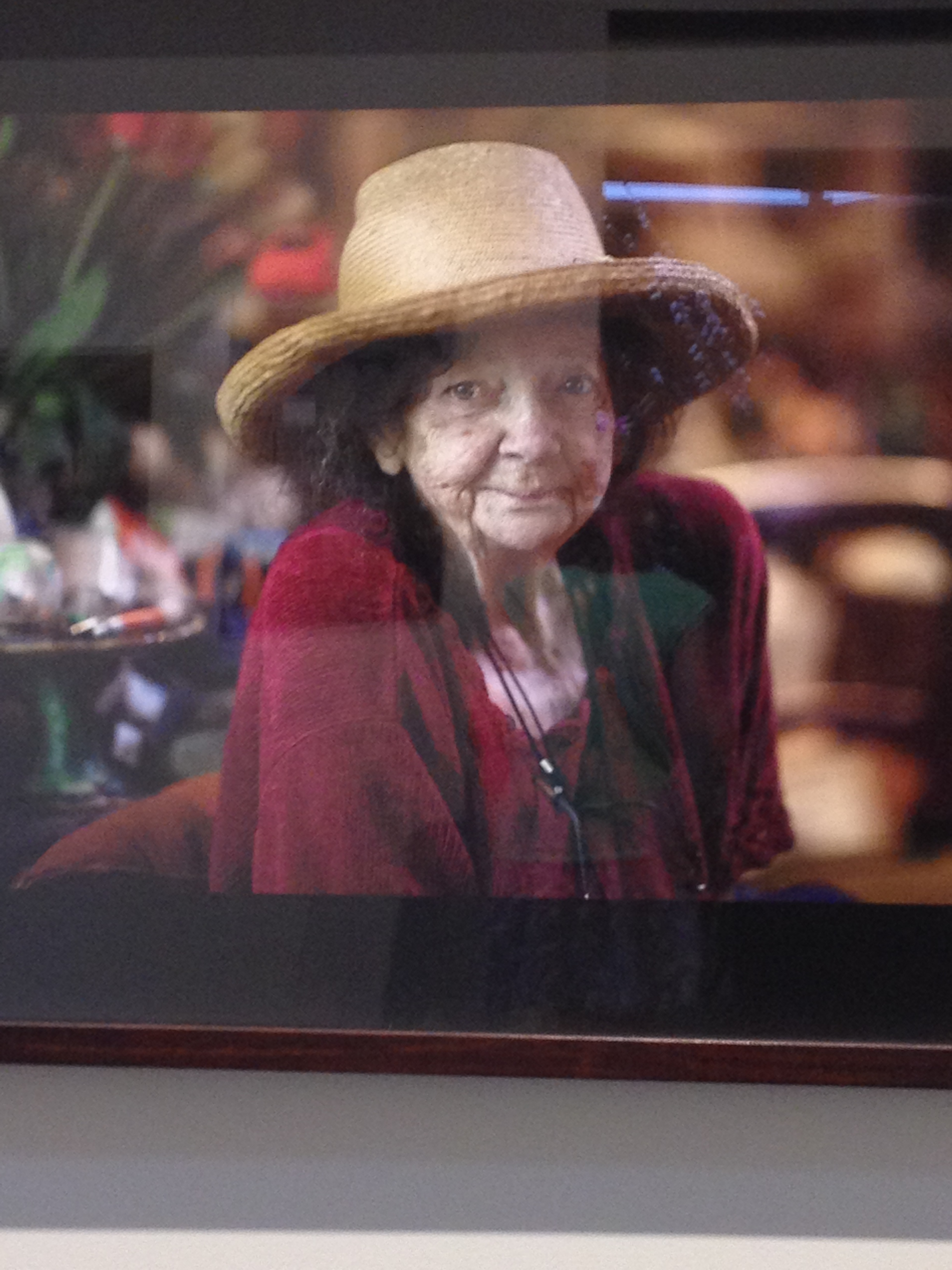
(13 photos) Margaret Olley (1923 – 2011) is one of Australia’s better known local artists. She was born in Lismore then moved to Tully in North Queensland to a sugar cane and beef cattle property. This eventually led to her being sent to boarding school in Brisbane – Somerville House. Here she was lucky to have as an art teacher Caroline Barker who learnt her trade from McGovern. She was talented and had won a scholarship to study art in London. Margaret Cilento was also a pupil at the school and Caroline took her two gifted students and gave them special instruction.
Margaret went on to art school and supported herself by painting theatre back drops. This created a hate of canvas and as a result she always painted on board, usually rested on her knee. She was lucky meeting an arty/theatre crowd and in 1946 Donald Friend persuaded the shy Brisbane girl to have a solo exhibition. She sold well and from that point didn’t look back.
She did a large number of portraits but she didn’t paint anyone but herself (not because she was narcissist but because she didn’t need to pay the model and she was constantly experimenting) and she never sold these paintings. She started with landscapes but soon discovered a love of interiors and still life. She was a very painterly painter.
Friendship was the most important thing in her life and she was a huge benefactor to the arts . She was considered the most knowledgeable person in Australia regarding the value of art works and spent much time travelling and visiting overseas galleries.
In 1948 she was invited to a party that she was to go as a duchess. She bought a parachute from army surplus and made a dress. Dobell painted her in this dress for the Archibald Prize. 14,000 people visited this painting in the first day of showing which put Margaret Olley firmly in the limelight. Margaret was again the subject of the winning Archibald prize in 2011 painted by Ben Quilty.
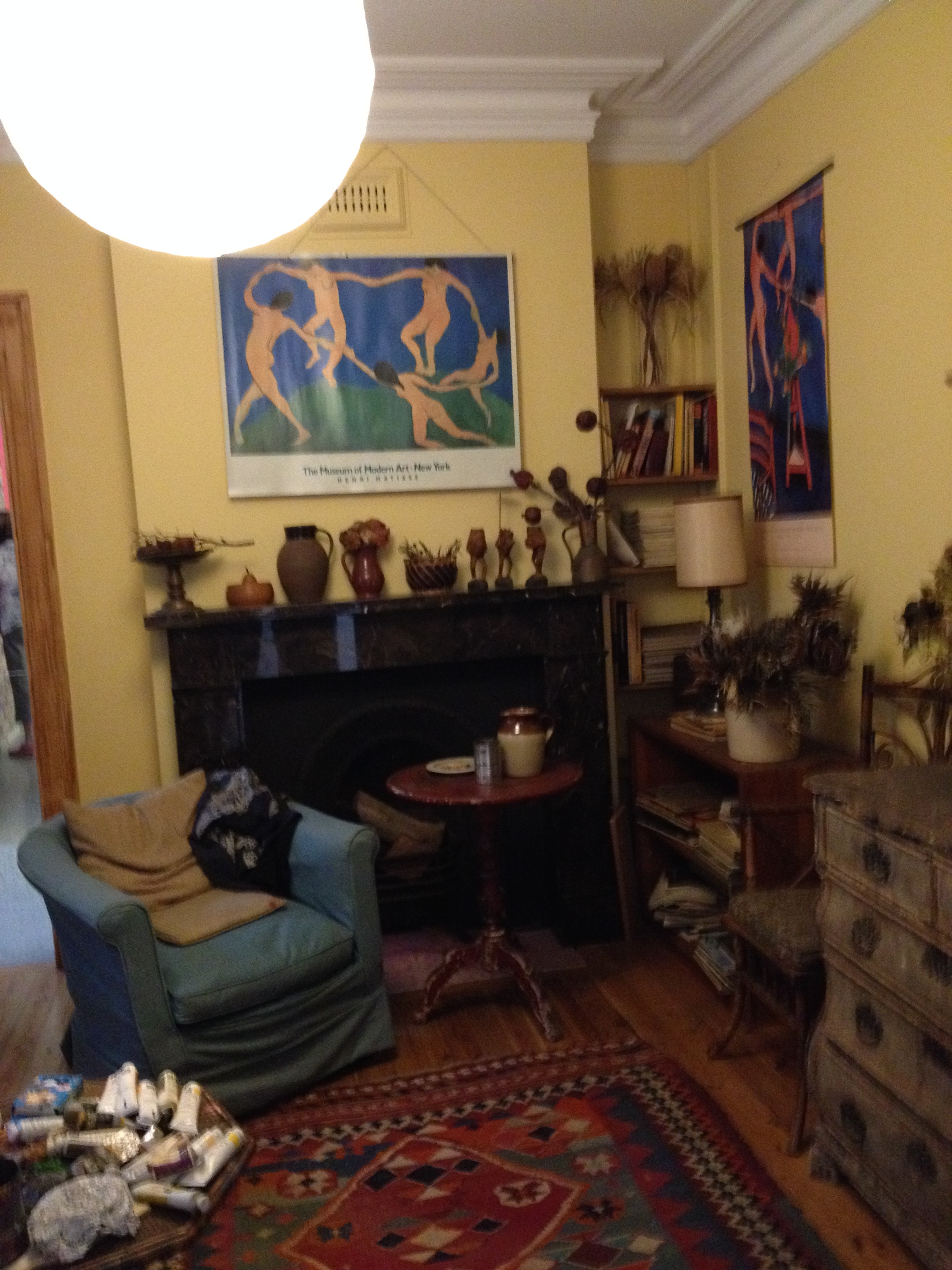
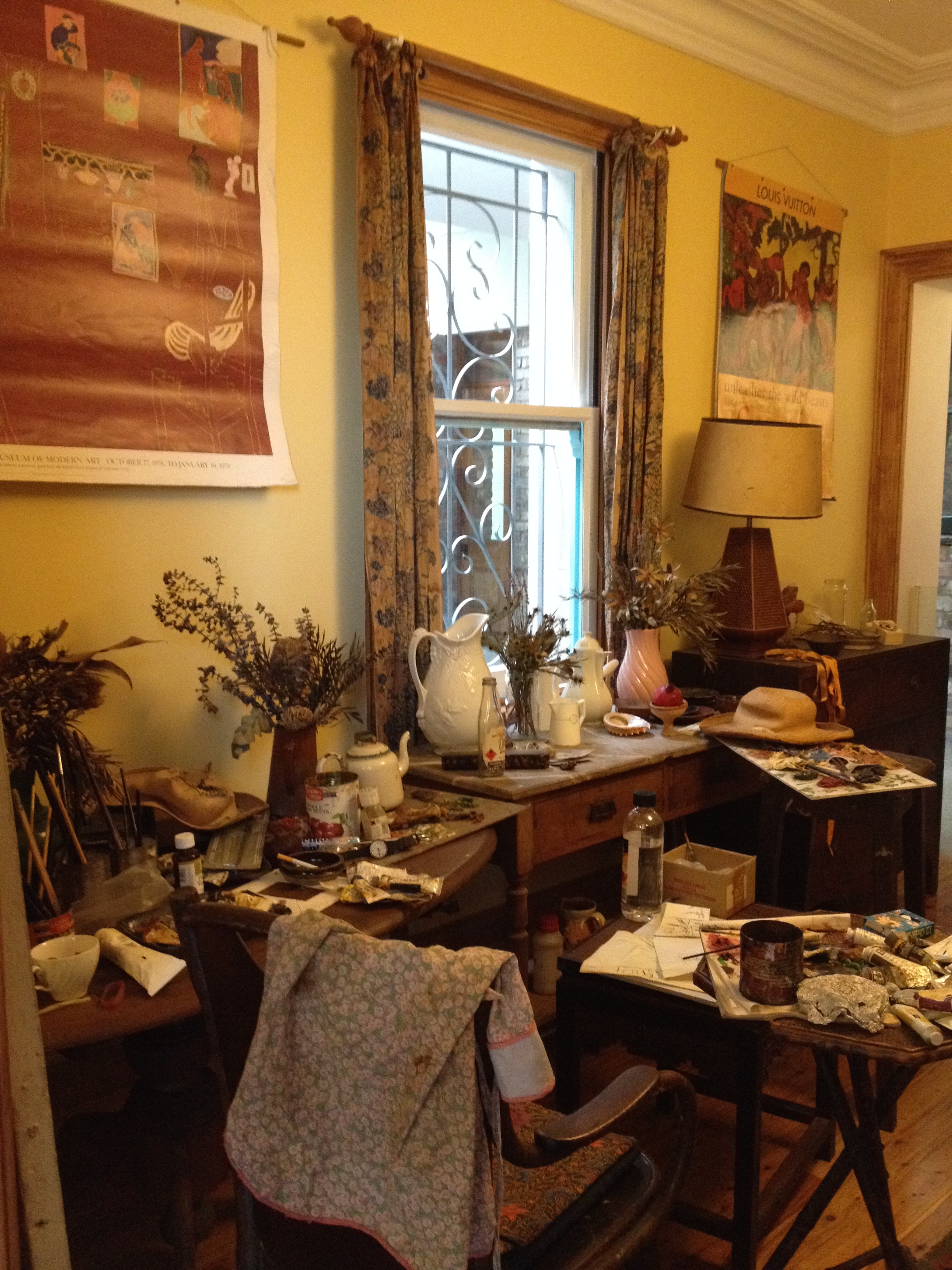
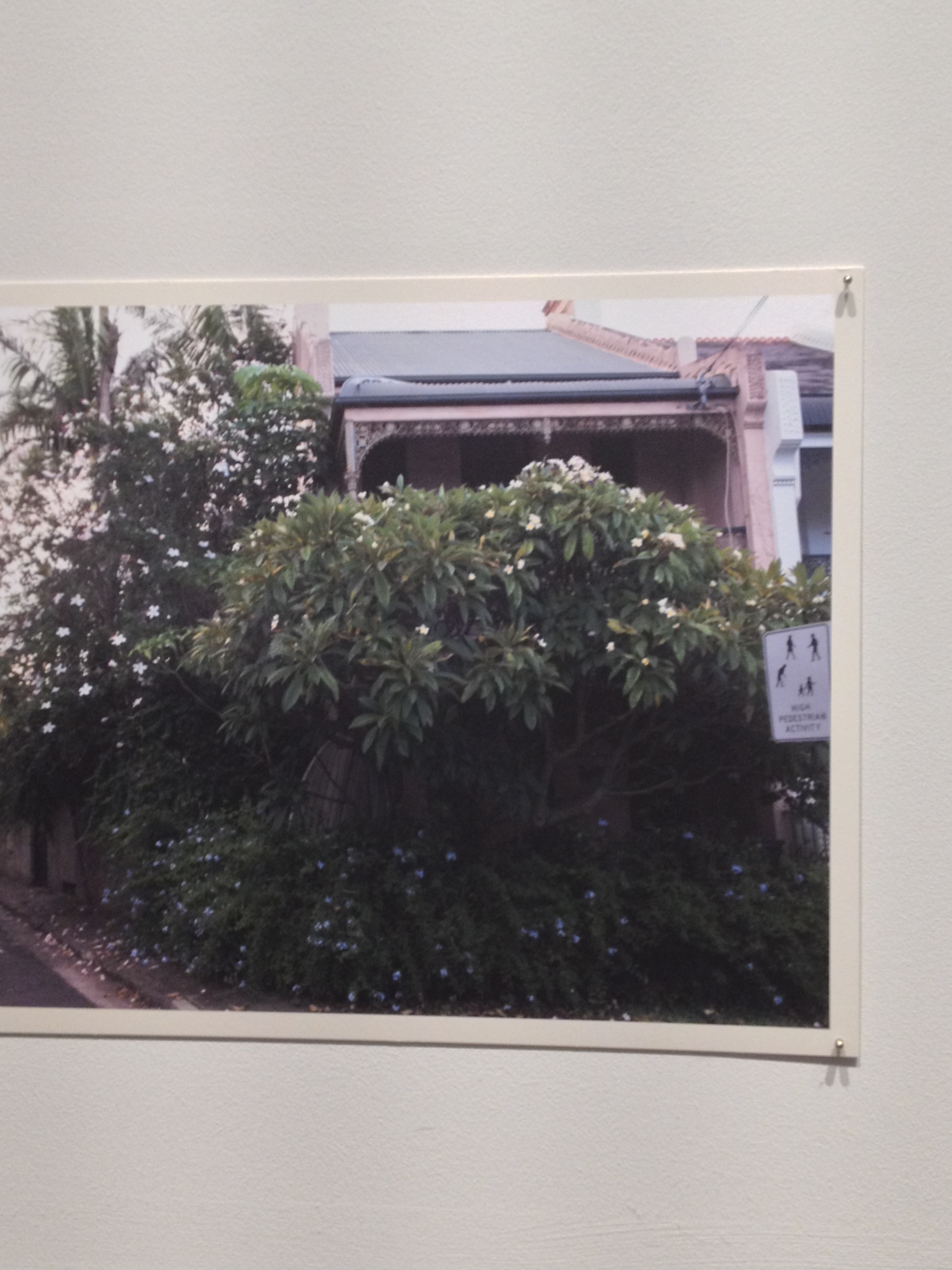
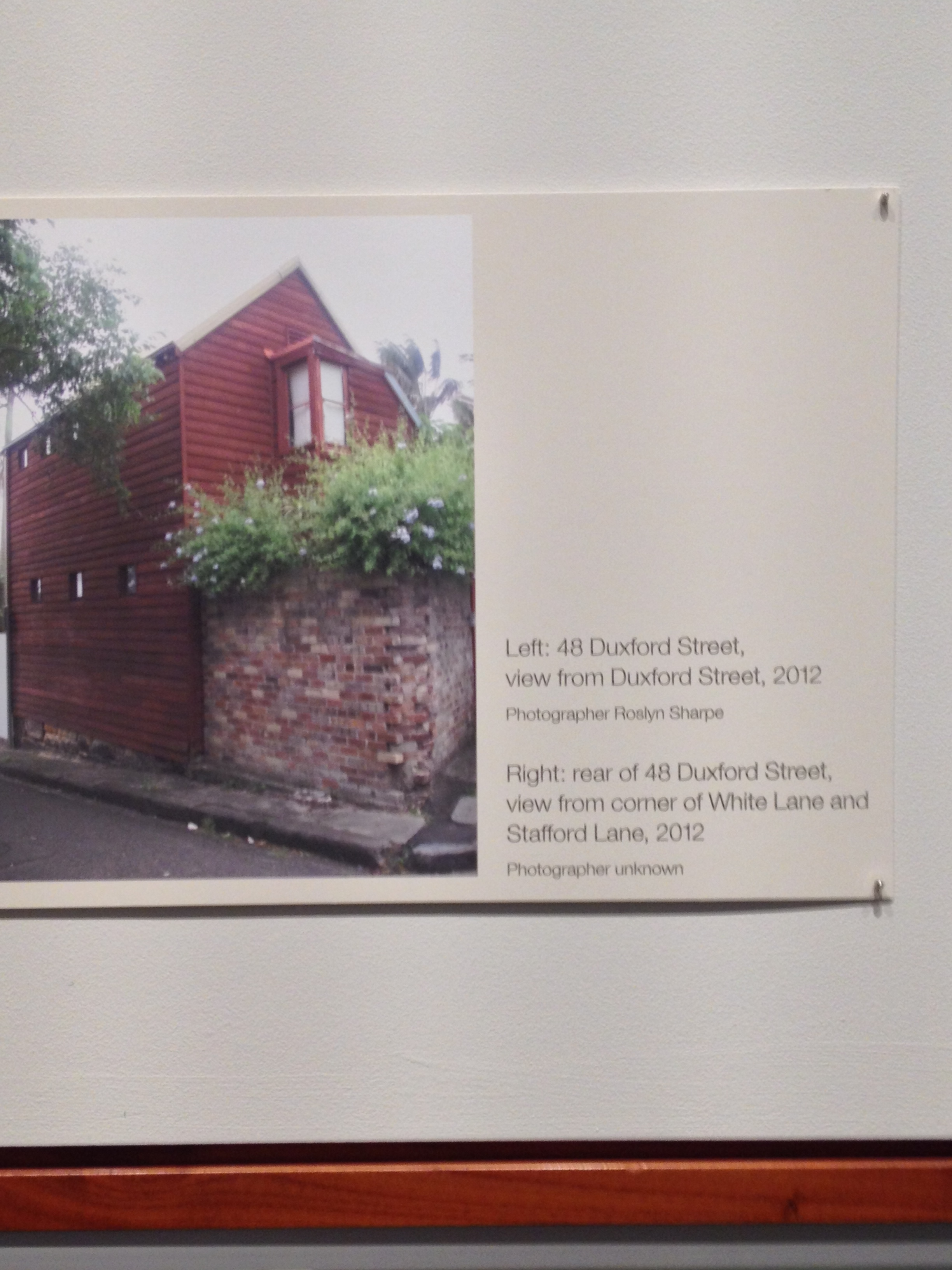
She bought the Duxford Street, Paddington cottage in 1964 initially living in two rooms. This became the backdrop for her painting. She particularly loved the yellow room as this was the room she and her one love Sam Hughes whom she met in 1973 lived until his death in 1982.

© irene waters 2014
© irene waters 2014
© irene waters 2014
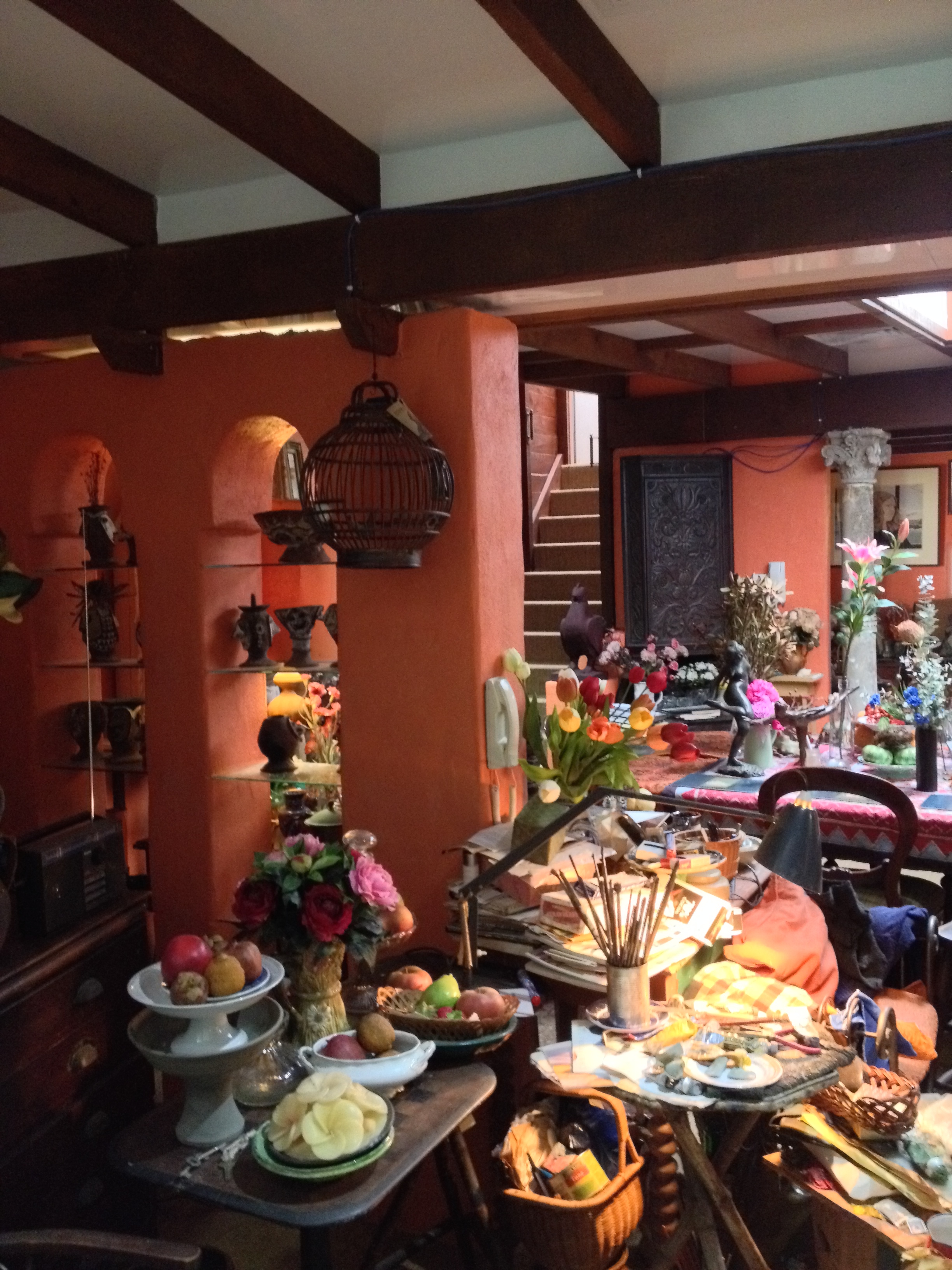
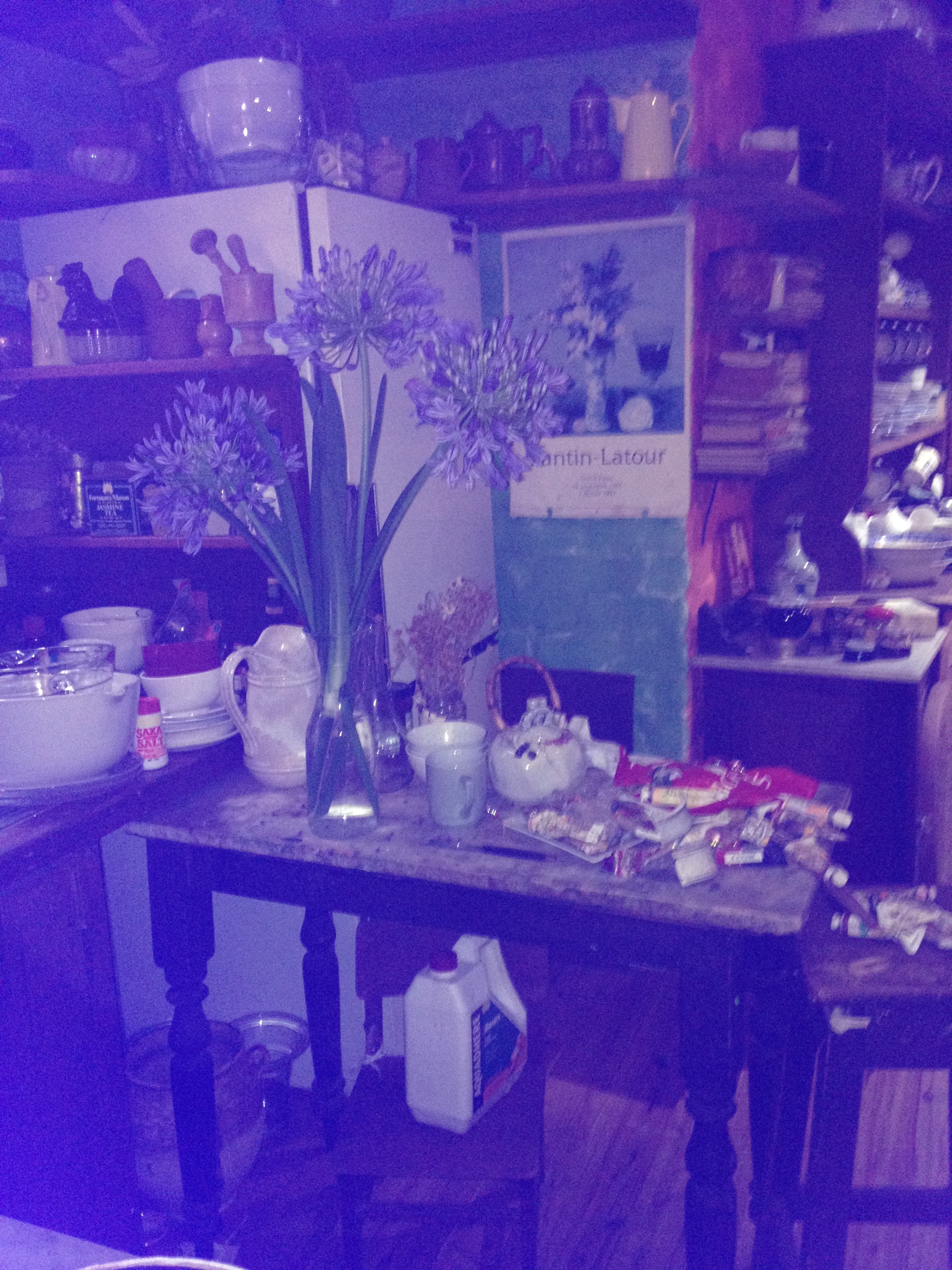
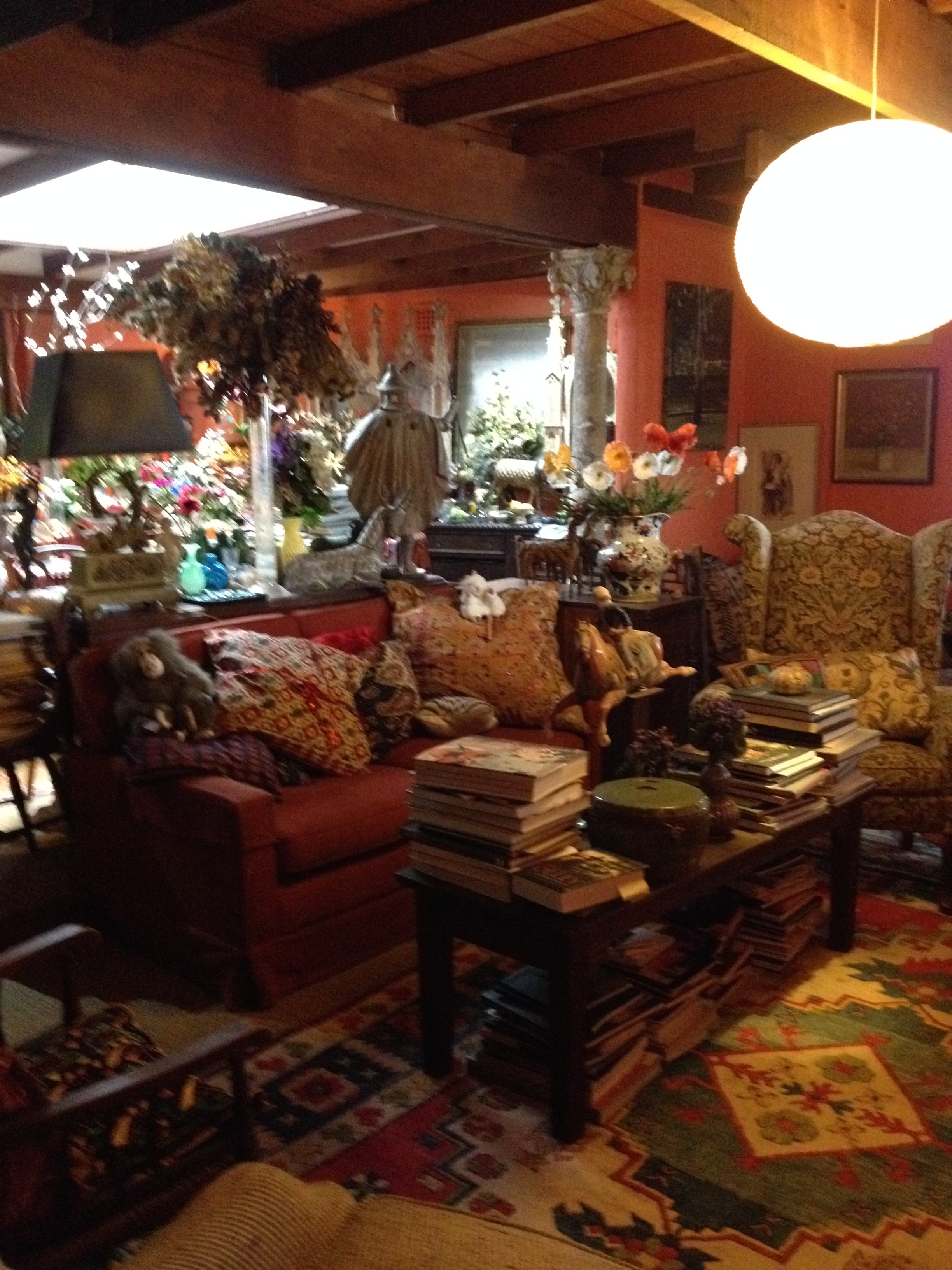
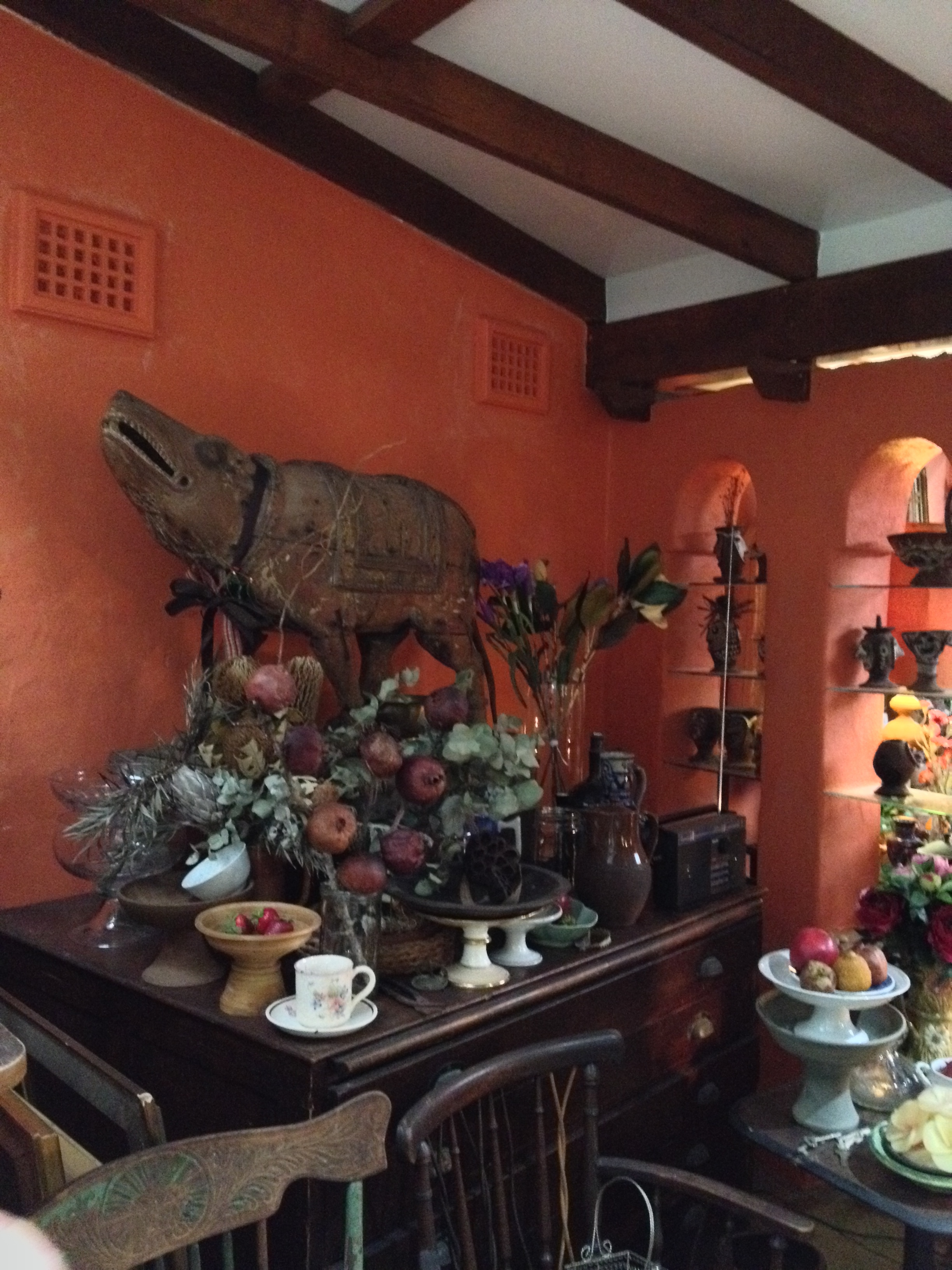
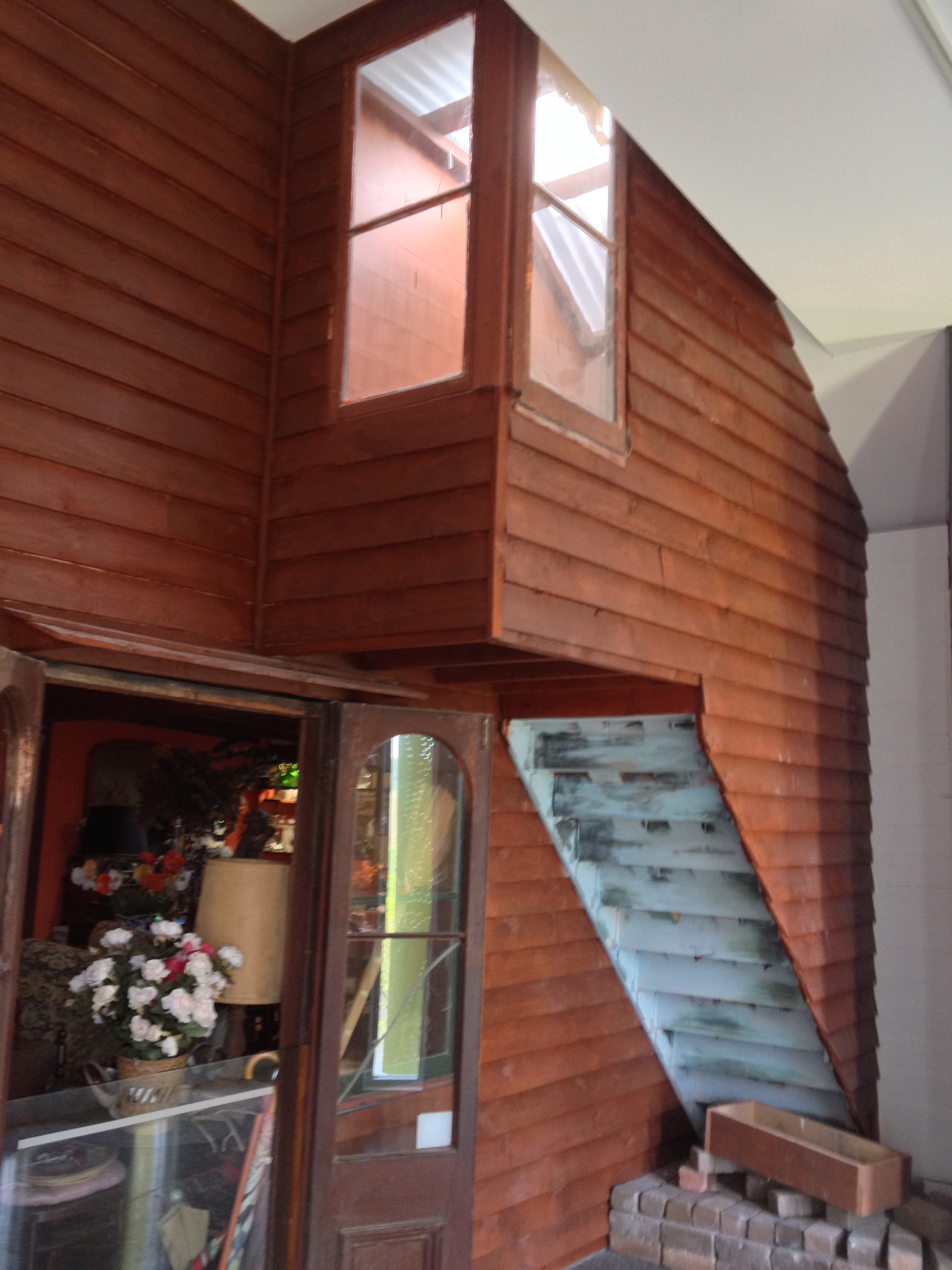
She loved flowers and objects and from the interior of her house it would seem that nothing was ever removed. On her death the interior of her house was painstakingly moved from Paddington to a recreation of the building in the Tweed River Regional Gallery. What a pleasure it was to see inside this incredible woman’s life. Around me I could hear sighs of horror at the clutter. Perhaps because I am a poor housewife and a hoarder I didn’t see it as clutter but as good placement of her bits and pieces that was, for me, asthetically pleasing.
© irene waters 2014
© irene waters 2014
© irene waters 2014
© irene waters 2014
© irene waters 2014
© irene waters 2014
© irene waters 2014
© irene waters 2014
I thought given her love of flowers and the abundance of them in these rooms Margaret’s Interior was a suitable choice for Floral Friday.










 Reflections and Nightmares- Irene A Waters (writer and memoirist)
I agree with you, Irene. The placement of all her bits a pieces is a feast for the eyes.
LikeLiked by 1 person
Yes there is definitely deliberate placement here making her house an artwork in itself.
LikeLike
This whole piece is fascinating. (Also, of course, love the photos.)
LikeLike
Glad you enjoyed it Sarah. We so seldom get to hear of artists unless they are European, English or the odd American artists. So glad to share an Aussie artist.
LikeLike
When I first saw the interior shot, despite the clutter I recognized the painstaking placement of all the things. Some people have that knack. My husband, is simply cluttered! I’m not a hoarder, but I’m an arranger–everything has it’s place or it’s gone. Such an interesting profile of an artist to go with the photos.
LikeLike
Yes it all boiled down to the placement and I guess that is where her artist’s eye helped.Do you arrange your husband’s clutter? Perhaps one day we will see your house displayed to show the space in which the tale of Rock Creek was written.
LikeLike
Thank you Irene for this wonderful glimpse into Margaret Olley’s home. She was such a wonderful painter and I really appreciated these photos showing where she lived. 🙂
LikeLike
I’m glad you enjoyed it Barbara. It was great to see as it really gave you a sense of the person. They had even done things like ash trays full of butts. Sadly she died of emphysema. 🙂
LikeLike
Love it all except the purple one. How anyone could be put off by the clutter is beyond me – it was how she was, and that’s all. Lovely post, Irene ….
LikeLike
Thanks M-R. Yes I don’t know what happened with that purple looking one. The flash I think must have gone off but I had to put in a picuture of her kitchen. She reportedly held fantastic dinner parties and it all came out of the tiny kitchen. Mind you Roger, a cook, tells me a small kitchen is the ideal and we had the smallest kitchen anyone had ever seen and it was his favourite. Maragaret Olley was who she was – a lovely human being accepting people for themselves.
LikeLiked by 1 person
You’re the only blogger to post on her wondrous old place, Irene: and she was SUCH a character – so generous, too …
I’m charmed with the idea of the best food coming from the smallest kitchen !! 😀
LikeLike
Very generous.
It means nothing burns whilst you run the kitchen’s distance for an implement. You stand in one place, turn in a circle and you can reach the lot. XD
LikeLiked by 1 person
An amazing woman. An artist hates throwing things out. It could be useful one day. I am like that with my fabrics and wools. One day I will use them. Thank you for sharing this amazing woman with us. 😀
LikeLike
You’re welcome Raewyn. Glad you enjoyed a brief glimpse into one of our great artists of the time. I agree – if you never throw things out then they are always there when you want them. I’m sure you’ll your fabrics and wools – one day. 🙂
LikeLike
Pingback: Weekly Photo Challenge: Yellow | Reflections and Nightmares- Irene A Waters (writer and memoirist)