The night before the mission Squadron 74 threw back their beers and cuddled their girls They knew there would be empty seats and some broken-hearts the following night.
1100 hours the bugle sounded. A quick briefing. No longer carefree, they ran to their planes. Commander Keith ‘Grid’ Caldwell headed out with his men. “On your bikes, chaps” he ordered.
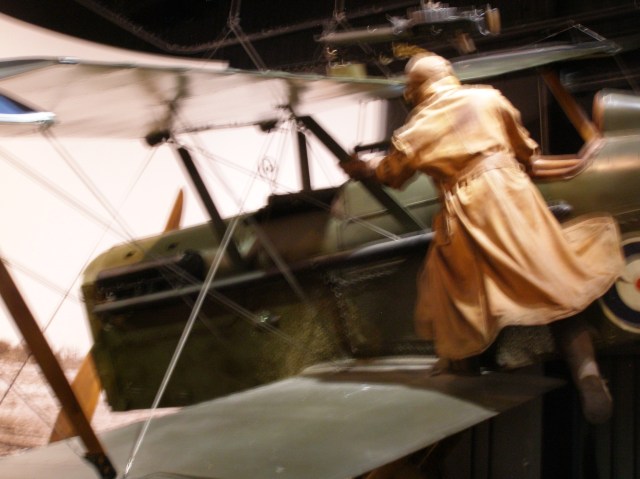
The formation crossed the line at 1330 hrs. Soon they ferreted out some enemy planes. Bratatattat. Bratatattat. Sparks flew from the machine guns. Grid, in his element, attacked, then spiralled, righting his plane to appear from nowhere shooting the German out of the sky. He dipped away. His plane shuddered. He had collided with one of his own at 7000 feet. The plane with it damaged wing spun downward another 2000 feet. Without a parachute Grid had a choice of death. He decided to jump. He leant out over the wing and the plane steadied, flattening out. Holding the right rudder with his left foot he kept his weight on the wing and managed to fly his crippled aircraft to safety.
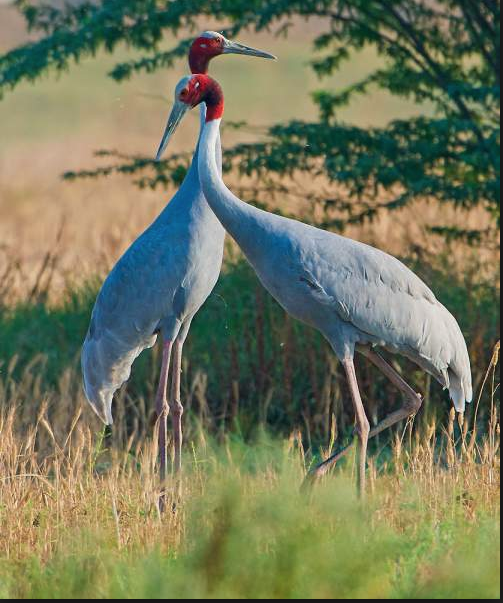
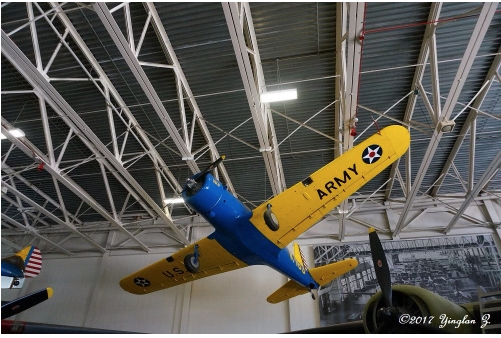
Thank you to Priceless Joy for hosting flash fiction for aspiring writers and thank you also to Yinglan who provided this weeks photo prompt.
This photo immediately reminded me of an war aircraft museum I have visited in New Zealand. In the WWI exhibit I learnt about this NZ pilot who had a narrow escape and was one of the few pilots to survive WWI where the average lifespan of these young men was two weeks from commencing flying missions. Grid went on to become a Air Commodore in WWII. He gained the nickname Grid as it is NZ for bicycle and this is what he called the planes.
© irene waters 2018
The other interesting fact that I didn’t know was that in WWI, unlike the German pilots, British pilots weren’t issued with parachutes. The rationale of the British Government was that the pilots may not be quite as focused on carrying out the task at hand and might bale earlier, ditching expensive aircraft that potentially could limp home. It took them some time to realise that trained fighter pilots were a more valuable commodity than the plane. Once they realised this parachutes became standard issue.